









































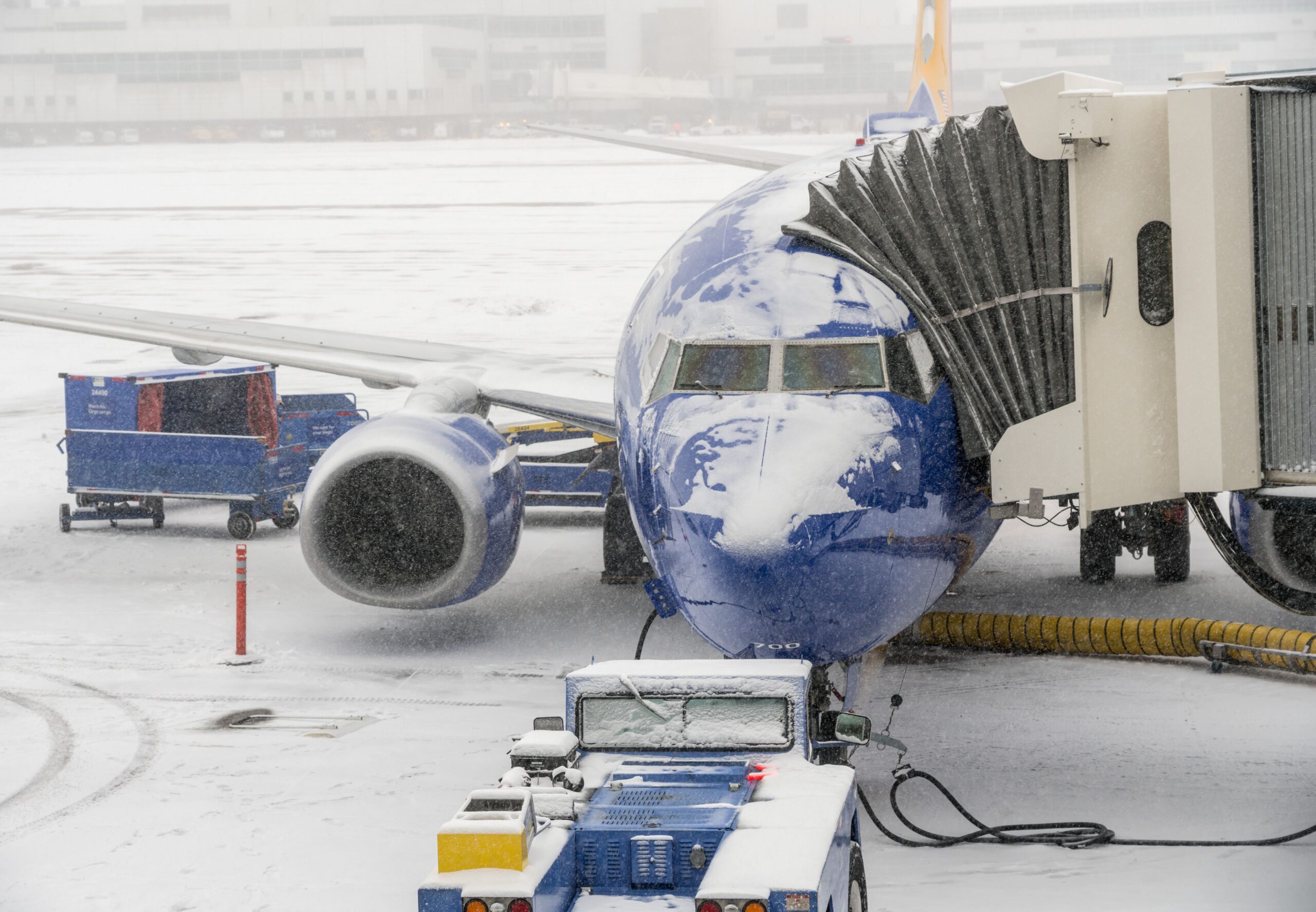
A severe winter storm is disrupting air travel across the United States, leading to more than 8,000 flight cancellations over the weekend. According to FlightAware, both domestic and international flights are affected, with the storm impacting regions as far east as Massachusetts and west to New Mexico. The situation is expected to worsen as airlines proactively cancel or delay flights in anticipation of heavy snowfall.
As of January 24, American Airlines has cancelled over 2,000 flights, while Southwest Airlines has grounded more than 1,000. United Airlines has reported over 500 cancellations. The ripple effect of these cancellations will likely leave many passengers stranded and create significant backlogs in airport terminals.
Flight Disruptions Expected to Continue
The forecast predicts a mix of snow, ice, and freezing temperatures affecting most states. By January 25, FlightAware anticipates approximately 4,935 cancellations for that day alone, following 3,132 flights cancelled on January 24. In response, airlines are taking significant precautions. For instance, Delta Air Lines has cancelled numerous flights originating from North Texas, Oklahoma, Arkansas, Louisiana, and Tennessee to ensure passenger safety.
In an effort to accommodate affected travelers, airlines are adding additional flights. For example, American Airlines announced it would operate 17 extra flights to and from Dallas/Fort Worth International Airport to key destinations as part of their contingency plan.
Advisories and Travel Waivers Issued
Travelers are strongly advised to check their flight statuses before heading to the airport, as weather conditions continue to evolve. Airlines are implementing travel waivers, allowing passengers to modify their itineraries without incurring penalties. Delta Air Lines has issued a waiver for most travel across the eastern United States, affecting major airports like Boston, New York, and Philadelphia. Similarly, American Airlines has opened the opportunity for passengers to alter plans for travels scheduled between January 23 and January 25 across 34 airports.
Passengers traveling with United Airlines can also take advantage of a waiver that covers travel within the same dates, affecting over 30 U.S. airports. Notably, the highest cancellation rates are being reported at New York’s JFK, Newark, and LaGuardia airports.
Safety remains the top priority for airlines, which necessitates frequent clearing of airport runways and taxiways. Additionally, aircraft must undergo de-icing procedures before departure to prevent ice accumulation. Airlines often preemptively cancel flights under severe weather conditions to avoid stranding passengers and crew.
Travelers whose plans are impacted are encouraged to reach out to their airlines or utilize online platforms to explore rebooking options. With both domestic and international flights facing disruptions, the impact of this winter storm is expected to resonate beyond U.S. borders, affecting global travel schedules.
















