









































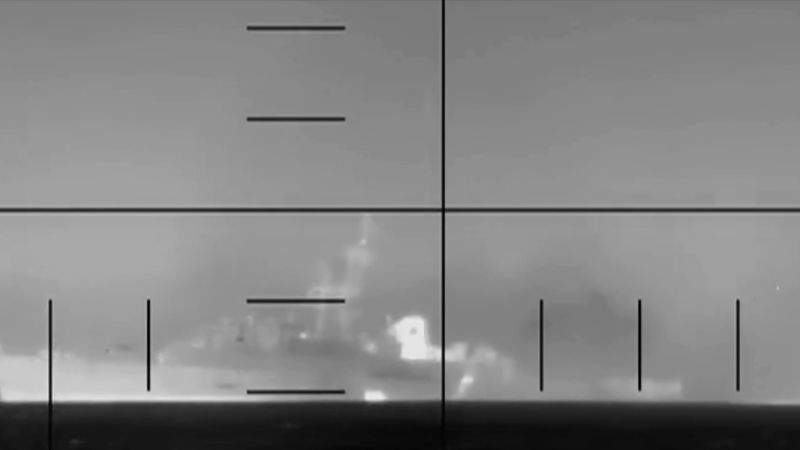
The sinking of the Iranian frigate IRIS Dena by a US Navy submarine marks a significant escalation in the ongoing conflict between the United States and Iran. This incident occurred approximately 2,000 miles from Iran’s shores and has raised questions regarding the nature of military engagements in the region.
The Pentagon released footage showing a large explosion at the stern of the Dena, which subsequently sank. Iranian Foreign Minister Abbas Araghchi confirmed the loss of the frigate, stating it was on its way home after participating in India’s MILAN 2026 naval exercises, a multilateral event involving vessels from multiple nations, including the United States. Reports indicate that while the Dena was involved in a largely ceremonial exercise, it was nonetheless one of Iran’s most advanced ships, equipped with various missiles and torpedoes.
Sri Lankan authorities reported receiving a distress signal from the Dena and promptly launched a rescue operation, managing to save 32 crew members while recovering 87 bodies. The total crew was identified as comprising 130 sailors. US Defense Secretary Pete Hegseth characterized the sinking as a “quiet death,” while Araghchi condemned the act as “an atrocity.”
The escalation of hostilities comes in the wake of a broader military engagement, with Iranian forces allegedly targeting US interests and allies across the region. Carl Schuster, a military analyst and former director of the US Pacific Command’s Joint Intelligence Center, suggested that the Dena represented a potential threat to commerce in the area, particularly given Iran’s history of targeting US-friendly nations. He indicated that the sinking could be justified as a preventive measure.
The legal groundwork for the US action may be traced back to a document signed by former President Donald Trump on March 2, 2024, which authorized measures to protect the free flow of goods through the Strait of Hormuz. Experts noted, however, that it remains unclear whether the Dena was prepared for combat at the time of the attack or if any warnings were issued. Analysts pointed out that the Iranian ship was at a significant disadvantage against a US fast-attack submarine.
Historical Context of the Engagement
Some observers have drawn parallels between this incident and the sinking of the Argentinian cruiser ANA General Belgrano during the Falklands War in 1982. That engagement marked a significant moment in naval warfare, as the Royal Navy submarine HMS Conqueror sank the Belgrano, which was outside a declared exclusion zone. The controversy surrounding that encounter echoes the current situation, where the operational scope has expanded significantly compared to previous conflicts.
Since the initial attacks last Saturday, Iranian retaliation has extended to targets as far away as Cyprus and US military installations in the Persian Gulf. The Dena’s sinking signifies a further widening of the combat theater into the eastern Indian Ocean, raising concerns over the potential for increased military involvement from multiple nations.
Araghchi has vowed that Iran will seek vengeance for the loss of the Dena, warning that the United States will “bitterly regret” its actions. The historical significance of this event cannot be overstated; it marks the first instance of a US Navy submarine sinking an enemy vessel since August 14, 1945, when the USS Torsk torpedoed a Japanese frigate during World War II.
The ramifications of this incident remain to be seen, as both nations navigate a complex landscape of military readiness and international relations. The current state of affairs suggests that tensions will continue to escalate, with both sides poised for further actions. Missiles and drones have already found new targets, and the geopolitical implications of this conflict will likely extend far beyond the region.
















