









































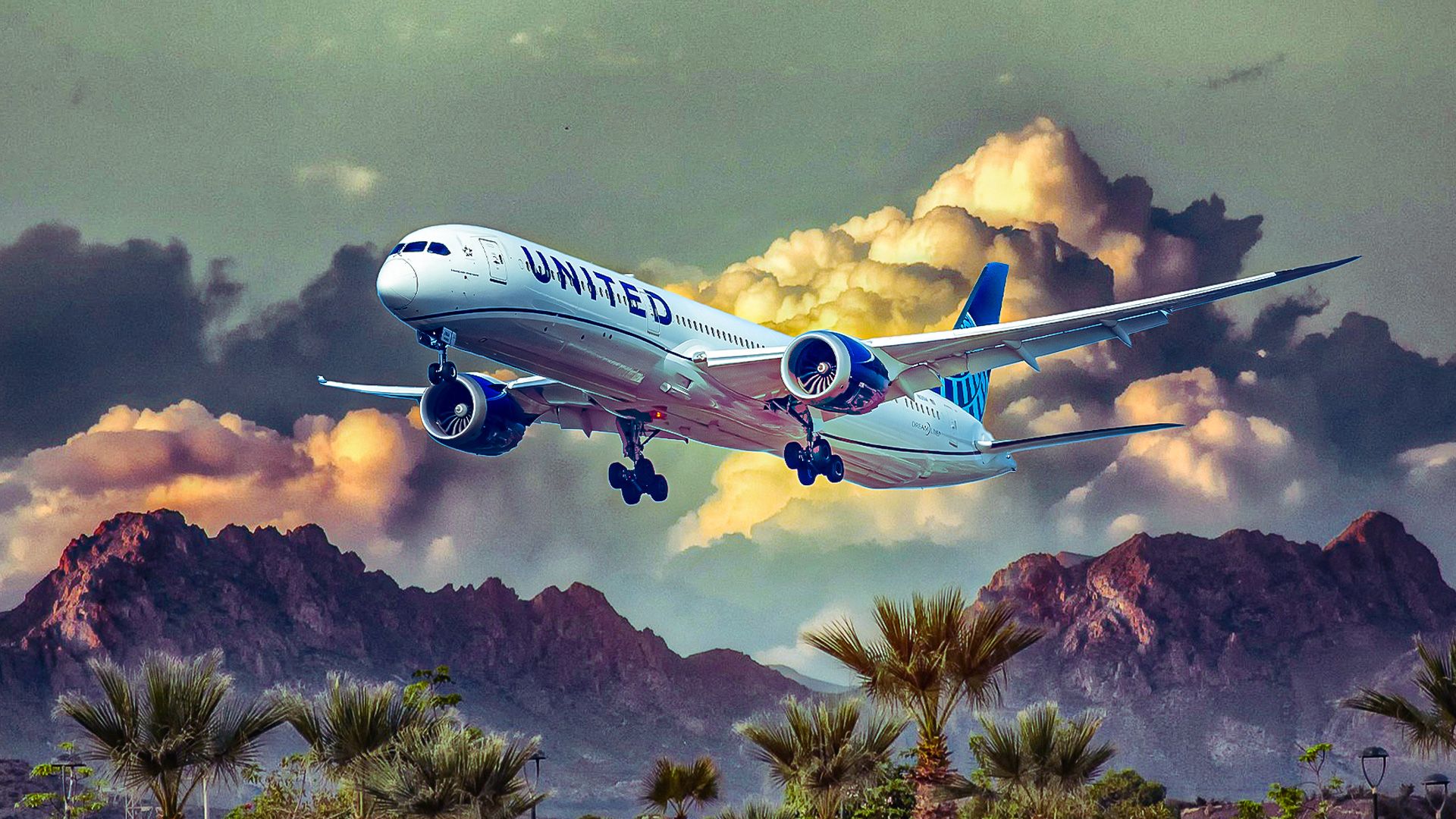
In a strategic move for its 2026 operations, United Airlines is set to deploy its Boeing 787-10 Dreamliner on some of its longest nonstop routes. This aircraft, the largest member of the Dreamliner family, is designed to accommodate high demand while maintaining operational efficiency. With a capacity of approximately 330 passengers in a typical two-class configuration, the 787-10 is tailored for long routes with high load factors, particularly those that emphasize premium seating.
The 787-10 features a range that is sufficient for most transoceanic flights, including popular destinations across the Atlantic, as well as points in South America and East Asia. Although it does not support ultra-long-haul missions, its design allows United to maximize passenger and cargo capacity on routes that consistently operate at full capacity.
Route Strategy and Network Dynamics
United’s approach to its 787-10 deployment reflects a broader hub-and-spoke network strategy. The airline’s extensive use of the Dreamliner family underlines its commitment to long-haul growth, balancing fuel efficiency with capacity needs. According to data from aviation analytics firm Cirium, United focuses the 787-10 on a select number of high-impact markets instead of distributing the aircraft across a wider network.
The 787-10 is particularly effective on routes where strong business demand exists, as well as those where cargo loads can be optimized within weight-and-balance constraints. Chicago O’Hare International Airport (ORD) serves as the primary hub for these operations, with additional routes from Newark Liberty International Airport (EWR) and Los Angeles International Airport (LAX) providing further connectivity.
Notable nonstop routes scheduled for the 787-10 in 2026 include the Chicago to Tokyo Haneda route, spanning 6,306 miles (10,149 km), and Newark to Tel Aviv, which measures 5,692 miles (9,160 km). These routes exemplify how United leverages the aircraft’s capacity and efficiency on high-demand international flights.
Capabilities and Fleet Modernization
The Boeing 787-10 is built for efficiency, trading off some ultra-long-range capabilities for increased seating capacity. This design allows United to offer a wider range of long-haul services, particularly to destinations that are not as far-flung as those serviced by the 787-9 and 787-8 variants. The aircraft features advanced aerodynamics, a composite airframe, and a modern engine design that contribute to lower fuel consumption and reduced noise levels.
United Airlines is also undergoing a broader modernization of its fleet in the 2020s, with plans to incorporate 270 new mainline aircraft under its United Next program. This initiative includes the introduction of new Boeing 737 MAX jets and Airbus A321neo models, as well as retrofitting existing aircraft to enhance passenger experience through improved cabin features.
With the 787-10 at the forefront of its long-haul strategy, United has placed a firm order for 100 Dreamliners, with deliveries scheduled from 2024 to 2032. The airline aims for 75% of its fleet to consist of next-generation aircraft by 2030, reflecting its commitment to operational efficiency and passenger comfort.
Overall, the deployment of the Boeing 787-10 allows United Airlines to strategically address the high-capacity needs of its busiest international routes. The aircraft not only provides enhanced passenger experiences but also supports the airline’s ongoing efforts to optimize operational performance across its global network.
















