









































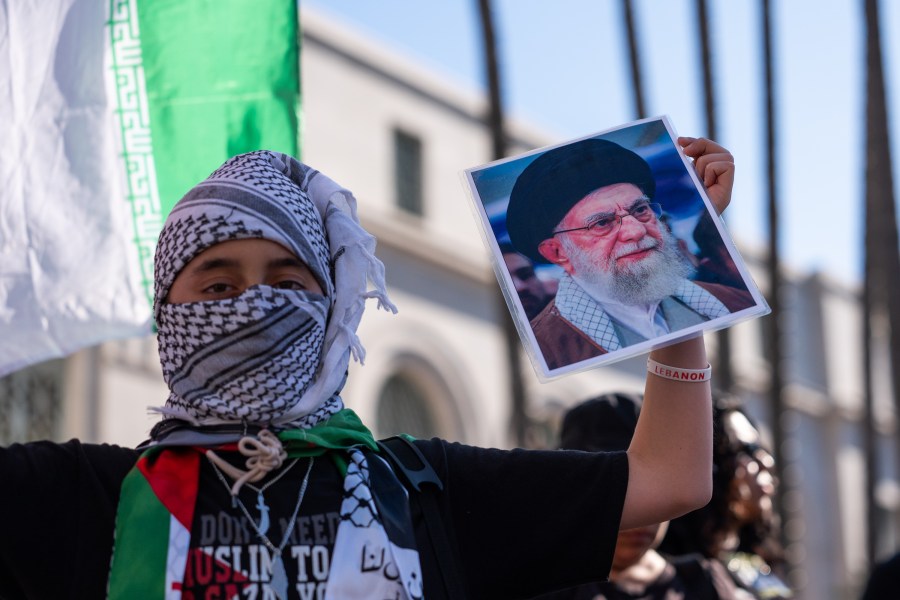
The recent comments made by former President Donald Trump regarding U.S. foreign policy in the Middle East have sparked renewed debate on the effectiveness of American interventions in the region. Trump’s assertion that the overthrow of the Ayatollah will lead to peace has been met with skepticism from numerous experts who argue that a fundamental shift in U.S. strategy is essential for achieving long-term stability.
Trump emphasized the need for aggressive action against Iranian leadership, asserting that removing the Ayatollah would pave the way for a more peaceful Middle East. This perspective, however, overlooks the complex dynamics that have historically characterized U.S. involvement in the region. Critics contend that decades of American foreign policy have often resulted in increased instability rather than the anticipated peace.
Reassessing U.S. Involvement
Many analysts suggest that a reevaluation of America’s role in the Middle East is overdue. The United States has been deeply entrenched in regional conflicts, often aligned with Israel, which has led to significant backlash against U.S. interests. According to a report by the Brookings Institution, an independent think tank, the continued support for Israel without addressing Palestinian concerns has further exacerbated tensions.
The report highlights that a withdrawal from a position of unwavering support for Israel could potentially foster a more balanced approach to diplomacy in the region. By recognizing the legitimate aspirations of both Israelis and Palestinians, the U.S. could contribute to a more stable environment.
Moreover, Trump’s comments raise important questions about the future of U.S. military engagements. The Institute for Peace has indicated that American military presence in the Middle East has not only failed to bring peace but has also contributed to widespread anti-American sentiment. This sentiment could be alleviated by a strategic withdrawal that allows for regional powers to take the lead in addressing their conflicts.
Calls for Diplomacy Over Force
Advocates for a diplomatic approach argue that the U.S. should focus on fostering dialogue rather than military interventions. John Smith, a political analyst based in Washington, states, “The U.S. must invest in diplomatic solutions rather than relying on the threat of force. A sustainable peace requires understanding the root causes of conflict.”
In light of this, experts propose that the U.S. engage with regional partners to create collaborative frameworks. This could involve working alongside countries like Saudi Arabia and Turkey to mediate disputes and promote economic development. As tensions continue to rise, especially with Iran’s nuclear ambitions, a united front could serve as a deterrent against further escalation.
Ultimately, the success of any U.S. strategy in the Middle East hinges on its ability to adapt to the evolving geopolitical landscape. Moving away from an interventionist posture while supporting local governance may prove crucial in promoting a lasting peace that benefits the entire region.
In conclusion, Trump’s outlook on U.S. foreign policy in the Middle East highlights the urgent need for a reassessment of strategies that have historically failed to yield stability. By shifting focus from military might to diplomatic engagement, the U.S. can better serve its interests while contributing to a more peaceful future for the Middle East.
















