









































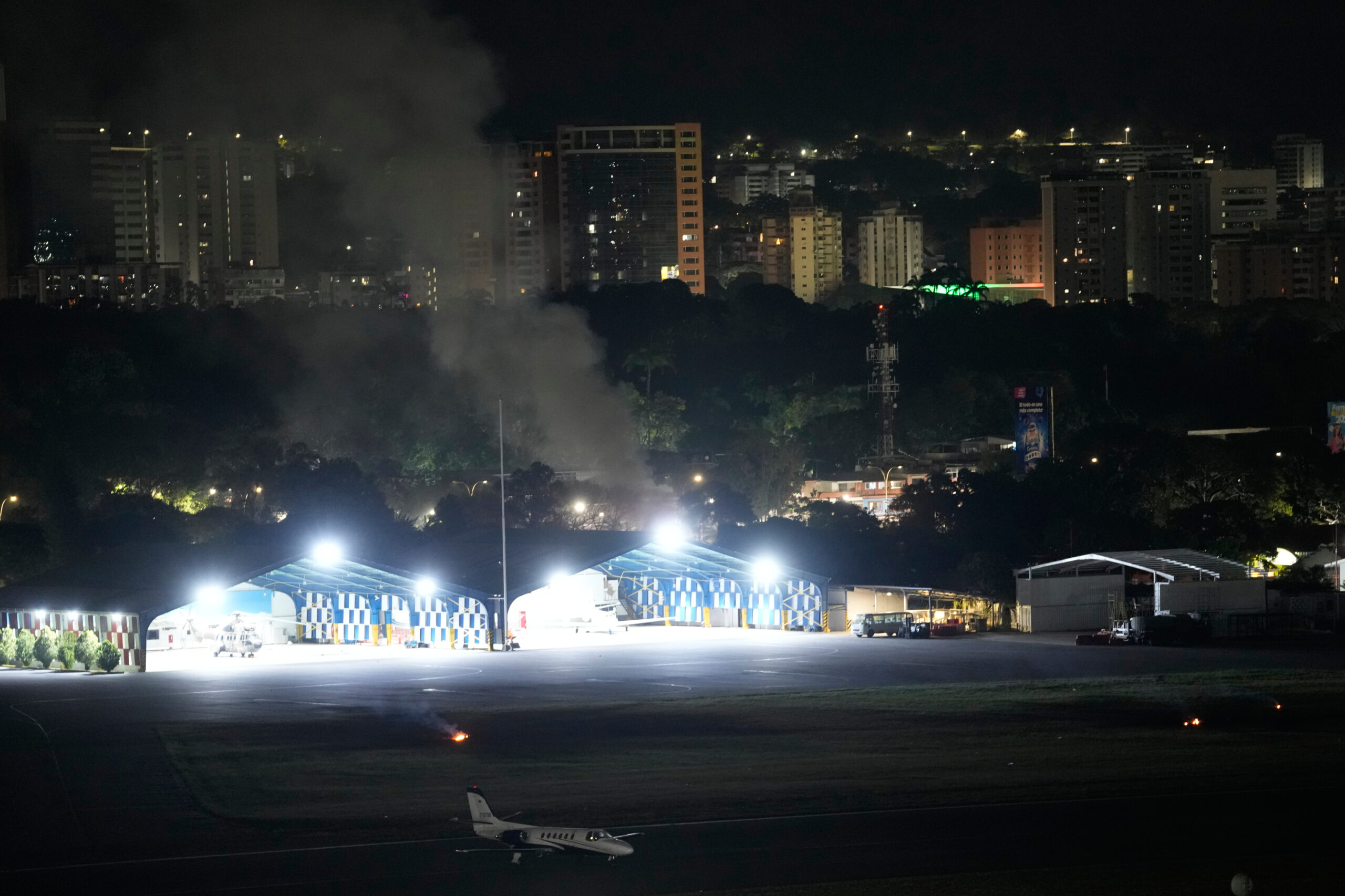
The United States launched a significant military strike against Venezuela early on March 16, 2024, claiming the capture of President Nicolás Maduro. Following months of mounting pressure on Maduro’s government, U.S. President Donald Trump announced the operation via social media just hours after it took place. The details surrounding the legal authority for the strike and whether Trump sought congressional approval remain unclear.
The rapid and extraordinary military action mirrors the U.S. invasion of Panama in 1990, which led to the apprehension of its leader, Manuel Antonio Noriega. Following the strike, U.S. Attorney General Pam Bondi stated that Maduro, along with his wife Cilia Flores, would face criminal charges stemming from an indictment in New York. Bondi emphasized that they would “soon face the full wrath of American justice on American soil in American courts.”
Witnesses in Caracas reported multiple explosions and low-flying aircraft during the strike, which the Venezuelan government condemned as an “imperialist attack.” Vice President Delcy Rodríguez took to social media, stating that the government did not know the whereabouts of Maduro and Flores, and demanded proof of life for the couple.
According to Trump, Maduro and his wife were captured and “flown out of the country” as part of an operation conducted in collaboration with U.S. law enforcement. The attack lasted less than 30 minutes, with at least seven blasts reported throughout the capital. Residents reported chaotic scenes, with many rushing into the streets and using social media to share their experiences.
After the strike, Maduro’s government called for citizens to take to the streets in protest, declaring a state of external disturbance and urging the implementation of national defense plans. Video footage verified by The Associated Press showed explosions illuminating the night sky and smoke rising from military installations in Caracas.
The U.S. Embassy in Venezuela, which has been closed since 2019, issued a warning to American citizens in the country, advising them to shelter in place due to the ongoing military activity. The Federal Aviation Administration (FAA) also restricted airspace over Venezuela and nearby Curacao, citing safety concerns.
In the aftermath of the operation, reactions emerged from various factions. Christopher Landau, Deputy Secretary of State, described the military action and Maduro’s capture as “a new dawn for Venezuela,” while Cuban President Miguel Díaz-Canel Bermúdez condemned the strikes, calling for international solidarity against what he labeled a “criminal attack.” Additionally, Iran’s Foreign Ministry expressed similar condemnation.
As the situation continues to unfold, the White House has yet to clarify the specifics of Maduro and Flores’ current location or the next steps following the strike. Lawmakers in the U.S. Congress have expressed concerns regarding the legality of the military actions, particularly those targeting boats suspected of drug smuggling near Venezuelan waters, with no formal authorization for military force having been granted for such operations.
This unprecedented military engagement raises significant questions about the future of Venezuela and the implications of U.S. foreign policy in the region. As the world watches, the fallout from this operation is likely to reverberate for some time.
















