



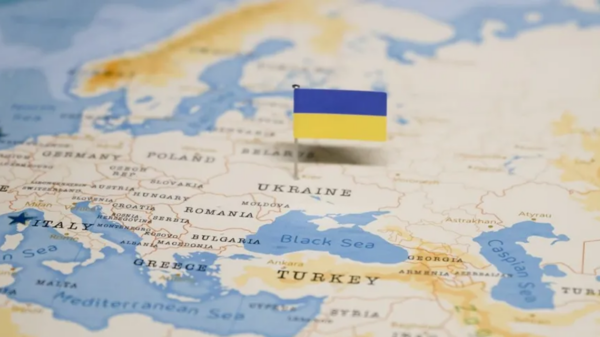
















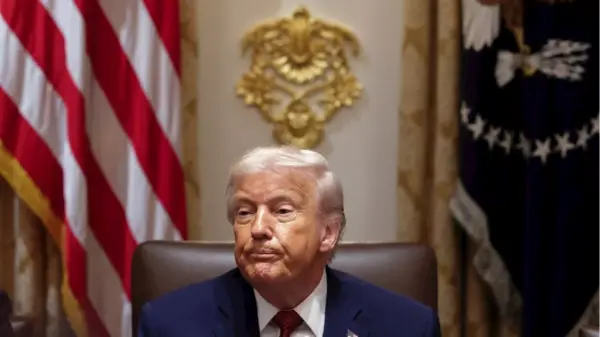













The relationship between the United States and Europe is increasingly strained, as remarks from US President Donald Trump suggest a widening rift that could benefit Russia in its ongoing conflict with Ukraine. In a recent interview with Politico, Trump described European nations as “weak” and “decaying” due to their immigration policies. He also asserted that Russia holds the “upper hand” in the war and urged Ukrainian President Volodymyr Zelensky to “start accepting things” in order to move toward peace.
This commentary follows the release of a new US national security strategy that criticized European governments for their support of Ukraine. The document claimed that “European officials who hold unrealistic expectations for the war” hinder a potential peace agreement. It noted, “A large European majority wants peace, yet that desire is not translated into policy, in large measure because of those governments’ subversion of democratic processes.”
Friedrich Merz, the Chancellor of Germany, publicly rejected elements of this strategy, stating at a news conference that some points were “understandable” while others were “unacceptable” from a European perspective. He emphasized that European nations do not require assistance from the United States to “save democracy” in Europe.
In stark contrast, Russian officials have welcomed Trump’s comments. Dmitry Peskov, a spokesman for the Kremlin, noted that the strategy aligns with Russia’s views, expressing a desire for dialogue and constructive relations. Similarly, Kirill Dmitriev, CEO of the Russian Direct Investment Fund, praised Trump’s assessment of Europe, particularly his caution that “Europe has to be very careful” and is heading in “bad directions.”
Trump’s criticism coincided with a significant fine imposed on X, formerly known as Twitter, by European regulators, amounting to $140 million for violations of online content rules. These issues have further fueled tensions and provided Russian officials, like Dmitriev, a platform to amplify accusations of European democratic backsliding.
Despite the Russian enthusiasm for Trump’s comments, it is important to note the contradictions in their positioning. Vladimir Putin, the President of Russia, has systematically eliminated political competition and restricted media freedoms during his decades-long rule. Russia also blocks access to social media platforms such as Facebook and X, although well-connected officials like Dmitriev utilize these platforms to spread their narratives.
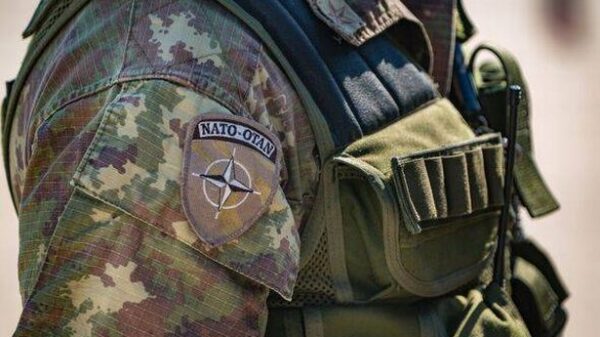
The Russian strategy appears aimed at undermining European support for Ukraine while creating uncertainty regarding the NATO alliance. The recent US national security strategy adds to this narrative, serving as a tool in an information war aimed at influencing public opinion in both the United States and Europe.
The reaction in Europe echoes previous responses to US officials’ statements. The fallout from the strategy document resembles the shock following a speech by US Vice President JD Vance at the Munich Security Conference earlier this year. Observers suggest that such remarks from American leaders bolster Russian morale, especially in light of Trump’s earlier public criticisms of Zelensky.
As Zelensky seeks to reinforce support from European leaders during his visits to London and Brussels, Russian messaging has intensified. On Russian state television, political scientist Sergey Karaganov suggested that Russia is “at war with Europe, not with a miserable, pitiful, misled Ukraine.” Although Karaganov clarified that he does not speak for Putin, his comments reflect a broader aggressive stance emanating from the Kremlin.
Ahead of a meeting with Trump’s special envoy Steve Witkoff and his son-in-law Jared Kushner, Putin indicated that Russia is “ready right now” for war with Europe, though he claimed there were no plans to initiate conflict. His rhetoric underscores a desire to instill fear in European nations and signal the seriousness of Russia’s military posture.
The current climate highlights the precarious state of transatlantic relations, with Trump’s rhetoric potentially providing Moscow with new leverage in its geopolitical maneuvers. As the situation evolves, the implications for European unity and support for Ukraine remain significant, with both sides navigating a landscape rife with tension and uncertainty.