









































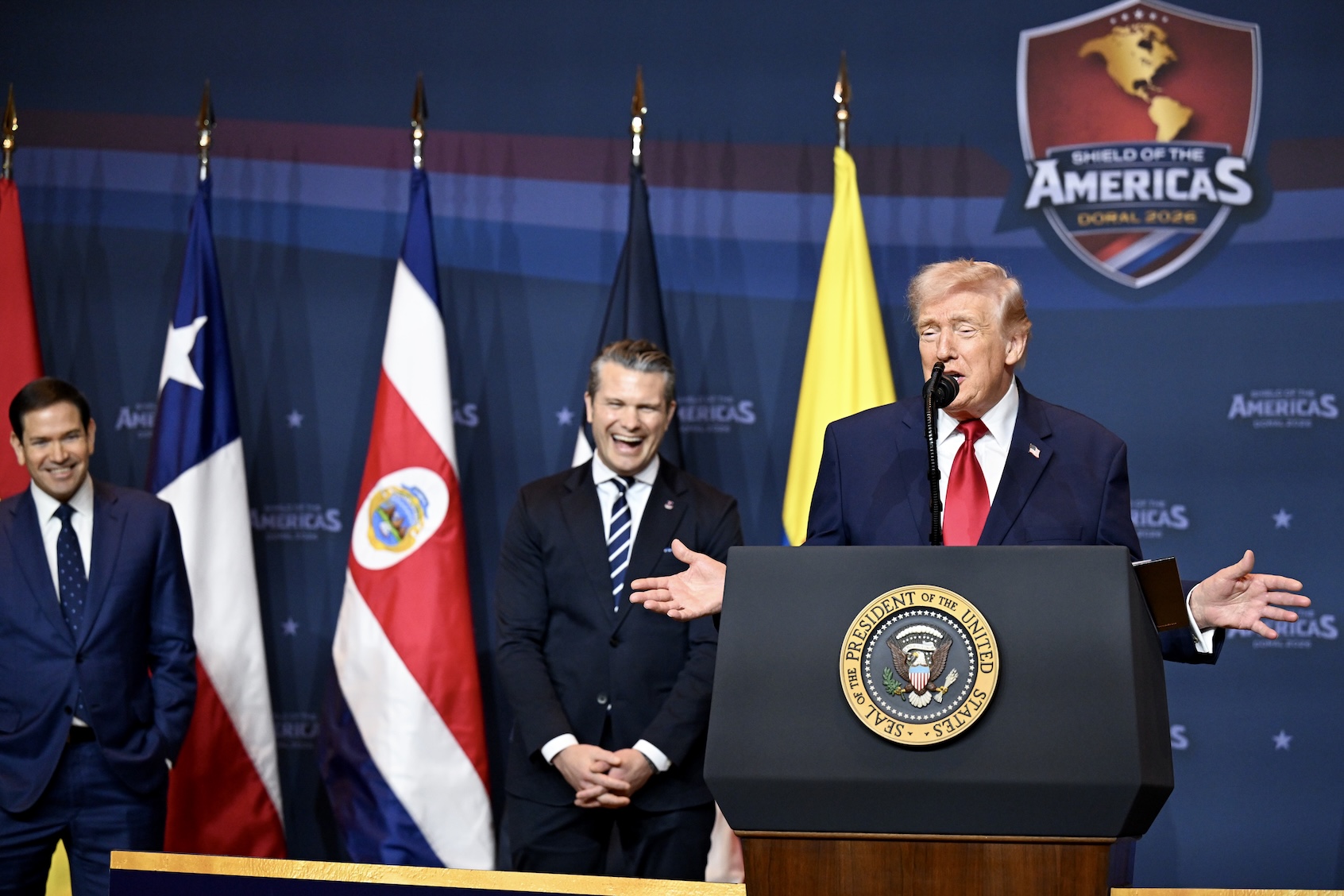
President Donald Trump has faced significant backlash following recent military actions against Iran, with critics arguing that the ongoing conflict reveals deeper flaws within his administration. During a Pentagon press conference, Pete Hegseth, a prominent figure in the MAGA sphere, proclaimed, “America is winning,” amidst rising concerns about the consequences of the U.S. military involvement. This statement came as the United States grapples with the aftermath of a missile strike that reportedly killed over 150 children at a girls’ school in southern Iran on February 28, 2024.
The Pentagon’s recent propaganda initiatives, including videos featuring unlicensed clips from popular media, have faced scrutiny for their portrayal of the conflict. Critics note that these efforts aim to distract from domestic issues, such as the controversial crackdown on immigration and the stagnating economy. While some within the administration assert that the U.S. is successfully confronting Iran, the reality on the ground tells a different story.
The military strategy appears to hinge on dismantling Iran’s military capabilities before the U.S. and its allies exhaust their own resources. Experts express concern that the U.S. is racing against time to neutralize Iran’s extensive arsenal of ballistic missiles. According to a survey conducted by researchers at William & Mary and the University of Georgia, nearly 87 percent of international relations scholars oppose the U.S. decision to engage militarily, believing it could render the U.S. less secure.
Domestic and International Repercussions
The ramifications of this conflict are not limited to international relations. Financial markets have reacted negatively, with crude oil prices surging from under $70 per barrel to over $90, impacting American consumers. Gasoline prices in the U.S. have also risen above levels seen prior to the 2024 election, creating anxiety within Trump’s administration regarding public sentiment.
Critics suggest that this military engagement is not just a tactical decision but a desperate attempt by the Trump administration to shift the narrative away from pressing domestic issues. Marc Lynch, a scholar at George Washington University, points out that the Gulf states, initially supportive of Trump, now perceive a threat from U.S. actions that may leave them vulnerable to regional instability.
While the administration attempts to project an image of strength, the reality reflects a troubling disconnect. Military experts remain divided on the effectiveness of U.S. strategy, with many warning that the current approach could lead to further complications.
Political Implications and Future Considerations
The political landscape is shifting as Republican lawmakers become increasingly uneasy about the rising costs of conflict. Members of Congress are beginning to voice concerns over the financial implications of Trump’s Iran strategy, suggesting that funds allocated for military efforts could have been better used to support domestic initiatives like healthcare subsidies.
As the Trump administration continues to assert that “America is winning,” the reality of the situation suggests otherwise. Many observers believe that the current trajectory is unsustainable and fraught with potential pitfalls. The ongoing conflict, characterized by its unclear objectives and lack of a coherent strategy, raises questions about the future of U.S. foreign policy in the region.
In conclusion, while the Trump administration seeks to frame its military actions as a show of strength, the underlying weaknesses are becoming increasingly apparent. The situation in Iran highlights the complexities of military engagement and the potential for unintended consequences that could further destabilize the region and impact U.S. interests abroad.
















