



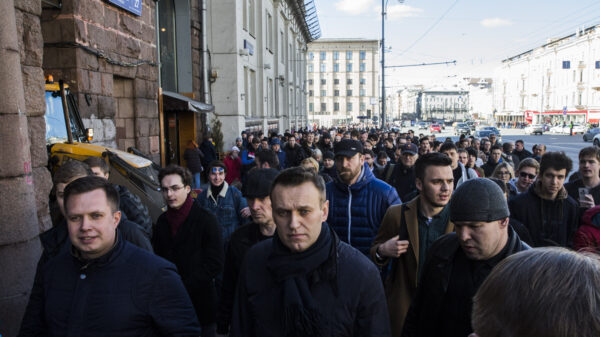

































The Supreme Court of Russia has classified the opposition leader Alexei Navalny’s foundation, ACF Inc., as a terrorist organization following a closed-door ruling on October 22, 2025. This decision arose from a petition by the Prosecutor General’s Office, which argued that ACF’s activities promote and support terrorism under the country’s anti-terrorism laws.
ACF Inc., based in the United States, is known for investigating corruption among high-ranking Russian officials. The foundation has previously exposed claims involving former Prime Minister Dmitry Medvedev, alleging the misuse of billions of state resources for personal luxury properties. The organization aims to shed light on corruption, releasing detailed reports that have gained millions of views. The ruling marks a significant escalation in Russia’s ongoing efforts to suppress dissent and silence opposition voices.
Impact of the Ruling on Navalny’s Legacy
The Supreme Court’s designation of ACF as a terrorist organization carries severe implications. Anyone associated with ACF could face criminal prosecution, which may result in harsh penalties, including life imprisonment. This ruling follows a pattern of targeting Navalny’s legacy, notably after his controversial death in 2021, which his widow, Yulia Navalnaya, claims was orchestrated under orders from President Vladimir Putin. She asserts that the authorities are seeking to dismantle her husband’s legacy and eliminate any remaining opposition.
The Anti-Corruption Foundation is not new to being labeled as undesirable. It succeeded the original organization, FBK, which was designated as a “foreign agent” in 2019 and subsequently classified as an “undesirable organization” in 2021. These classifications have allowed the government to freeze assets and restrict activities associated with Navalny and his supporters.
International Responses and Legal Concerns
Amnesty International has condemned the Russian government’s actions, asserting that the anti-terrorism laws are often used to silence critics. The organization emphasizes that the terms “terrorism” and “extremism” remain poorly defined in international law, allowing for broad interpretations that can jeopardize the rights of countless individuals.
Marie Struthers, Amnesty International’s Director for Eastern Europe and Central Asia, stated that the Kremlin’s campaign against Navalny has reached alarming levels. She noted that merely posting a photograph of Navalny could now lead to severe personal consequences, including arrest and imprisonment. Struthers called for an independent international investigation into the treatment of Navalny while in custody and urged the Russian authorities to stop weaponizing anti-terrorism laws against dissenters.
Legal experts, including Yevgeny Smirnov from the project Perviy Otdel, indicate that this ruling allows the government to impose significant restrictions on Navalny’s supporters, including asset freezes and difficulties in maintaining bank accounts internationally. The decision marks a crucial moment in Russia’s ongoing struggle between government authority and political dissent, reflecting broader challenges for human rights and freedom of expression in the country.
As the situation develops, Navalny’s team has vowed to continue their work, stating their commitment to uncovering the truth and supporting political prisoners. The implications of the Supreme Court’s ruling will likely resonate beyond Russia, attracting international scrutiny and potential diplomatic repercussions.