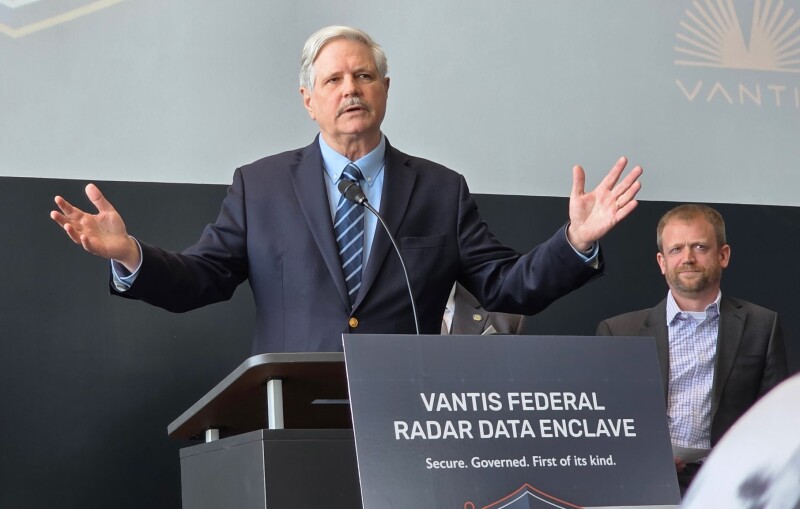
North Dakota is set to enhance its position in the unmanned aerial systems (UAS) sector with the launch of the Vantis Federal Radar Data Enclave. Senator John Hoeven announced this significant development during a press conference at the University of North Dakota on February 27, 2024. This initiative aims to solidify the state as a leader in the UAS ecosystem in the United States.
Hoeven emphasized that the activation of this radar data enclave provides North Dakota with a substantial competitive advantage. “It puts us ahead of anyone else in the country in a big way,” he stated, noting the extensive work required for other states to replicate this achievement.
Key Features of the Vantis Radar Data Enclave
The Vantis Federal Radar Data Enclave represents a secure integration of unfiltered radar data from the Federal Aviation Administration (FAA) with the Vantis system at the Northern Plains UAS Test Site. This site is noteworthy as it is the first non-federal entity in the nation granted access to the FAA’s unfiltered radar data feed. The initiative follows the FAA reauthorization bill passed in 2024, which included mandates for evaluating how radar data could support UAS integration into the national airspace.
Since the announcement of the partnership between the FAA and the Northern Plains UAS Test Site, preparations have been underway to establish the necessary systems and technology to utilize this data effectively. Hoeven noted that the setup process took nearly two years to complete.
The enclave offers three primary advantages for North Dakota’s UAS landscape. The first advantage is the facilitation of statewide beyond-visual-line-of-sight (BVLOS) UAS flights, which will become more frequent as a result. This capability is crucial for both commercial and military applications.
Implications for National Security and Research
The second significant benefit of the enclave is its contribution to addressing counter-drone and national security challenges. Hoeven highlighted the importance of the Point Defense Battle Lab at the Grand Forks Air Force Base, which focuses on countering small UAS threats. Additionally, the Technology Readiness Experimentation program (T-REX) at Camp Grafton will leverage the capabilities of the enclave, with operations set to commence in August 2024.
Furthermore, North Dakota is positioning itself as a vital location for practicing counter-drone technology, especially in preparation for major events such as the upcoming 2026 World Cup and the celebrations for America’s 250th anniversary.
The third advantage of the Vantis Federal Radar Data Enclave lies in the new research and development opportunities it will create in the UAS field. Hoeven explained that this initiative will enable drones to operate in the national airspace for various military and civilian purposes, allowing for diverse flight scenarios. This development is expected to benefit both large corporations and emerging companies in the UAS sector.
“It helps the military find solutions and it helps these young companies get going,” Hoeven remarked, emphasizing the dual benefits of enhanced military capabilities and support for innovation.
Overall, the activation of the Vantis Federal Radar Data Enclave marks a pivotal moment for North Dakota, positioning it as a frontrunner in UAS technology and integration within the national airspace. As the state continues to develop its UAS ecosystem, it stands to attract significant investment and talent, paving the way for future advancements in this rapidly evolving industry.