






































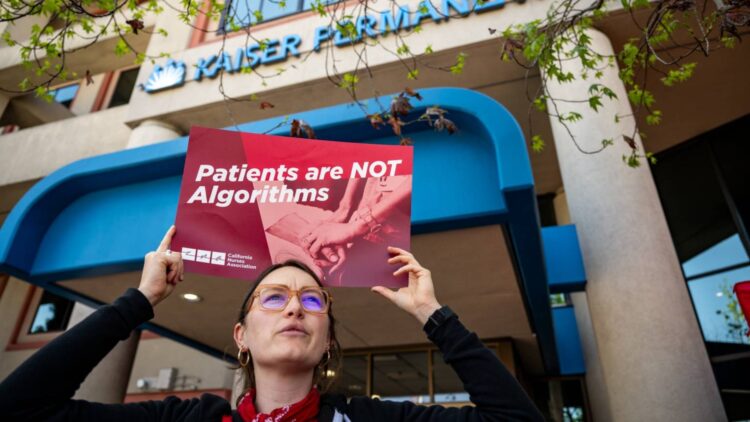
On November 18, 2025, nurses from the New York State Nurses Association (NYSNA) rallied at City Hall to voice their concerns about the increasing integration of artificial intelligence (AI) in hospital settings. This event coincided with their testimony before the city council regarding hospital safety and the overall state of nursing in New York City. The rally highlighted a growing tension between technological advancements in healthcare and the need for improved patient care.
Nancy Hagans, president of NYSNA and a nurse at Maimonides Medical Center, emphasized the need for hospitals to prioritize patient safety over financial gains. In her statement, she criticized hospitals’ focus on AI investments, stating, “Now is the time for hospitals to step up and take patient safety seriously. We have seen hospitals like Mount Sinai try to obscure the extent to which they have prioritized their profit-making enterprises over the patients of this city. We are here to say that enough is enough.”
The nurses have created a website, NYC Hospital Greed, to shed light on what they perceive as poor working conditions and safety issues within the city’s hospitals. They are calling on private hospitals, including Mount Sinai, Montefiore, and New York-Presbyterian, to redirect their funding from AI projects towards enhancing patient care. Hagans further elaborated on the challenges posed by the current healthcare environment, particularly referencing pressures from the previous federal administration.
Concerns Over AI Implementation
The nurses’ rally is part of a broader movement advocating for the proper allocation of resources in healthcare. Hagans remarked on the dual challenges facing nurses: “The first front is against the [previous] federal administration and its attacks on our most vulnerable patients and healthcare funding. The second front is against the private hospitals in our city, which are fighting against all the achievements nurses have made to stabilize the workforce and improve and protect patient care.”
Maimonides Medical Center defended their use of AI, stating that they employ a rigorous review process involving direct input from healthcare professionals before implementing any new technology. They expressed that AI can enhance clinical outcomes and patient experiences, but always under the supervision of qualified doctors and nurses.
In contrast, New York-Presbyterian indicated their interest in innovations that could improve diagnostics and treatment outcomes, asserting that they strive to deliver compassionate care alongside advancements in technology.
Nurses Share Personal Experiences
During the council meeting, Denash Forbes, a nurse from Mount Sinai West, shared her concerns about the hospital’s substantial investment of $100 billion in AI technologies, which she claims occurred without sufficient involvement from nursing staff. “The nurses were not involved in this discussion and had no role in creating the facility,” Forbes stated. She highlighted the consequences of such decisions, explaining that nurses are often left to manage the outputs of AI systems like Sofiya, leading to increased workloads and the risk of errors.
Forbes warned that reliance on AI without adequate nursing input could amplify biases and create significant challenges in patient care. “When hospitals try to make cuts like this in safe patient care, mistakes are made, biases are amplified, and often more work is created,” she concluded.
As the integration of AI into healthcare continues to expand, the voices of nurses like Hagans and Forbes underscore the critical need for balance between technological advancements and the core mission of healthcare: ensuring the well-being of patients. The future of patient care in New York City may depend on how these issues are addressed in the coming months.