




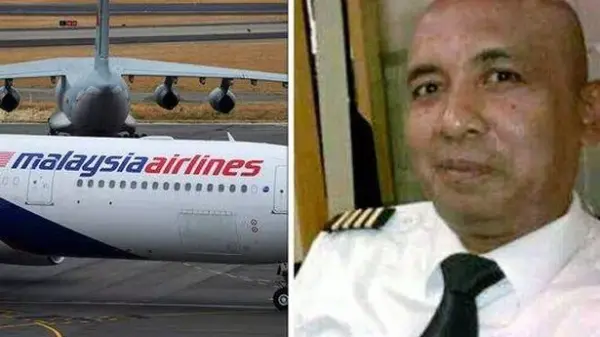


































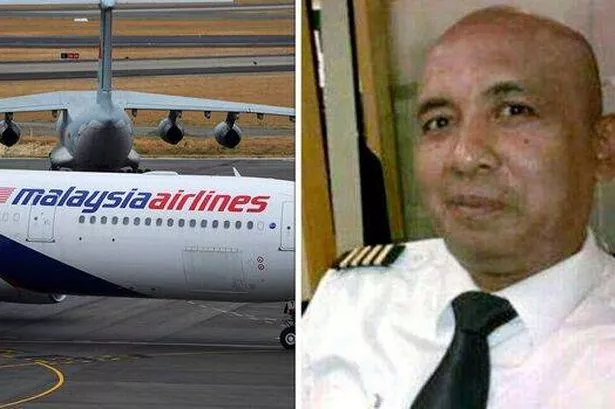
The search for Malaysia Airlines Flight MH370, which vanished on March 8, 2014, with 239 passengers and crew aboard, is set to resume with a new mission. The Boeing 777 disappeared without a trace while flying from Kuala Lumpur to Beijing, and despite extensive searches, the aircraft has never been found. The latest effort, led by British exploration company Ocean Infinity, is scheduled to begin on December 30, 2023, and will focus on the Southern Indian Ocean, where experts believe the plane ultimately crashed.
The last communication from Captain Zaharie Ahmad Shah occurred approximately two hours after takeoff, when he transmitted the words, “Goodnight Malaysia three seven zero.” This brief message has puzzled investigators for years and led to various theories surrounding the plane’s disappearance. The unsettling silence following this communication has fueled speculation, with some suggesting the plane was intentionally brought down by hostile actors, including allegations against various foreign governments.
As the search continues, conspiracy theories persist. The new mission will operate under a “no find, no fee” agreement, which incentivizes thorough exploration of the seabed using advanced technology. This includes robotics capable of scanning areas that were previously unreachable. While previous searches have covered vast expanses, the hope is that fresh methodologies will yield new insights.
One of the most perplexing aspects of the MH370 case is how a large commercial aircraft could vanish in an age characterized by advanced aviation tracking technologies. After entering Vietnamese airspace that night, the plane’s systems appeared to shut down, leading to the theory that its internal controls were deliberately disabled. Despite these challenges, data from various sources—including Automatic Dependent Surveillance-Broadcast (ADS-B), radar, and Aircraft Communications Addressing and Reporting System (ACARS)—has provided crucial insights into the flight’s trajectory.
According to research conducted by Simon Maskell, a professor of autonomous systems at the University of Liverpool, the analysis of Weak Signal Propagation Reporter (WSPR) data has helped rule out numerous unsubstantiated theories about the plane’s fate. Maskell’s team analyzed extensive records and identified three plausible scenarios regarding the aircraft’s disappearance.
“The analysis we did indicated that there are three explanations that appear to be approximately equally consistent with the information we had at the time,” Maskell stated. “There is a chance that a freak accident occurred and the crew were unable to communicate or land the aircraft elsewhere, or it involved a murder-suicide with the murderer alive when the descent occurred.”
The murder-suicide theory gained traction after authorities discovered a flight simulator at Captain Shah’s residence, with a route resembling MH370’s last known path. While no definitive evidence suggests that Shah or his co-pilot intended to sabotage the flight, the theory has remained a focal point of speculation due to the lack of convincing alternatives.
Maskell pointed out that previous extensive searches, including a three-year operation led by Australia covering over 120 square kilometers of ocean, have yet to yield results. He noted, “Given the plane has not been found and the area that has been searched is underpinned by assumptions that involve there being no human intervention during the descent, it now seems more plausible that there was human intervention during the descent.”
The ongoing investigation underscores the complexity of the MH370 case, as experts seek to derive evidence-based conclusions rather than entertain conspiracy theories. As the new search initiative approaches, the aviation community and the families of the missing continue to hope for closure.
Despite the uncertainty surrounding the new search, the absence of conclusive answers more than a decade after the aircraft’s disappearance highlights the intricate nature of this ongoing mystery. “While our calculations indicate that an accident would be a commensurately rare event compared to a successful attempt at murder-suicide,” Maskell remarked, “all the explanations imply that something like this happens very rarely indeed.”
As the search resumes, the world watches closely, hopeful that this latest effort may finally uncover the truth behind the disappearance of MH370.