





































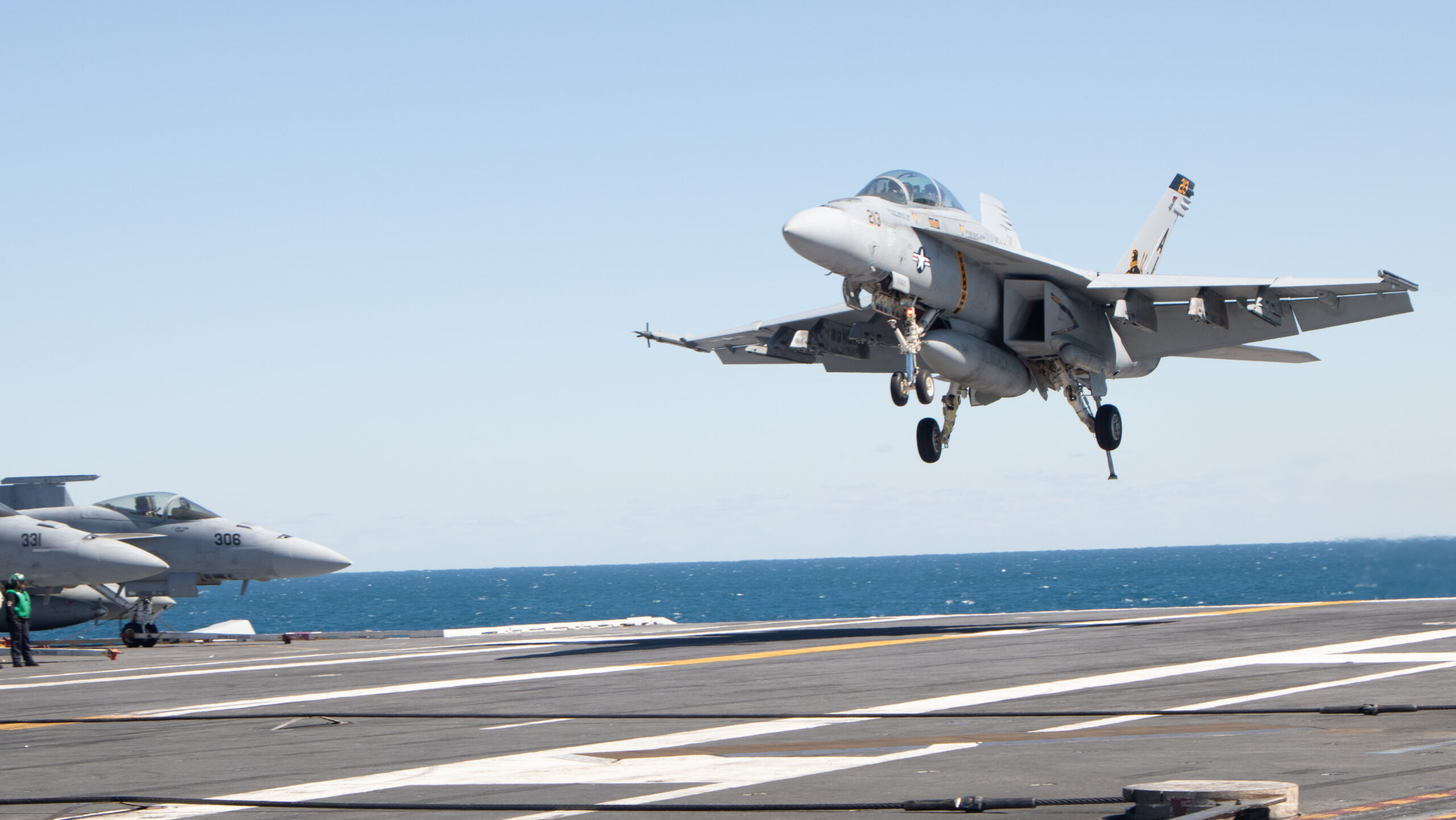
The United States Navy is confronted with a critical challenge as it seeks to enhance its carrier air wings with the F/A-XX fighter aircraft. The USS Gerald R. Ford, the Navy’s largest and most advanced aircraft carrier, has recently arrived in the US Southern Command area after being ordered to move from the Mediterranean by former President Donald Trump. Accompanying the Ford is Carrier Air Wing 8, featuring four squadrons equipped with fighter jets and electronic warfare planes that will support strike operations and monitor activities identified by the Pentagon as drug trafficking.
While the Navy has achieved notable success in operations such as Operation Rough Rider, concerns are rising regarding the age of the aircraft currently in service. The urgency for a modern solution is underscored by the comments of Adm. James Kilby, the acting Chief of Naval Operations, who stated, “We need F/A-XX in the United States Navy. We’re talking about a fight in the Pacific.” Despite this clear need, the Pentagon faces indecision over the future of the program, which is critical to maintaining naval superiority.
Challenges Ahead for Navy Aviation
The Navy’s struggle to secure funding and resources for the F/A-XX program comes at a time when China is rapidly advancing its military capabilities. The Chinese navy is currently testing its own new aircraft carrier and has developed at least two stealth aircraft. As the need for superior naval aviation becomes increasingly pressing, delays in the F/A-XX program could have significant implications for the United States’ military readiness.
The F/A-XX fighter is designed to provide enhanced survivability and range, equipped with advanced missiles and aerial refueling capabilities that would allow for long-range strikes. Historically, naval aviation has evolved in response to emerging threats, such as the improvements made to the Grumman F6F Hellcat during World War II. The F/A-XX aims to build upon this legacy by extending the operational range of carrier-based aircraft.
The Navy has already laid the groundwork for this transformation, including the development of longer-range missiles and the introduction of the MQ-25 Stingray drone, set to join the fleet in 2026. The MQ-25 will provide essential air-to-air refueling capabilities, enabling strike fighters to expand their mission radius and duration significantly. This strategic enhancement is crucial, as it allows carrier aircraft to maintain operational flexibility even as they face new challenges.
Future of Naval Aviation at Stake
The F/A-XX is projected to have a combat radius exceeding 750 nautical miles, an increase of approximately 25 percent over existing aircraft like the F-35C and F/A-18EF. With the potential integration of advanced missiles such as the SM-6, which boasts a range of approximately 300 miles, the F/A-XX could enable strikes up to 1,500 miles from the carrier. This capability would allow for operations from a broader area of the ocean, greatly enhancing the tactical options available to naval commanders.
As production of the F/A-18EF is scheduled to cease in 2027, the transition to the F/A-XX becomes increasingly urgent. Both Boeing and Northrop Grumman have developed mature prototypes, and the necessary supply chains are in place. A decisive move towards engineering and manufacturing design would initiate a timeline for low-rate initial production and the first flight of the F/A-XX, potentially as early as 2028 or 2029.
Failure to commit to the F/A-XX program in a timely manner could jeopardize the United States’ naval aviation capabilities. The Pentagon must prioritize this development to ensure that the Navy remains equipped to face emerging threats. With global military dynamics shifting rapidly, the time for decisive action is now. As highlighted by Rebecca Grant, a Senior Fellow at the Lexington Institute, the future of naval aviation hangs in the balance, demanding attention from military leadership.