









































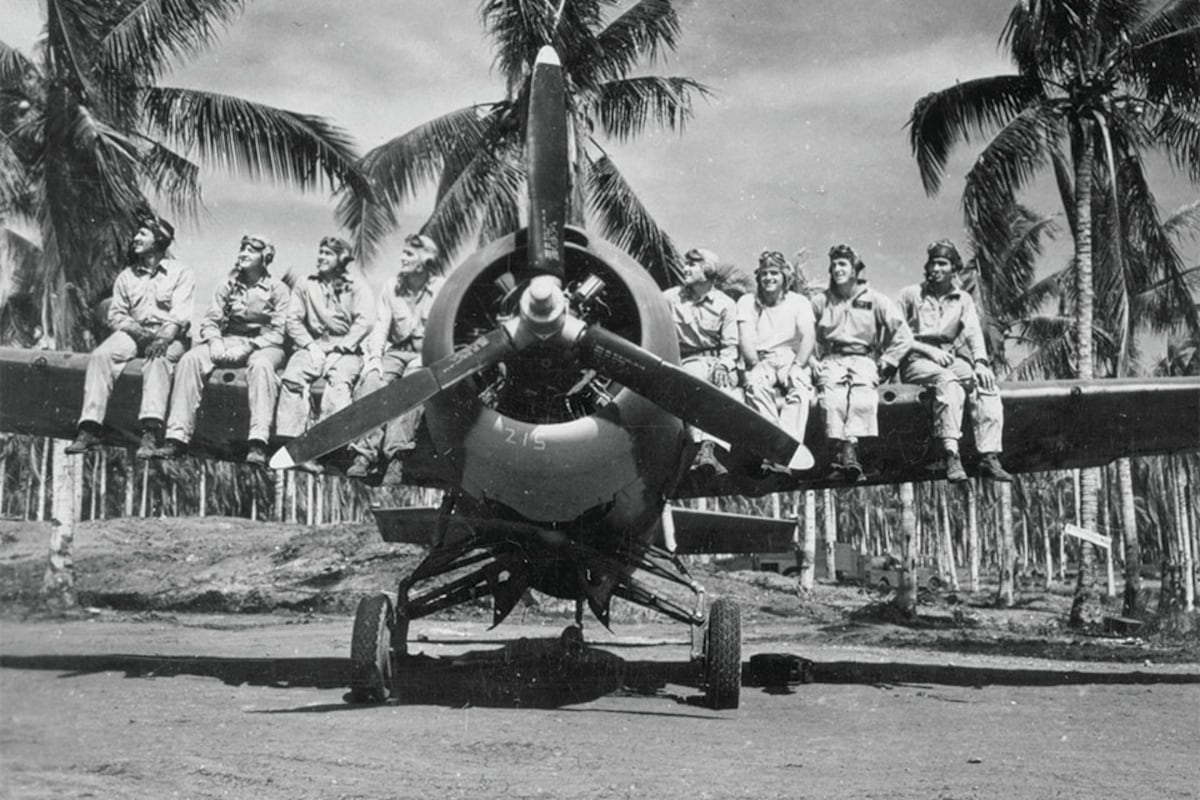
On January 1, 2003, the world lost a remarkable figure in military history, Joseph Jacob Foss, a Marine Corps aviator renowned for shooting down a record 26 enemy aircraft during World War II. Born on April 7, 1915, in Sioux Falls, South Dakota, Foss’s legacy is marked not only by his combat achievements but also by his post-war contributions to public service and aviation.
Foss’s military journey began after he enlisted in the Marine Corps Reserve in June 1940. He completed flight training in March 1941, shortly before the United States entered the war. His first operational assignment came in August 1942, when he joined Marine Fighter Squadron VMF-121 and deployed to the strategic battleground of Guadalcanal. The squadron operated from the makeshift airfield known as Henderson Field, which was often under heavy enemy fire.
Foss’s combat debut was intense. On October 13, 1942, he shot down his first enemy aircraft, a Mitsubishi A6M2 Zero, but not without sustaining damage himself. He demonstrated remarkable resilience, managing to land his aircraft despite being shot up. His performance quickly escalated, and within a week, he had become an ace, achieving five confirmed aerial victories.
Record-Breaking Career
Throughout his formidable career, Foss consistently outperformed his adversaries. He recorded a staggering tally of enemy aircraft shot down, including multiple Zeros and other Japanese fighters. His successful missions included an extraordinary five kills in a single day on October 25, 1942. This aggressive pursuit in the air solidified his status as the top-scoring Marine aviator, a title that remains unchallenged to this day.
The challenges Foss faced extended beyond aerial combat. On one occasion, after being shot down, he found himself stranded in the ocean, surrounded by sharks. He recalled, “I did more praying that afternoon out there than I ever did in my life.” With resourcefulness and determination, he managed to swim to safety and returned to combat just days later.
In recognition of his bravery and skill, Foss received the Medal of Honor from President Franklin D. Roosevelt on May 18, 1943. His heroics were highlighted in the June 7, 1943, issue of *Life* magazine, bringing further attention to his accomplishments.
After the war, Foss transitioned into a life of public service. He resigned from the Marine Corps Reserves in 1946 and went on to serve in various capacities, including as a member of the South Dakota House of Representatives and ultimately as the state’s governor. He was elected governor in 1954 and re-elected in 1956, where he focused on issues affecting veterans and public welfare.
A Lifelong Legacy
Foss’s contributions to sports and aviation were equally notable. He served as the first commissioner of the American Football League from 1959 to 1966 and hosted the television program *American Sportsman: Joe Foss* from 1966 to 1974. His passion for aviation led to his induction into the National Aviation Hall of Fame in 1984.
Throughout his life, Foss remained a staunch advocate for veterans’ rights. His presidency of the National Rifle Association from 1988 to 1990 showcased his commitment to public service and advocacy for Second Amendment rights.
Joseph Foss passed away from a cerebral aneurysm in Scottsdale, Arizona, on January 1, 2003. His remains were interred at Arlington National Cemetery, a fitting final resting place for a man whose life was dedicated to serving his country.
Foss’s legacy continues to inspire future generations of aviators and public servants. His remarkable story of bravery and resilience is a testament to the spirit of the Marine Corps and the sacrifices made during World War II.
















