









































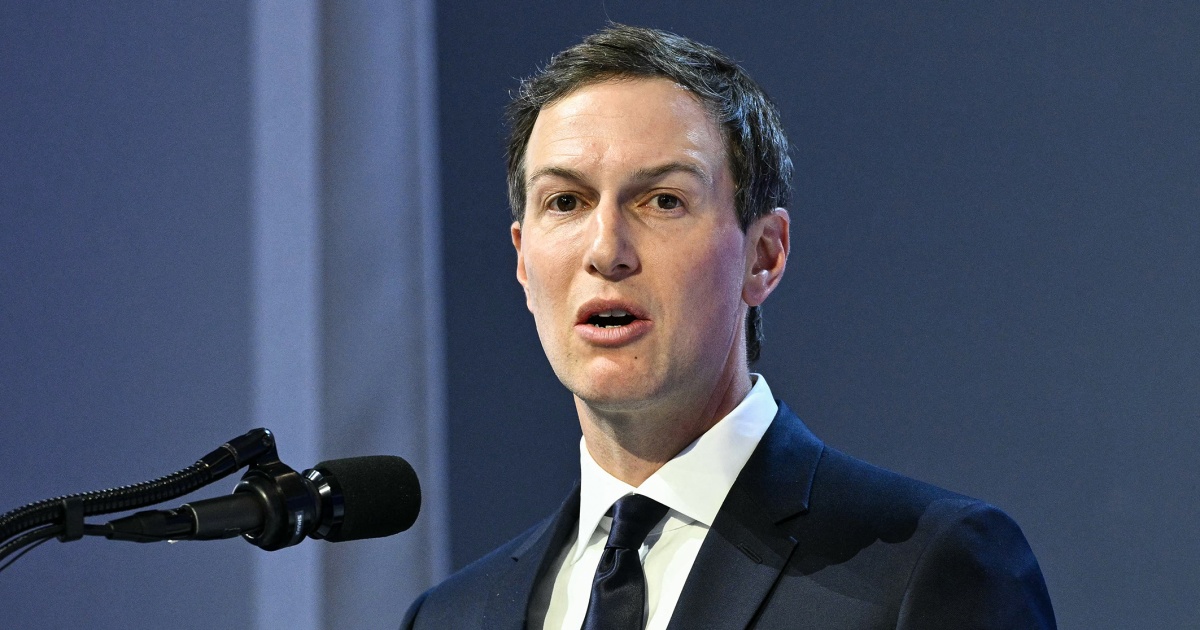
Jared Kushner, son-in-law of former President Donald Trump, has unveiled an ambitious vision for a revitalized Gaza during his address at the World Economic Forum in Davos. His proposal, dubbed “New Gaza,” features plans for high-rise towers and vibrant tourist beaches. This optimistic outlook starkly contrasts with the current realities faced by the region, which has been devastated by years of conflict.
Kushner emphasized that initial reconstruction efforts could begin within two to three years, stating, “We’ve already started removing the rubble and doing some of the demolition.” He presented a series of concept images showing futuristic developments and outlined zones designated for coastal tourism, residential areas, and advanced manufacturing. Despite these grand plans, the situation on the ground in Gaza remains dire.
As noted by the Palestinian Health Ministry, over 71,000 Palestinians have lost their lives due to ongoing violence, and hundreds of thousands of the enclave’s 2 million residents have been displaced, living in tents vulnerable to disease and harsh weather conditions. The blockade on construction materials continues, severely hampering recovery efforts, while Israeli airstrikes targeting Hamas persist.
Kushner’s proposal comes more than two years after the October 7, 2023, Hamas-led terrorist attacks that resulted in approximately 1,200 deaths and numerous kidnappings. The political landscape surrounding Gaza is complex, with Trump’s peace plan calling for the disarmament of Hamas and a gradual Israeli withdrawal. However, tangible progress toward these goals appears elusive.
During the presentation, Kushner asserted, “There is no Plan B,” emphasizing his determination to transform Gaza into a place of hope and opportunity. He projected that Gaza could achieve a GDP exceeding $10 billion by 2035. Nonetheless, skepticism abounds among those residing in the region. Ghassan Al-Tanani, who recently lost his brother in an airstrike, questioned, “Where is this so-called World Peace Council in Gaza?” His sentiment reflects a broader distrust in the viability of Kushner’s plans.
The United Nations Office for Project Services estimates that Gaza is burdened with over 60 million tons of rubble, which would take more than seven years to clear. This staggering amount highlights the enormity of the reconstruction task ahead. Kushner’s claims regarding the timeline and feasibility of recovery faced criticism, including from White House Deputy Press Secretary Anna Kelly, who dismissed the U.N. estimates as “laughable.”
Concerns also linger about whether Israel would support Kushner’s proposal, which envisions the establishment of a new port and airport in a territory currently under strict military control. Israeli officials have not publicly commented on the initiative. Analysts suggest that the construction of high-rise buildings could pose security risks for Israel, especially if they provided clear lines of sight to military installations.
Furthermore, Israeli Finance Minister Bezalel Smotrich has voiced intentions to reinforce Israeli control over Gaza, suggesting the establishment of a military government in the region. Kushner’s Board of Peace includes no Palestinian representatives, although he acknowledged the contributions of Ali Shaath, a former Palestinian planning minister, who is tasked with overseeing day-to-day governance in Gaza.
While Kushner’s plans may offer a vision for the future, the prevailing conditions in Gaza paint a different picture. The aspirations expressed in Davos may find it challenging to gain traction amidst a backdrop of ongoing violence and humanitarian crisis. As the situation evolves, the international community’s role in supporting peace and reconstruction will remain critical.
















