









































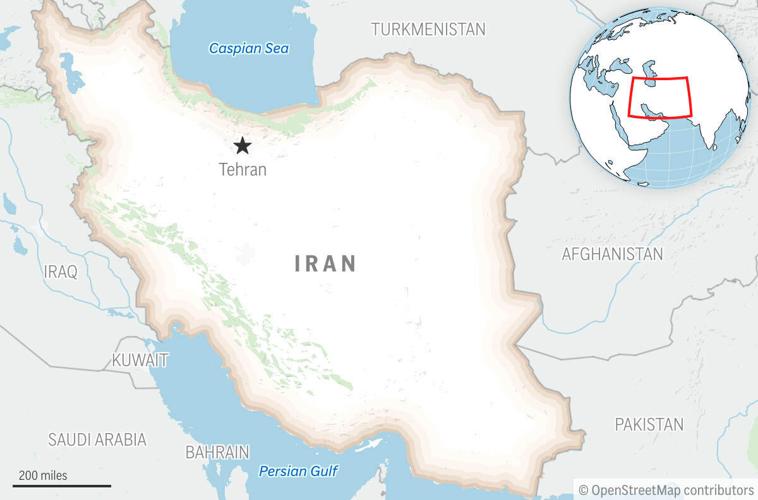
The death toll in Iran’s crackdown on protests has reached at least 5,002, according to the U.S.-based Human Rights Activists News Agency. Activists report that the toll includes 4,716 demonstrators, 203 government-affiliated individuals, 43 children, and 40 civilians not involved in the protests. Many more casualties are feared as the country experiences its most extensive internet blackout in history, which has now lasted over two weeks.
The protests, which began on December 28, 2023, have sparked significant unrest across Iran. The Iranian government reported a much lower death toll of 3,117, stating that 2,427 of those killed were civilians and security forces, while labeling the remaining fatalities as “terrorists.” Historically, the Iranian government has been criticized for underreporting deaths during periods of civil unrest.
Access to accurate information remains severely limited due to the Iranian authorities’ decision to cut off internet access on January 8. This has hindered efforts for journalists and human rights organizations to verify claims about the violence. The Associated Press has been unable to independently assess the death toll or the situation on the ground, where reports indicate journalists face restrictions when attempting to cover the protests.
Escalating Tensions with the United States
As the situation in Iran intensifies, tensions between the United States and Iran have escalated. U.S. President Donald Trump recently announced that an aircraft carrier group, including the USS Abraham Lincoln, is advancing towards the Middle East. Trump referred to this military deployment as a significant buildup, likening it to an “armada.” He stated that the ships are being moved “just in case” military action is deemed necessary.
In conjunction with this military movement, Trump has laid down two critical conditions regarding the protests: the killing of peaceful demonstrators and the potential for mass executions in Iran. The Iranian attorney general has described some detainees as “mohareb,” or “enemies of God,” a designation that carries the death penalty and has historically been used to justify mass executions.
The U.S. military’s repositioning in the region includes additional assets as tensions rise. A U.S. Navy official disclosed that the Lincoln strike group is currently located in the Indian Ocean. Trump has emphasized the seriousness of the situation, suggesting that any future military action would dwarf previous U.S. strikes against Iranian nuclear facilities.
Global Reactions and Implications
The international community is closely monitoring the situation in Iran. The United Kingdom’s Defense Ministry announced that its joint Eurofighter Typhoon fighter jet squadron with Qatar, 12 Squadron, has been deployed to the Persian Gulf for defensive purposes amid the rising regional tensions.
The ongoing protests and the significant death toll have drawn comparisons to the chaos that characterized Iran’s 1979 Islamic Revolution. As the unrest unfolds, the implications for both regional stability and international relations continue to grow.
As the situation develops, the potential for further violence and the impact on civilians remain pressing concerns, with activists warning that the death toll could rise significantly.
















