









































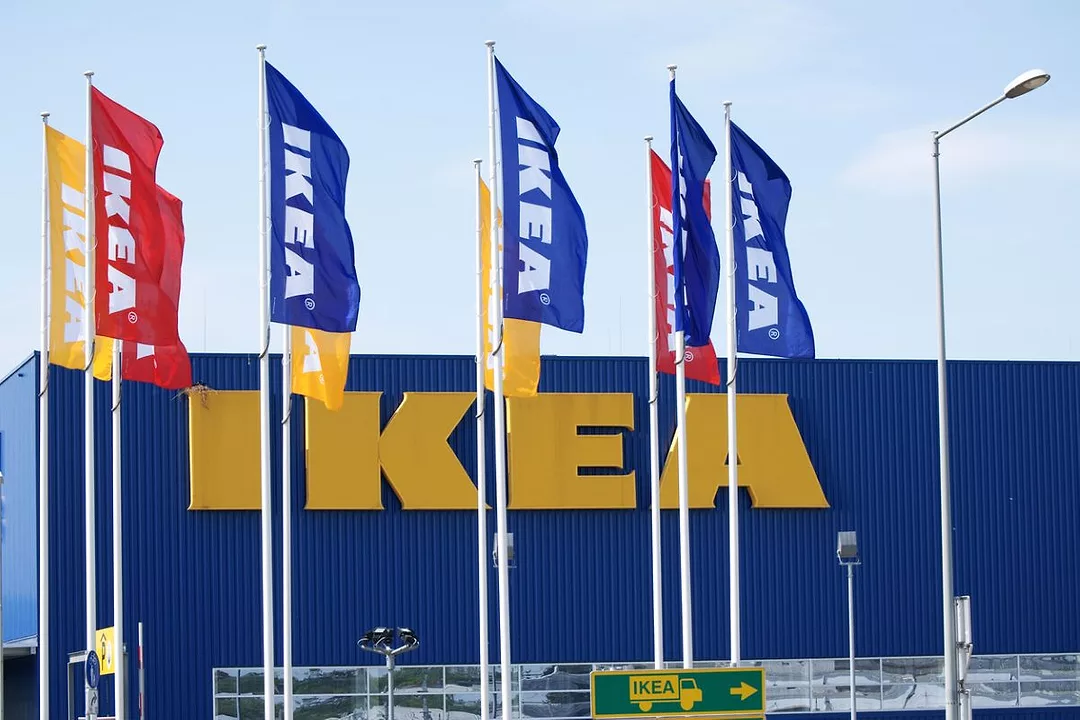
Sweden’s Ingka Group, the primary retailer for the IKEA brand, is implementing innovative solutions to reduce transport emissions in its supply chain. The company is utilizing boats on the Seine River in Paris to move goods to distribution points, from which electric vehicles (EVs) will deliver the products to customers. This strategy aligns with Ingka’s goal of achieving a 50% reduction in carbon dioxide equivalent (tCO2e) emissions by 2030 and reaching net zero emissions by 2050.
Ingka Group’s approach emphasizes operations in regions that offer regulatory support for transitioning to zero-emissions vehicles. According to Trellis.com, formerly known as GreenBiz, the retailer faces significant challenges in managing its Scope 3 emissions, which accounted for 98% of the 30 million tons of tCO2e emitted in the baseline year of 2016.
To meet its ambitious targets, Ingka is investing in electric and alternative-fuel vehicles. The company aims to increase the share of home deliveries made using zero-emission vehicles from 40% to 90% by 2028. Alongside this, Ingka is enhancing accessibility by establishing more pick-up locations closer to customers’ homes.
Transport-related emissions, which comprise a significant part of Ingka’s third-largest Scope 3 component, include delivery services and the travel of customers and employees. Although the company has achieved a modest reduction of just 13%—bringing transport-related emissions down to 2.3 million tCO2e—the figures indicate a slight rise in emissions between 2023 and 2024.
The transition plan set forth by Ingka calls for an additional 40% reduction by 2030, targeting a footprint of 1.6 million tCO2e. This ambitious aim is particularly notable considering that at least half of the world’s largest retailers do not have a formal net-zero target, according to Trellis’ Chasing Net Zero series.
For instance, Walmart, recognized as a leader in supply chain decarbonization, is struggling to meet its short-term commitments. Despite its extensive network of at least 100,000 supplier relationships, Walmart’s progress contrasts sharply with Ingka’s model, where the climate footprint is primarily derived from a more concentrated base of 1,500 suppliers. Remarkably, 81% of Ingka’s climate impact originates from IKEA foods and products.
As Ingka Group continues to innovate in its logistics and supply chain strategies, the company sets a precedent for other retailers grappling with similar sustainability challenges. By prioritizing zero-emission transportation solutions and leveraging regional regulatory benefits, Ingka aims to position itself as a leader in the transition towards a more sustainable retail future.
















