






































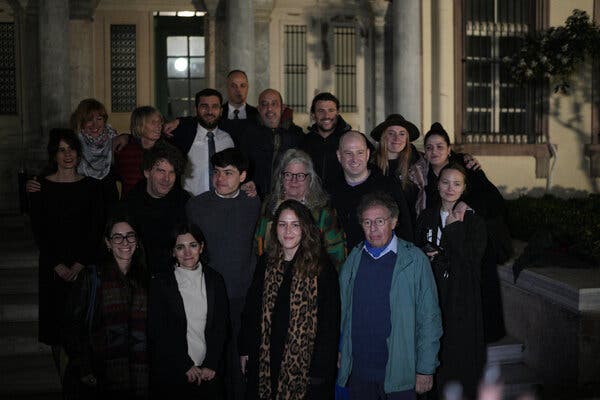
A Greek court acquitted a group of 24 humanitarian aid workers on March 14, 2024, who were previously charged with smuggling migrants. The court’s verdict, delivered in Lesbos, has been hailed by human rights advocates as a significant victory against what they describe as attempts to criminalize rescue efforts.
The defendants included prominent figures such as Syrian refugee and activist Sara Mardini. If convicted, they faced penalties of up to 20 years in prison on various charges, including facilitating illegal entry and membership in a criminal organization. This prosecution was part of a broader trend across Europe, where authorities have increasingly targeted aid workers in an effort to deter migration, especially in light of the humanitarian crisis that peaked from 2015 to 2016.
The island of Lesbos emerged as a critical location during that crisis, becoming a focal point for volunteers who provided assistance to migrants arriving by sea. The aid workers, including Mardini and her co-defendants, were associated with the now-defunct nonprofit Emergency Response Center International. Their work involved rescuing individuals from perilous situations at sea and aiding them upon arrival.
During the court proceedings, defense lawyers Zacharias Kesses and Evita Papakiriakidou argued that the defendants acted out of a humanitarian obligation rather than any intent to commit criminal acts. The criminal court agreed, stating that the mission of the aid workers was to provide assistance and save lives. Kesses described the ruling as a “courageous decision,” reflecting the court’s recognition of the humanitarian nature of their work.
Court officials did not immediately provide further comments on the verdict, as the judges have yet to issue a formal written statement. This acquittal is seen as a pivotal moment for humanitarian efforts in Greece and may influence the treatment of aid workers in future cases.
The outcome of this trial may also resonate beyond Greece, as various rights organizations continue to advocate for the protection of humanitarian workers worldwide. The case highlights the ongoing challenges faced by those dedicated to assisting migrants and raises critical questions about the legal frameworks surrounding search and rescue operations in Europe.
















