









































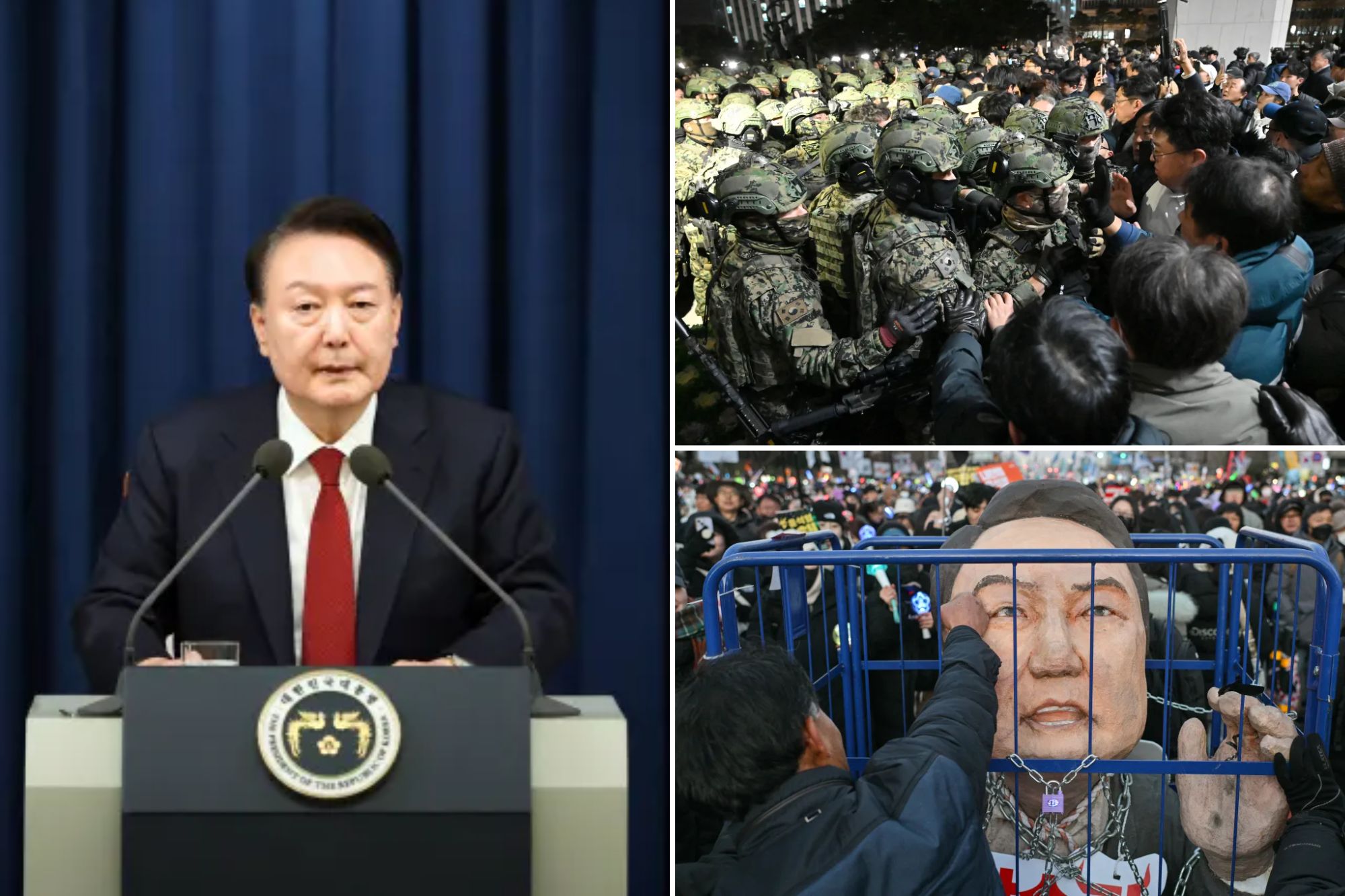
Former South Korean President Yoon Suk Yeol received a five-year prison sentence on March 15, 2024, following a court ruling connected to his controversial imposition of martial law. This verdict marks a significant legal milestone in Yoon’s ongoing legal battles, as it is the first of eight criminal trials he faces regarding the decree he issued in late 2024 and related allegations.
The Seoul Central District Court found Yoon guilty on multiple charges, including defiance against authorities attempting to detain him. The most serious charge against him involves accusations of leading a rebellion tied to the enforcement of martial law, which carries the potential for the death penalty. Despite the gravity of the situation, Yoon has not yet publicly responded to the court’s decision.
During the trial, an independent counsel had sought a ten-year prison sentence, arguing that Yoon’s actions warranted severe punishment. In response, Yoon’s defense team characterized these demands as politically motivated and lacking substantial legal grounds, claiming the proposed sentence was excessively harsh.
Yoon, who was impeached and subsequently removed from office, implemented martial law in December 2024. His decree prompted widespread public protests, with citizens demanding his resignation. Yoon defended his actions by asserting that his intention was not to establish prolonged military rule but rather to alert the public to the dangers posed by a parliament he deemed obstructive to his governance.
Investigators, however, perceived Yoon’s declaration as a maneuver to strengthen and extend his authority. As a result, he faces multiple charges, including rebellion and abuse of power, which have led to his current legal predicament.
This ruling is expected to have far-reaching implications for South Korean politics, as it underscores the intense scrutiny of leaders’ actions during times of national crisis. The case highlights the ongoing debate in the country regarding the limits of executive power and the responsibilities of elected officials.
As Yoon’s legal battles continue, it remains to be seen how this verdict will affect the political landscape in South Korea and the future of governance in the nation.
















