









































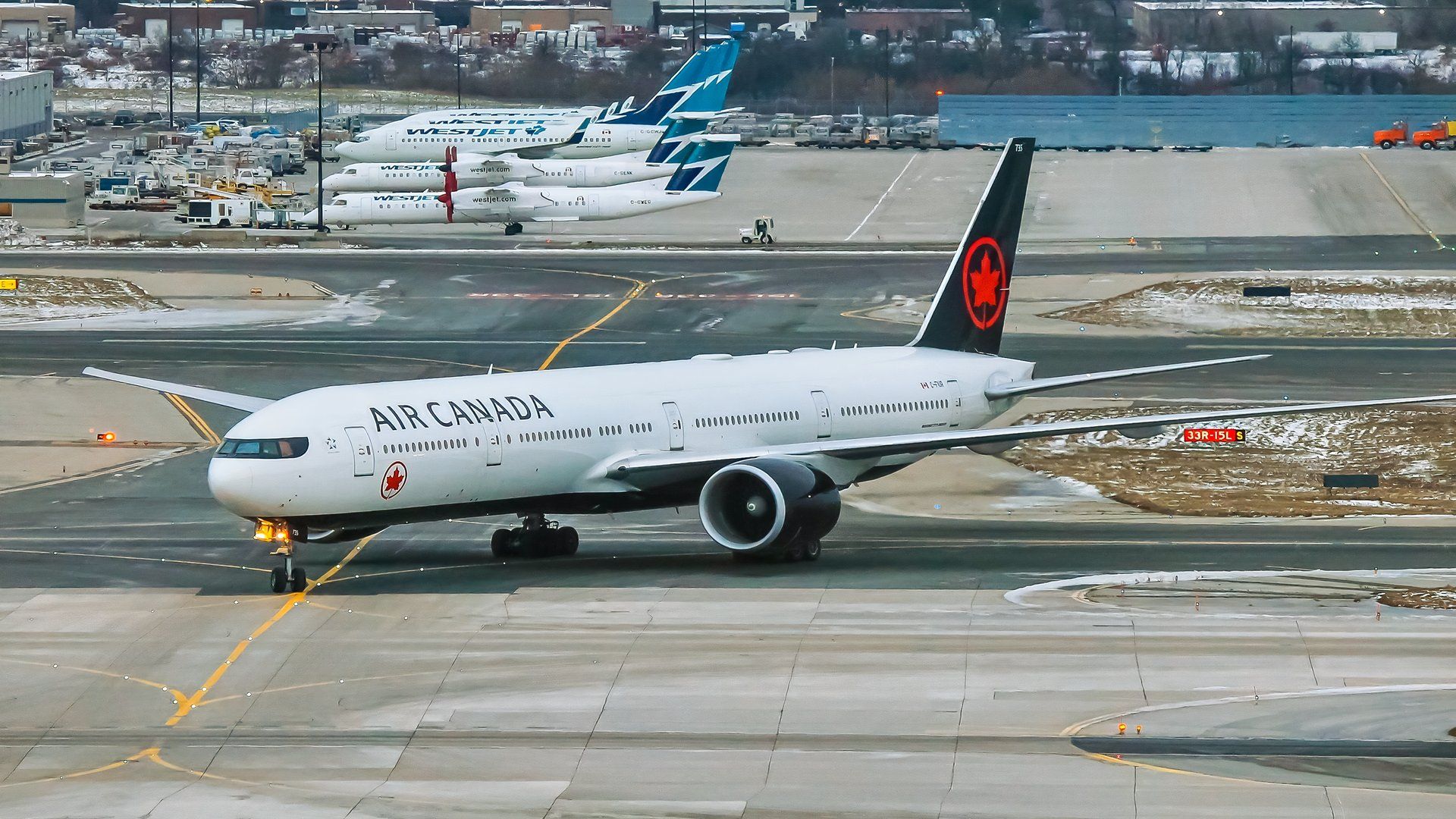
Air Canada has announced plans to introduce ten new ultra-long-haul routes in 2026, expanding its global reach and solidifying its position as the world’s 11th-largest airline for long-haul travel. This expansion will significantly enhance the carrier’s operations, particularly from major Canadian cities such as Toronto and Montreal, where it holds a dominant market share of 39% and 45%, respectively, in long-haul flights.
The airline’s upcoming routes will feature some of the longest nonstop flights, with durations reaching up to an impressive 17 hours and 5 minutes. These long-haul services will predominantly utilize the Airbus A321XLR and the newly ordered A350-1000, which is expected to replace older aircraft models in Air Canada’s fleet.
Details of the New Routes
The following routes are set to be among the longest nonstop flights in Air Canada’s schedule for 2026:
– **Toronto to Delhi**: Up to 17 hours and 5 minutes, operating daily year-round on the 777-200LR.
– **Vancouver to Singapore**: Approximately 16 hours and 45 minutes, with four to five weekly services year-round on the 787-9.
– **Delhi to Montreal**: Scheduled for 16 hours and 30 minutes, operating three to five weekly during the winter months on the 787-9.
– **Vancouver to Bangkok**: Up to 16 hours and 25 minutes, with three weekly to daily services year-round on the 787-9.
– **Toronto to Shanghai**: Resuming on June 3, 2026, this route will take approximately 16 hours and 10 minutes, with four weekly flights year-round on the 787-9.
Other notable routes include Vancouver to Sydney at 15 hours and 55 minutes, and Toronto to Seoul Incheon, which will operate five to daily weekly with a flight time of 15 hours and 25 minutes.
Impact of New Routes on Air Canada
Air Canada’s decision to expand its long-haul offerings comes at a time when the demand for international travel is rebounding. The airline’s focus on key markets, such as Toronto to Delhi, which recorded nearly 712,000 passengers in 2025, demonstrates its strategic approach to capitalize on high-traffic routes. The Toronto-Delhi route was the most-trafficked market between North America and India, with an average of 2,000 passengers flying daily.
The prolonged flight durations have been necessitated by the need to avoid Russian airspace, particularly for flights returning from India. Prior to the conflict in Ukraine, the block time for this route was approximately 15 hours and 20 minutes, but detours have increased this to 17 hours and 5 minutes, surpassing Delta Air Lines’ longest offering but still falling short of United Airlines’ record.
Air Canada’s service to Dubai has also been a consistent part of its operations since 2015, primarily due to its partnership with Emirates. The airline facilitates connections for passengers traveling through Dubai, reinforcing its role in the region’s aviation landscape.
The introduction of these new ultra-long routes positions Air Canada to meet the growing demand for international travel while enhancing its competitive edge in the long-haul market. As the airline continues to adapt to changing travel patterns, its investments in modern aircraft and strategic route planning are likely to yield significant returns in the coming years.
















