









































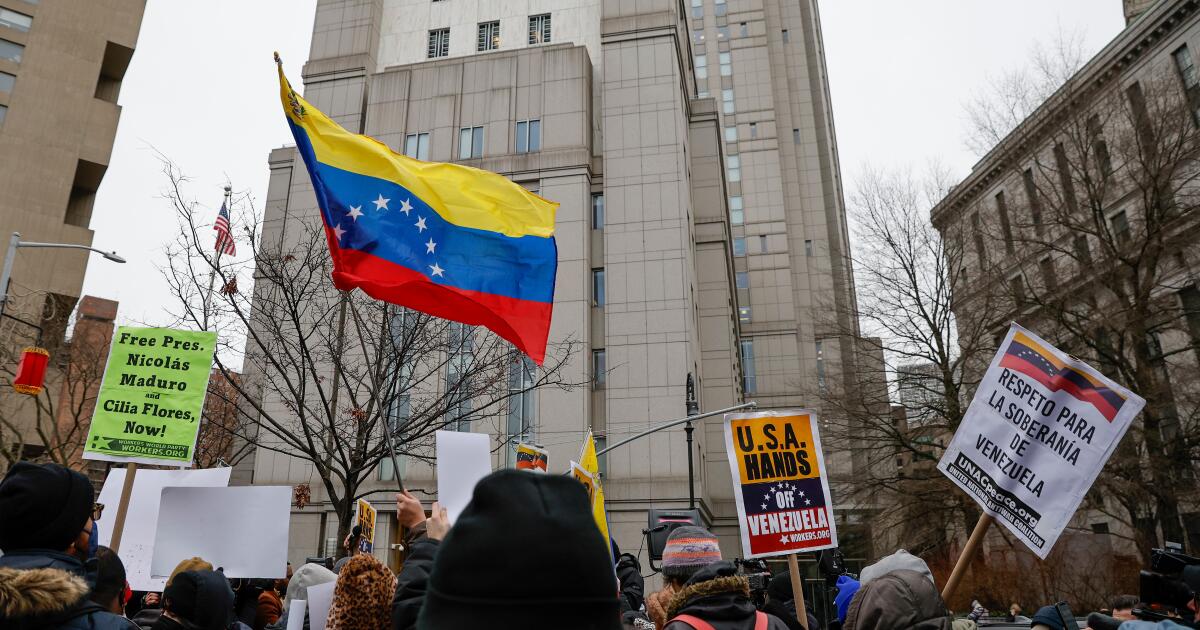
UPDATE: Nicolás Maduro, the deposed Venezuelan leader, faces an uphill legal battle following his dramatic arrest by U.S. forces in Caracas. His initial court hearing in New York City was a spectacle where he declared himself Venezuela’s president and pleaded not guilty to serious drug trafficking charges. This case could keep him imprisoned for years, potentially even for life.
The stunning middle-of-the-night raid that captured Maduro and his wife, Cilia Flores, marks the beginning of a legal odyssey. Both were arraigned on drug trafficking charges, with Maduro claiming he is a prisoner of war. The U.S. government has labeled the operation a “surgical law enforcement action,” with charges stemming from a case prosecutors first filed six years ago.
Maduro, aged 63, and Flores, aged 69, are now detained at the Metropolitan Detention Center. Their next court appearance is scheduled for March 17, 2023, where they may request bail, although legal experts view this as a long shot. The judge, Alvin Hellerstein, has indicated he is open to bail requests, but prosecutors are likely to argue that both are flight risks due to the serious nature of the charges.
The couple faces severe allegations, including conspiracy to import cocaine into the U.S. and possession of machine guns. Judges rarely grant bail in such high-stakes cases. Historical precedents, such as the denial of bail for Manuel Noriega in 1989, suggest a similar fate may await Maduro and Flores.
Additionally, Flores has reportedly suffered “significant injuries” during her capture and requires medical evaluation, while Maduro’s health issues also demand attention. Their lawyers have expressed concern over the adequacy of medical care at the detention facility, which has faced criticism in the past.
In a significant move, Maduro has expanded his legal team to include Bruce Fein, a constitutional law expert who previously served under President Reagan. His lawyer, Barry Pollack, has promised to challenge the legality of the case, citing Maduro’s status as a head of state and the controversial nature of his military capture.
The U.S. has not recognized Maduro as the legitimate leader of Venezuela for years, complicating his claims to sovereign immunity. Pollack emphasized the complex legal challenges ahead, which could prolong the case and possibly lead to appeals courts.
As the world watches closely, the implications of this case extend beyond the courtroom. It highlights the ongoing geopolitical tensions and the future of Venezuela under Maduro’s contested leadership. The emotional weight of their situation—locked up far from home—underscores the human impact of this unfolding story.
Stay tuned for further developments as this legal saga continues to evolve.
















