









































UPDATE: A proposed “temporary” solar farm in the Lincolnshire countryside is facing fierce opposition, with the last solar panels potentially remaining in place until 2090. The Fosse Green solar farm, intended to span approximately 3,000 acres near Witham St Hughs and Thorpe on the Hill, has sparked significant concerns from local authorities and residents alike.
Lincolnshire County Council has raised strong objections, warning that the project would irreversibly alter a large portion of the rural landscape for generations. Council members highlighted that the solar farm, while designed to be temporary, would have a presence for 60 years, fundamentally changing the character of the area.
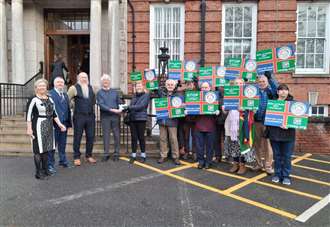
Residents from nearby villages have mobilized against the proposal, presenting 500 letters to the Prime Minister voicing their concerns. Nick Lyons, chairman of Thorpe on the Hill Parish Council, articulated these fears, stating, “It will industrialise a rural area, and would consume 51 percent of all land in the parish boundary.” He further emphasized the potential negative impact on tourism, questioning, “Would you want to come to a place like that?”
The ambitious plans, put forward by Windel Energy and Recurrent Energy, also include the development of a battery farm and the installation of cables leading to a proposed substation in Navenby. The developers claim that the project could power 110,000 homes, with construction slated to begin in 2031 and energy generation expected by 2033.
During a council planning committee meeting on January 12, local resident James Bean described the solar farm as “a blight on the landscape.” Another resident, Charlotte Vernon, expressed grave concerns about the long-term effects, stating, “It will irreversibly change our local area forever, and won’t be temporary – 60 years is effectively all of our lifetimes.”
Concerns surrounding the environmental impact and potential loss of farmland have prompted the council to prepare a report detailing its objections to the government. This report will address issues such as the detrimental effects on mental health and landscape aesthetics. Marianne Overton, who represents part of the affected area, voiced her apprehensions, saying, “This will see glass and steel concrete marching across productive farmland, swallowing our heritage. It is the biggest danger facing our area.”
Interestingly, Labour Councillor Neil Murray stood as the sole voice in favor of the project, arguing for the necessity of sustainable energy infrastructure in Lincolnshire. “We all want electricity and know we need to stop using fossil fuels,” he stated. “Lincolnshire needs to do its bit by having some infrastructure, the same as everywhere else.”
The government is expected to make a final decision on the proposal later this year, and the outcome will be closely monitored by local residents and authorities. With strong opposition mounting, this developing story raises essential questions about the balance between renewable energy initiatives and the preservation of rural landscapes.
Stay tuned for further updates on this critical issue as it unfolds.
















