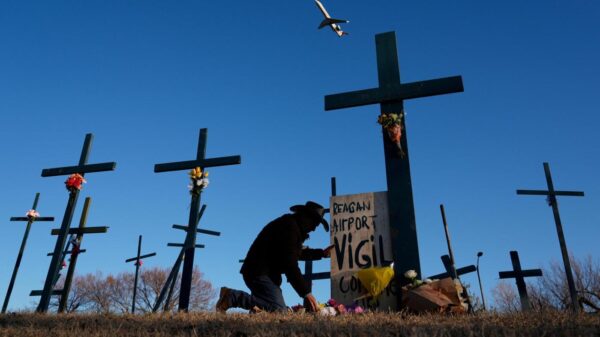


































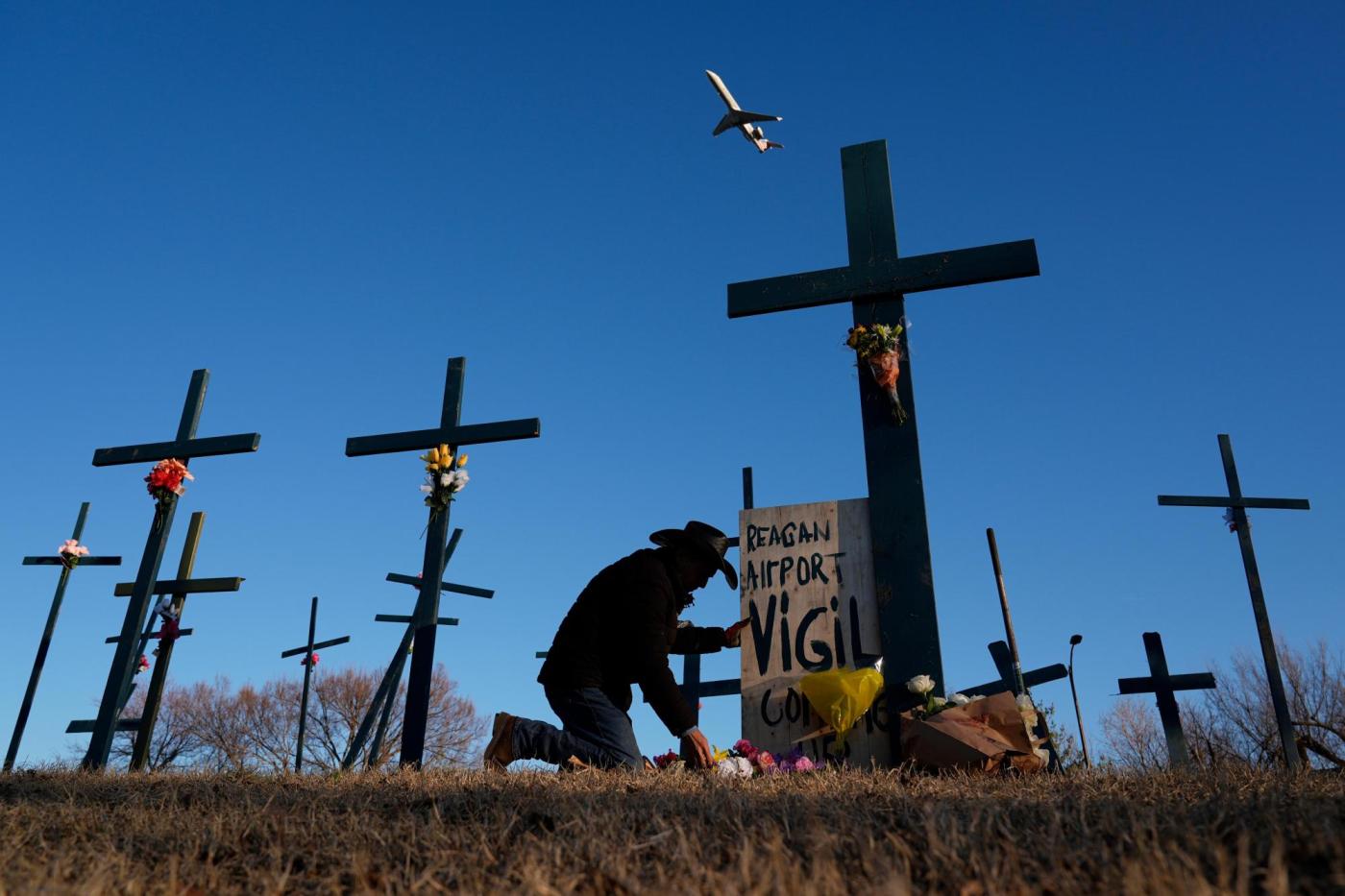
UPDATE: Senators from both parties are urgently pushing for critical amendments to a defense bill that could impact air safety, just days after crash investigators and victims’ families raised alarms. The proposed legislation would allow military aircraft to operate under the same relaxed safety standards that contributed to a deadly January 2023 collision over Washington, D.C., which resulted in 67 fatalities.
This developing situation has prompted fierce opposition from lawmakers, including Democratic Senator Maria Cantwell and Republican Senator Ted Cruz, who are advocating for immediate changes to the National Defense Authorization Act. They argue that the current bill, which was advanced by the House on Wednesday, would severely undermine essential safety reforms implemented in the wake of the tragic crash.
The National Transportation Safety Board (NTSB) has voiced strong concerns, asserting that the bill would reinstate dangerous practices by allowing military helicopters to fly in busy airspace without the necessary tracking systems. NTSB Chairwoman Jennifer Homendy stated, “This represents an unacceptable risk to the flying public. It’s a shameful dismissal of our investigation and the 67 families who lost loved ones in a tragedy that was entirely preventable.”
Currently, the legislation includes exceptions enabling military aircraft to bypass the Automatic Dependent Surveillance–Broadcast (ADS-B) system, a key safety feature mandated by the Federal Aviation Administration (FAA) as of March 2023. This would revert to pre-crash standards, allowing military operations that many experts deem hazardous.
Victims’ families, including Tim and Sheri Lilley, whose son was the first officer on the downed American Airlines flight, decried the bill as a mere “window dressing fix” that fails to address underlying safety issues. They insist that the proposed amendments are necessary to ensure that military operations do not compromise public safety.
As the Senate prepares to discuss the National Defense Authorization Act next week, it remains uncertain whether amendments will be permitted. Senate Majority Leader John Thune has not yet responded to inquiries regarding potential changes. With Congress scheduled to break for the holidays at the end of the week, swift action is critical to prevent the legislation from moving forward without necessary reforms.
The White House has yet to comment on the safety concerns raised, although President Donald Trump has previously indicated his support for the bill, highlighting its alignment with his priorities, including a proposed 3.8% pay raise for military personnel.
As this situation unfolds, the urgency for meaningful safety improvements remains paramount. Families affected by the crash, along with safety advocates, continue to call for a legislative response that prioritizes the lives of those flying in and around Washington, D.C.
What’s Next: Watch for developments as Senate discussions commence next week, and stay tuned for potential amendments that could reshape the future of military aviation safety in the U.S.