









































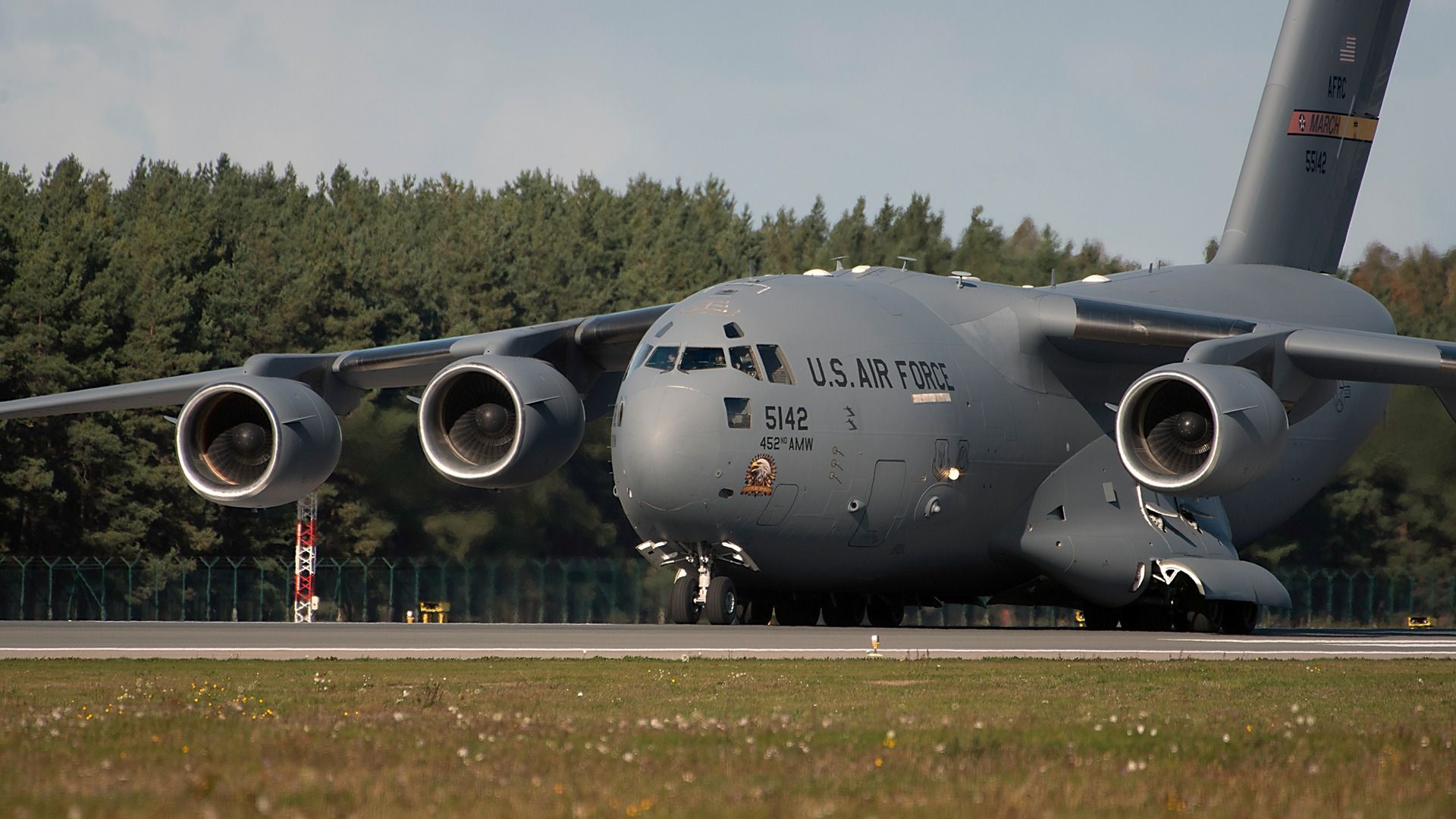
The escalating conflict between the United States and Iran has left around 1,600 American citizens stranded across the Middle East. As airports shut down and flights disappear, the U.S. State Department is working to arrange charter departures while exploring military options, including utilizing C-17 Globemaster III cargo aircraft to facilitate evacuations. This situation underscores the urgent need for a rapid response amidst a deteriorating security climate in the region.
Unique Evacuation Experience on C-17 Aircraft
Evacuating civilians aboard a C-17 is a stark departure from traditional airline travel. With only two pilots and a loadmaster on board, the experience is far from the comforts of commercial flights. Passengers board through the aircraft’s expansive rear ramp, designed for vehicles rather than personal luggage. The seating is minimal and functional, consisting of sidewall seats and palletized rows that prioritize space over comfort.
According to the Washington Post, the C-17 can accommodate approximately 100 individuals in a troop configuration, with a focus on efficient movement rather than passenger amenities. The cabin resembles a cargo bay, where safety briefings are conducted, and passengers are strategically positioned away from equipment to ensure quick departures. This urgency is crucial, as airspace can close rapidly due to security threats.
Security Concerns Drive Evacuation Strategy
The necessity for civilian evacuations via military aircraft highlights the precarious security situation in the Middle East. Reports indicate that Iranian missiles and drones have targeted U.S. diplomatic facilities, resulting in embassy closures and limited operations for evacuations. This complex scenario transforms the evacuation process into a logistical challenge, where the U.S. military often advises civilians to shelter in place for their safety.
While the U.S. response has faced criticism for its reactive nature, officials emphasize that security concerns are paramount. Utilizing C-17 jets represents a significant shift from standard consular support to emergency airlift operations. As commercial travel options diminish, these strategic airlifters serve as a vital resource for evacuating American citizens.
The C-17 Globemaster III is specifically designed for versatility and rapid deployment, making it an ideal choice for these situations. With the capability to operate from shorter runways—measuring as little as 3,500 feet (1,064 meters)—the C-17 can access airfields that may be closer to conflict zones. This adaptability is crucial when conventional airports are compromised.
The aircraft can carry a maximum load of 170,900 pounds (77,519 kilograms) and is equipped for airdrop capabilities, enabling it to transport both personnel and critical supplies effectively. With in-flight refueling options, the C-17 has an extensive operational range, ensuring it can reach destinations even when traditional routes are unavailable.
As the U.S. continues to navigate this tense landscape, officials urge American citizens in the region to register for evacuation efforts. This process will allow for a quicker allocation of seats on military flights, ensuring that those in need can return home safely during these challenging times.
















