


































URGENT UPDATE: As President Donald Trump nears the end of his first year in a second term, analysts are sounding alarms over a shifting power balance in the Asia-Pacific region. The United States is grappling with the implications of China’s rapid military expansion, which poses a direct challenge to U.S. dominance.
The Asia-Pacific is a critical hub, home to nearly half the world’s population and accounting for approximately 60 percent of global economic output. One-third of world commerce navigates its sea lanes, making the region vital for international trade and security. For decades, the U.S. has maintained military superiority, fortified by bases in Japan, South Korea, Guam, and the Philippines. However, China’s military modernization—now featuring the world’s largest navy—has dramatically altered the landscape.
Recent developments reveal that Chinese forces have ramped up aggressive actions, including ramming Philippine vessels in contested waters and intercepting U.S. and Australian aircraft. Such incidents underscore a growing imbalance, especially with Taiwan, which China claims as its territory. Analysts warn that the U.S. must recalibrate its strategies to counter these heightened tensions.
In response to these challenges, Trump’s administration has adopted a complex stance. While initially expected to confront Beijing more aggressively, Trump’s policies have produced mixed outcomes. As Rob York, director of the Pacific Forum, noted, “China has probably seen an improvement in its position, particularly with how tariffs have played out.” Some tariffs have adversely affected U.S. allies, inadvertently strengthening China’s regional influence.
A troubling development occurred when Trump reportedly denied Taiwanese President Lai Ching-te a transit stop in the U.S. during a recent trip to Latin America. This has been perceived as a move to smooth trade relations with Beijing amid ongoing economic uncertainty.
Looking ahead, Henry Huiyao Wang, founder of the Center for China and Globalization, expressed cautious optimism as high-level meetings between the U.S. and China are anticipated in 2026. “He has to get along with China,” Wang said, reflecting the delicate balance needed to manage competition.
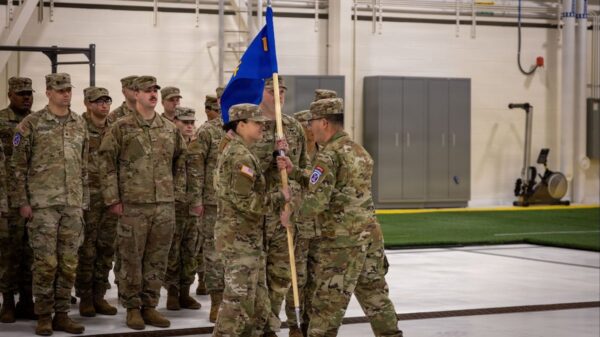
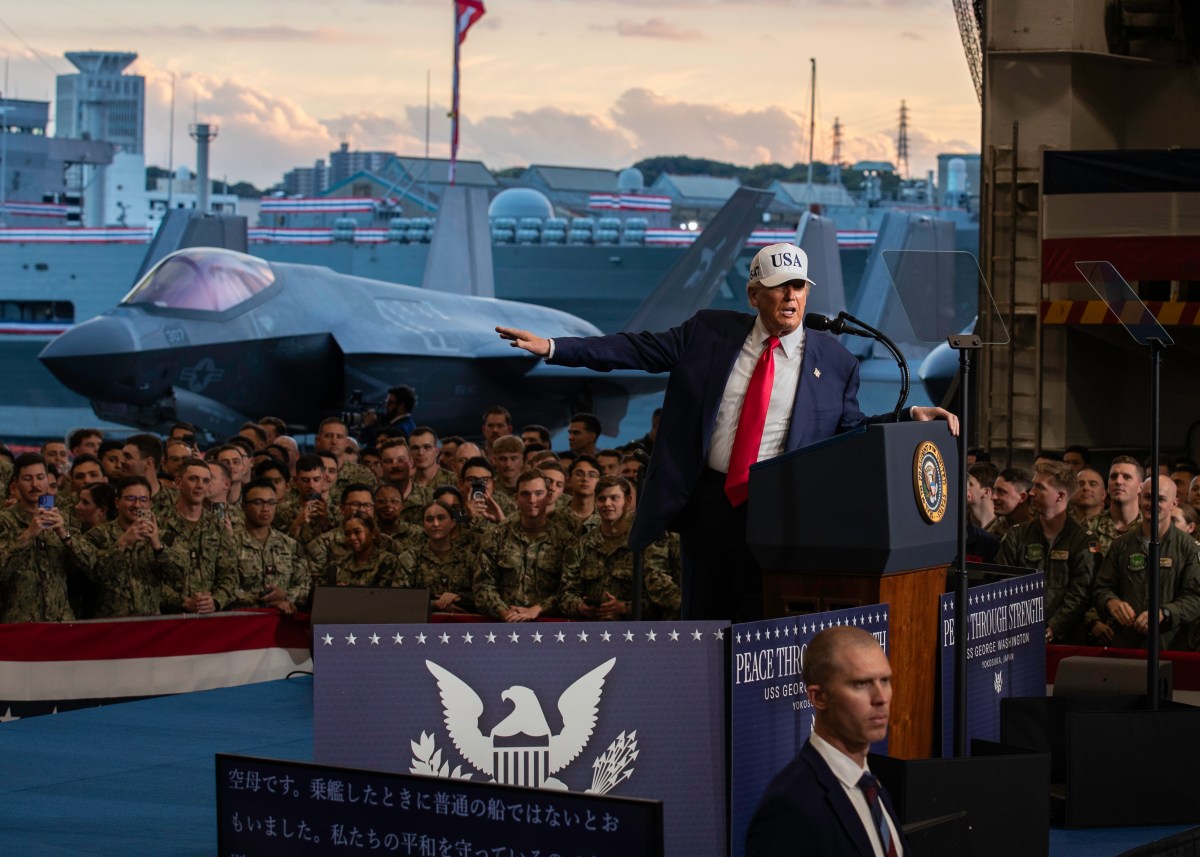
Despite the challenges, the U.S. maintains a formidable presence in the Pacific, with approximately 375,000 personnel under the Indo-Pacific Command. Japan has committed to doubling its defense spending by 2027, while the Philippines has opened additional bases for U.S. military access. The ongoing AUKUS partnership with Australia and India remains a cornerstone of U.S. strategy, yet concerns linger about Trump’s transactional approach to diplomacy.
Amidst these developments, North Korea has reignited tensions with missile launches, prompting calls for a new framework for peace involving both Koreas and China. The 2025 National Security Strategy outlines Trump’s vision of “strategic stability through strength,” reaffirming U.S. alliances while emphasizing the need for reciprocal engagement with China.
As the year unfolds, the international community is keenly watching how the U.S. navigates its relationships in the Asia-Pacific, particularly with Taiwan holding critical elections in 2026. The balance of power is in flux, and the outcomes of these dynamics will shape the geopolitical landscape for years to come.
Stay tuned for ongoing updates as this situation develops, with implications not only for regional stability but for global economic and security frameworks.