































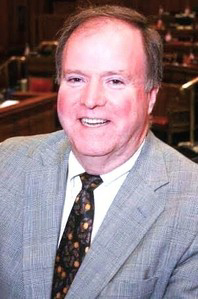








URGENT UPDATE: A growing number of older homeowners in the U.S. are facing a significant financial dilemma as they grapple with the capital gains tax on home sales. Many baby boomers, like Duane Flemming, 81, and his wife Chris Currie, are choosing to stay in their homes rather than sell, in order to leave their properties to their children tax-free.
Flemming and Currie have lived in their four-bedroom home for over 41 years in a suburban area just 30 miles east of San Francisco. They are considering downsizing but are deterred by potential capital gains taxes that could amount to between $30,000 and $60,000. “We don’t need it, and we would love to be able to get rid of it in an easy fashion,” Flemming expressed, highlighting the emotional and financial weight of their decision.
Since the enactment of the capital gains tax in 1997, homeowners in the U.S. have faced taxes on profits exceeding $500,000 for married couples and $250,000 for single filers. This tax can reach as high as 20% of the profits over the threshold, not including state taxes. With home values soaring, the share of home sales subject to the capital gains tax has more than doubled in recent years. According to the National Association of Realtors, approximately 34% of U.S. homeowners could exceed the $250,000 cap if they sell, up from just 1.3% in 2003.
The dilemma is exacerbated by the fact that if Flemming and Currie hold onto their home until death, their children will inherit it with a stepped-up tax basis, allowing them to avoid capital gains taxes on the appreciation accrued during their parents’ ownership. With federal estate taxes only applying to estates valued over $28 million, many homeowners find it financially advantageous to delay selling.
The implications of the capital gains tax are significant. Experts warn that this creates a “lock-in effect,” discouraging older homeowners from moving into more suitable housing. Jim Parrott, a housing policy advisor, noted that this trend is contributing to a mismatch in the housing market, where empty-nester boomers own far more large homes than younger families with children.
As of 2022, the real-estate company Redfin reported that empty-nest boomers owned twice as many homes with three or more bedrooms as millennials with children. “The knock-on effects for what’s a completely reasonable decision for empty nesters is utterly unreasonable in its macro impact on the housing market,” Parrott explained.
Legislation to reform the capital gains tax is gaining traction. Rep. Jimmy Panetta, a California Democrat, has introduced a proposal to double the tax exclusion for individuals and index it to inflation. This could alleviate some pressures on older homeowners. However, critics argue that another tax break for wealthier Americans could be regressive and may not significantly improve housing affordability.
Meanwhile, retirees are exploring alternative options. Patrick G., a 74-year-old from Colorado, is considering renting his home to allow his children to inherit it with the stepped-up basis. “If it becomes inevitable that the home in Colorado is no longer feasible, then most certainly, I would probably turn it over to a property manager,” he said.
The urgency of this situation cannot be overstated. With the housing market in flux and older homeowners feeling trapped by tax policies, the potential for reform is a critical issue for many families across the United States. As discussions continue in Washington, the future of capital gains tax reform could dramatically reshape the housing landscape for generations to come.
Stay tuned for further updates on this developing story as the implications for homeowners and families unfold.