









































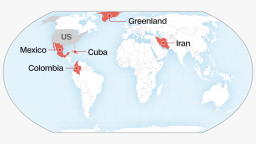
UPDATE: In a shocking turn of events, U.S. military forces have stormed into Caracas, Venezuela, capturing President Nicolás Maduro in a dramatic nighttime raid. This operation, occurring over the weekend, has sent ripples of fear and unrest across Iran, where protests against the government have surged in intensity.
As tensions escalate, Iranian authorities find themselves under immense pressure, grappling with both internal dissent and looming threats from the U.S. President Donald Trump has issued a stark warning: if Iranian forces harm protesters, the U.S. will respond decisively. Just hours ago, Trump reiterated, “If they start killing people like they have in the past, I think they’re going to get hit very hard by the United States.”
Protests erupted in Iran last week, primarily triggered by a plummeting currency and economic despair. Initially localized, these demonstrations have rapidly expanded, impacting 88 cities across 27 provinces. According to the Human Rights Activists News Agency (HRANA), at least 29 protesters have been killed and nearly 1,200 arrested as the regime deploys the Basij paramilitary force to quell the unrest.
The Iranian government, already facing a multitude of crises, is now confronted with the specter of renewed U.S. military action. Following last summer’s attacks on its nuclear sites, the recent capture of Maduro has heightened fears of a similar fate. Iranian Supreme Leader Ayatollah Ali Khamenei has condemned the protests, stating, “Protesting is legitimate, but protesting is different from rioting,” further intensifying his regime’s crackdown.
The Iranian leadership has long accused the U.S. of attempting regime change, a narrative that gains traction amid these latest developments. In a show of solidarity, Israeli Prime Minister Benjamin Netanyahu has publicly supported the Iranian protesters, escalating paranoia in Tehran. Iranian officials have labeled demonstrators as “rioters” and “mercenaries,” attempting to delegitimize the protests and unify public sentiment against foreign interference.
In an alarming trend, Iranian security forces have resorted to extreme measures, including raiding hospitals to arrest injured protesters. Reports indicate that a man was arrested in Tehran for alleged collaboration with the Israeli spy agency, Mossad, highlighting the deepening paranoia and security concerns within the regime.
Experts emphasize the critical nature of this moment for Iran. Vali Nasr from Johns Hopkins University stated, “To Tehran, American intentions now are clearly maximalist and hostile,” indicating that the U.S.’s actions in Venezuela may represent a broader threat to Iran’s stability. Sanam Vakil from the Chatham House think tank warns of a “triple crisis” facing the Islamic Republic, now compounded by external pressures from both the U.S. and Israel.
As the situation unfolds, the striking similarities between Iran and Venezuela’s struggles are drawing attention. Both nations, rich in natural resources yet crippled by U.S. sanctions, face severe economic turmoil. However, experts caution that Iran’s robust military capabilities and long-standing preparations for foreign intervention may provide it with a stronger defense against potential regime change efforts.
Iranian officials assert that any U.S. military actions will prompt a fierce response. Mohammad Bagher Ghalibaf, speaker of Iran’s parliament, warned, “All American centers and forces across the entire region will be legitimate targets for us,” underscoring the heightened tensions.
With protests continuing and the international community watching closely, the implications of the U.S. military operation in Venezuela could resonate deeply within Iran. As the Iranian populace struggles against economic hardship and governmental oppression, the dual pressures of internal unrest and external threats may shape the future of the Islamic Republic.
This developing situation demands urgent attention as the world watches both the streets of Tehran and Caracas. What happens next could redefine the political landscape in both nations, with broader implications for global stability.
















