









































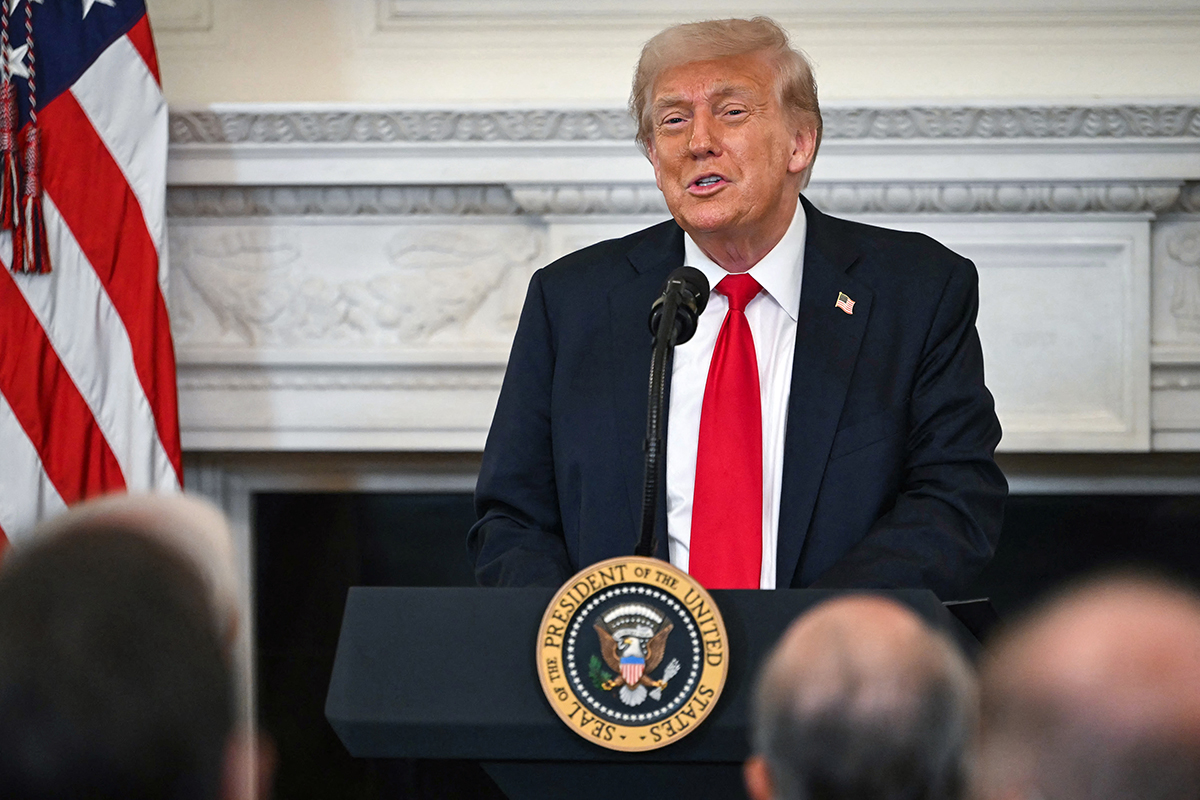
President Donald Trump announced on October 26, 2023, at the inaugural meeting of the Board of Peace, that nine member countries have pledged a total of $7 billion for a relief package aimed at rebuilding Gaza. In addition, five nations have agreed to send troops as part of an international stabilization force to support the war-torn Palestinian territory.
The countries committing troops include Indonesia, Morocco, Kazakhstan, Kosovo, and Albania, while Egypt and Jordan will assist in training local police forces. Troops are set to initially deploy in Rafah, a critical population center, where the U.S. administration plans to focus its reconstruction efforts.
Trump expressed gratitude to the donor nations, stating, “Every dollar spent is an investment in stability and the hope of a new and harmonious region.” Despite the significant funding, the pledged amount represents only a small portion of the estimated $70 billion required to rebuild Gaza after two years of conflict between Israel and Hamas.
In addition to the international commitments, the U.S. pledged $10 billion to the Board of Peace, though the specific uses of these funds were not disclosed. Major General Jasper Jeffers, head of the newly established International Stabilization Force, indicated plans for approximately 20,000 soldiers and 12,000 police to ensure security and support reconstruction efforts in Gaza.
Ambitious Goals and International Response
The Board of Peace was established as part of Trump’s broader peace initiative, initially focused on stabilizing Gaza. Following the ceasefire in October, the goals for the board have expanded. Trump now envisions it not only resolving the Gaza conflict but also addressing global instability.
Despite the ambitious aims, concerns have arisen regarding the U.S. president’s intentions. Critics worry that the Board of Peace may serve as a counterweight to the United Nations. In defense of the initiative, Trump stated, “Someday I won’t be here. The United Nations will be. I think it is going to be much stronger, and the Board of Peace is going to almost be looking over the United Nations and making sure it runs properly.”
As discussions progressed, Trump reiterated his administration’s stance against Iran, emphasizing that military action could be a consequence if Tehran does not comply with demands regarding nuclear weapons and its support for militant groups like Hezbollah and Hamas.
More than 40 countries and the European Union were represented at the meeting in Washington. Notable attendees included high-level officials from nations such as Germany, Italy, Norway, Switzerland, and the United Kingdom. Selected leaders, including Indonesian President Prabowo Subianto and Argentine President Javier Milei, were present to lend support.
Challenges Ahead for Gaza’s Reconstruction
A significant topic of discussion was the formation of an armed international stabilization force aimed at ensuring security and facilitating the disarmament of Hamas, a key condition for the ceasefire agreement and a priority for Israel. However, there are doubts about Hamas’s willingness to disarm, raising concerns about the feasibility of this aspect of the plan.
Israeli Prime Minister Benjamin Netanyahu reaffirmed that reconstruction efforts in Gaza would not proceed until Hamas disarms, stating, “There will be no reconstruction of the Gaza Strip before the demilitarization of the Gaza Strip.” He emphasized that Hamas would eventually face a choice regarding disarmament.
As the world watches closely, the path ahead remains fraught with challenges. The fragile ceasefire and the political dynamics surrounding the Gaza region will significantly influence the success of the initiatives announced at the Board of Peace meeting.
















