
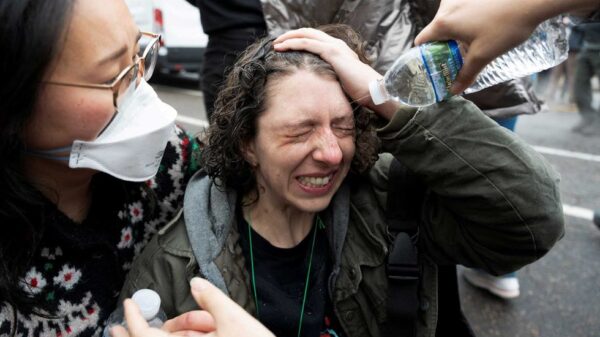
































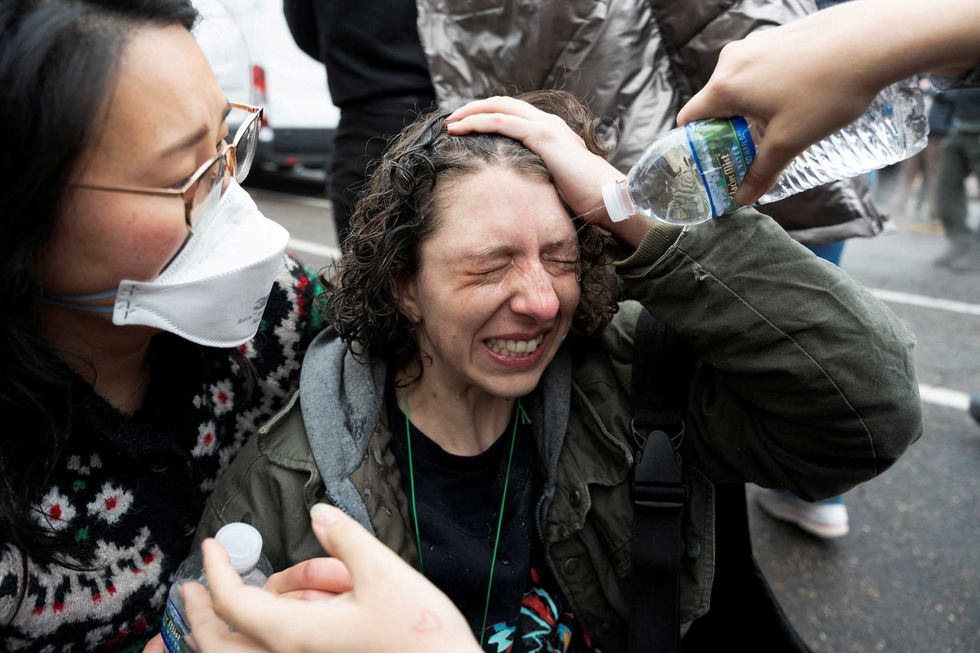
UPDATE: The Trump administration is facing intense scrutiny after reports reveal a dramatic increase in spending on chemical weapons, with expenditures reaching $5,010,584 since January 2025. This alarming surge occurs alongside allegations of the use of these weapons against civilians protesting immigration policies.
According to a Newsweek report, the administration’s spending on chemical weapons has outpaced that of previous administrations. In just 11 months, the Trump administration has nearly matched the $6,821,592 spent by former President Joe Biden throughout his entire term from 2021 to 2025. The figures indicate a staggering 1,150 percent increase in spending compared to the $447,555 allocated during Trump’s first term from 2017 to 2021.
In response to the mounting criticism, DHS Assistant Secretary Tricia McLaughlin characterized the situation as a “nonstory” and defended the administration’s actions. She stated, “ICE buying its law enforcement officers guns and non-lethal resources should come as no surprise, especially amid the increased onboarding of 11,000 agents thanks to President Trump’s Big Beautiful Bill.”
McLaughlin further questioned the media’s focus on spending, asking, “Do you also plan to cover the 1,150 percent increase in assaults against law enforcement, including terrorist attacks and officers having rocks and Molotov cocktails thrown at them?”
The contracts under scrutiny include significant sums awarded to Quantico Tactical, a tactical equipment company. Customs and Border Protection has allocated $2.6 million for less lethal munitions from June 2025 to June 2026, along with an additional $1.4 million for chemical munitions from September 2025 to September 2026.
These contracts specify the procurement of items classified under the product and service code “chemical weapons and equipment,” raising questions about the nature and intended use of these munitions. Some contracts detail equipment such as pepper spray and pepper ball projectiles, while others remain vague, referring to “less lethal munitions” without clarification.
The implications of this spending extend beyond fiscal concerns; they touch on civil rights and the treatment of protestors. Advocates argue that the utilization of chemical weapons against civilians is a stark violation of human rights and must be addressed immediately.
As the situation unfolds, experts urge the public to remain vigilant about the administration’s policies and spending practices. The increasing militarization of law enforcement could have lasting effects on community relations and civil liberties.
What happens next? Stakeholders are calling for greater transparency and accountability regarding the use of chemical weapons. Advocacy groups are mobilizing to challenge these expenditures and demand a reevaluation of law enforcement tactics. The public will be watching closely as further developments emerge in this critical issue.
Authorities continue to defend their actions, but the growing backlash and scrutiny of spending practices signal that this story is far from over.