









































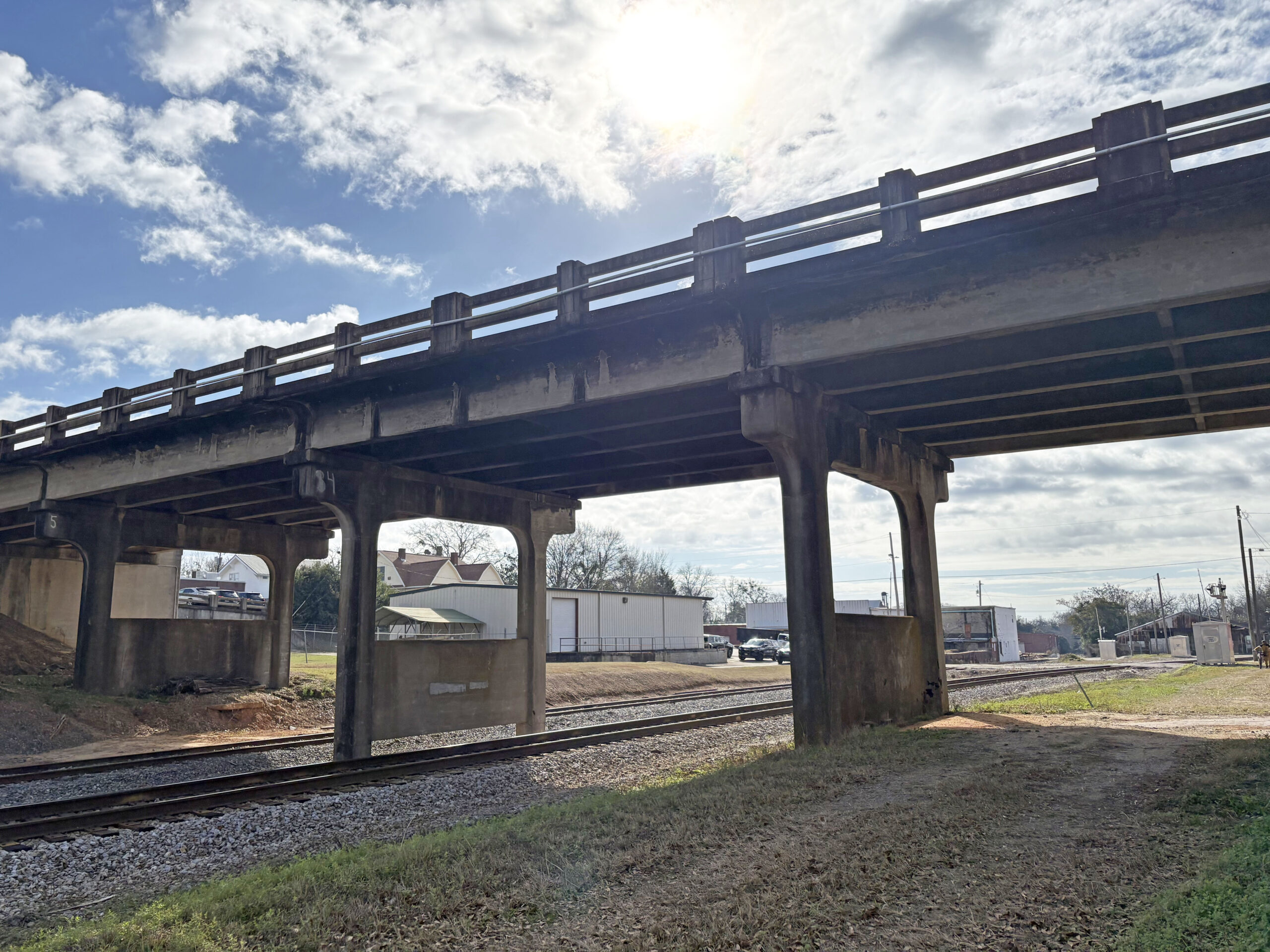
UPDATE: The City of Troy is urgently applying for a Community Development Block Grant (CDBG) to secure $1.2 million for essential bridge improvements that could dramatically impact emergency response times. During a public hearing on January 22, 2024, city officials confirmed that the funds will address critical safety issues with the Elm Street Bridge, which has been restricted for firetruck use due to structural deterioration.
Recent assessments by the State of Alabama have reclassified the weight limit for the Elm Street Bridge, adjacent to the downtown police department. The bridge, built in the 1930s, can no longer support heavy emergency vehicles, forcing fire services to divert to longer routes. This change poses significant risks for public safety, as delays in emergency response can be life-threatening.
Troy Fire Chief Michael Stephens emphasized the urgency of the situation, stating, “If we have something on the square with the train stopped on the tracks, we would have to go all the way out to Highway 231 to get to them.” In scenarios where a train blocks access, emergency responders could face up to five access points being completely cut off.
The statistics are alarming. Currently, firetrucks from Station 1 experience an average response time of just 50 seconds when using the bridge. Without access, this escalates to over eight minutes and an additional 3.1 miles. Similarly, fire crews from Station 2 see their response time balloon from three minutes to more than 11 minutes.
Chief Stephens noted the critical nature of these delays, “It adds minutes to every call. If you’re talking structure fires, they usually double every 20-30 seconds. Time is everything with us; seconds literally count.” The city’s ability to ensure rapid emergency response is hanging in the balance as the bridge remains off-limits for firetrucks.
The Alabama Department of Economic and Community Affairs (ADECA) has already committed $500,000 from the CDBG Urgent Need grant, but the city must match this with $700,000 for the upgrades, excluding engineering costs. City officials are scheduled to present the grant application to the city council in a crucial meeting on January 27, 2024.
As the city moves forward with this necessary application, residents and officials alike are watching closely. The improvements not only promise to enhance public safety but also to restore confidence in the city’s emergency infrastructure. The call for action is clear: the time to act is now, and the stakes are high for the community of Troy.
Stay tuned for more updates as this story develops.
















