































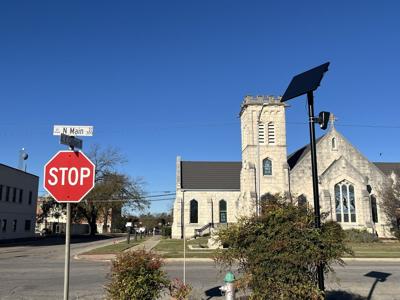
URGENT UPDATE: Temple City officials have just announced they are blocking access to information regarding their sophisticated surveillance camera system from Flock Group Inc. This decision comes after multiple requests for transparency were met with denials and legal complications, raising serious concerns about privacy and police oversight.
Citizens seeking clarity on the extensive network of cameras that monitor vehicle movements daily have encountered significant roadblocks. The Texas Attorney General’s Office confirmed this denial, citing potential risks to public safety as the reason for withholding details. Local activist and attorney, CJ Grisham, described the AG’s reasoning as “irrational,” questioning the validity of claims that such information could endanger law enforcement.
The Flock cameras, which are part of a growing national network, have become a focal point of controversy. Documents released by the city revealed that the lease agreement allows Flock to determine the placement of cameras, raising alarms over potential violations of citizens’ Fourth Amendment rights. Brodie Cutts, a concerned Temple resident, voiced his fears, stating, “This should be a huge concern… a blatant Fourth Amendment violation.”
According to records, the city has leased 40 license plate reader (LPR) cameras for a total of $125,048.75. The first lease, signed in May 2022, incurs an annual cost of $37,500 for 30 cameras, while a second lease in September 2025 adds 12 cameras at an annual cost of $79,560. The most recent contract, signed in November 2025, includes one camera for $5,000 annually.
The city’s transparency issues were highlighted when a public records request for the camera locations was forwarded to the Texas AG, who supported the denial based on previous case law. Willam Freeman, creator of Deflock.me, criticized this as one of the most absurd reasons for withholding information, pointing out existing platforms that already disclose camera locations across the U.S.
The released documents also revealed that data collected by Temple’s Flock cameras are deemed confidential, with Flock retaining rights to use the footage even after the city ends its contract. This raises alarming questions about the long-term control of sensitive data and the potential for misuse. Grisham emphasized the role of a powerful law enforcement lobby that increasingly undermines citizens’ rights.
With the city of Temple facing scrutiny over its surveillance practices, residents are left questioning the safety and privacy implications of such technologies. As the situation unfolds, citizens are urged to remain vigilant and demand accountability from their local government regarding surveillance measures and data privacy.
What happens next? Activists and concerned citizens are likely to mobilize efforts to challenge these denials and seek greater transparency from Temple City officials. The public’s right to know about surveillance operations in their neighborhoods is increasingly at stake, making this a crucial moment for civic engagement.
Stay tuned for ongoing updates as developments in this story emerge.