









































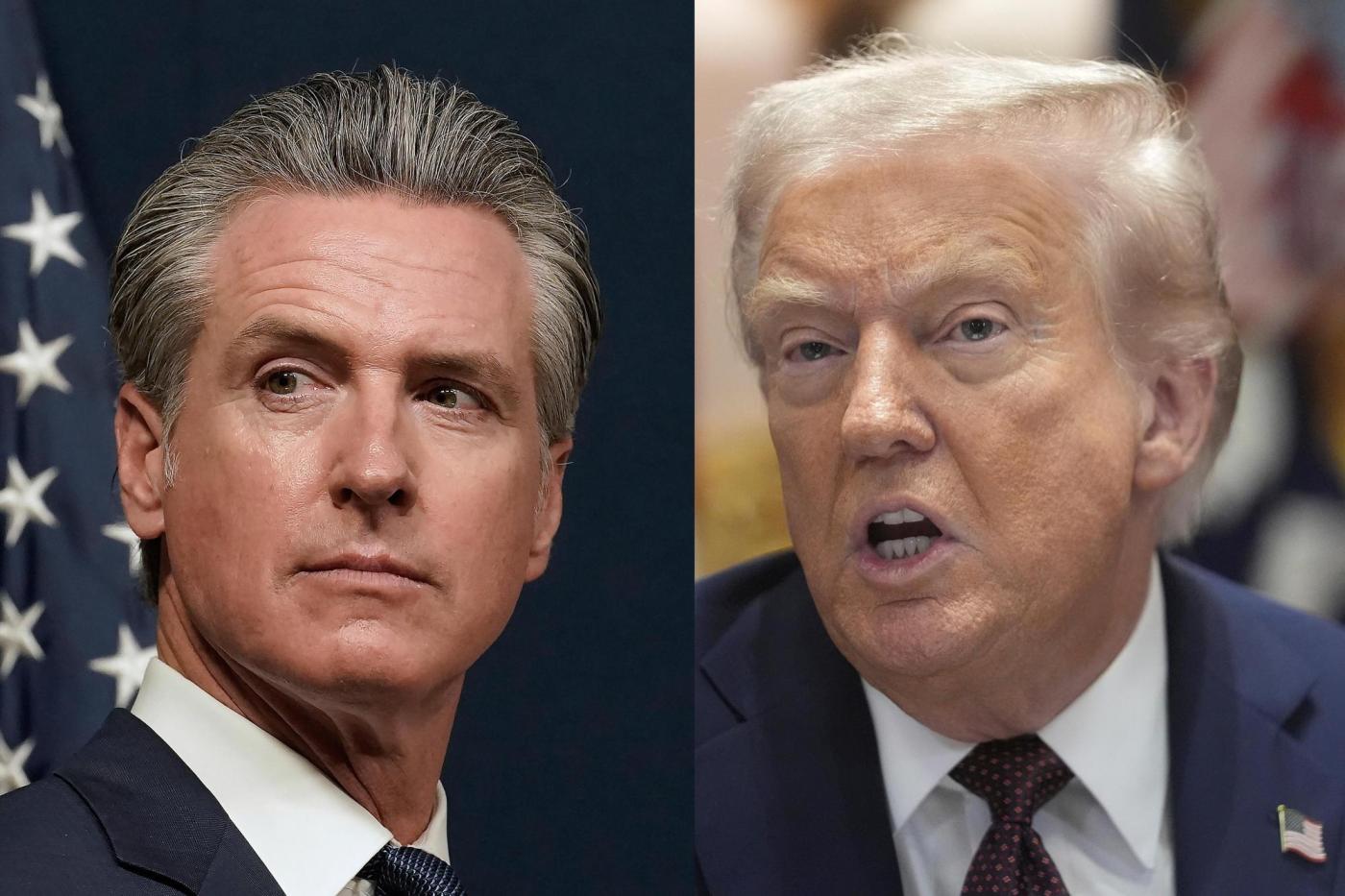
UPDATE: California Governor Gavin Newsom has just called on President Donald Trump to return billions of dollars collected under illegal tariffs, following a 6-3 ruling by the Supreme Court on Friday. The court determined that Trump overstepped his authority by imposing these tariffs without congressional approval, marking a significant legal defeat for the former president.
In a statement, Newsom declared, “Time to pay the piper, Donald. These tariffs were nothing more than an illegal cash grab that drove up prices and hurt working families.” This ruling not only impacts Trump’s legacy but also opens the door for potential refunds that could total as much as $170 billion.
The Supreme Court’s decision underscores that federal law does not grant the president unilateral power to impose sweeping tariffs, which have disproportionately affected California due to its critical role in the U.S. economy, contributing about 14% of the nation’s gross domestic product.
Newsom, who is viewed as a potential 2028 presidential candidate, has frequently confronted Trump’s policies, especially on trade. California was one of the leading states that challenged these tariffs in court. The ruling leaves unresolved how refund claims will be managed, placing the responsibility on lower courts to determine the process.
“These tariffs hurt families and businesses, and now it’s time for the federal government to make it right,” said Newsom.
In addition to financial implications, this ruling highlights the ongoing tensions between state and federal authorities, as California Attorney General Rob Bonta has filed lawsuits against the Trump administration on various issues, ranging from immigration to federal funding cuts. The tariffs, which Newsom argues were an attempt to extort allies and disrupt trade relationships, are now set to spark a major fight over refunds.
This urgent development not only affects California but also resonates across the nation as families and businesses seek justice for the economic impact of these tariffs. With the potential for $170 billion in refunds hanging in the balance, all eyes will be on how lower courts will address these claims in the coming weeks.
As the situation develops, it is crucial to monitor the administration’s response and any further legal actions that may arise from this landmark ruling. The implications of this case could reshape U.S. trade policy and the relationship between the federal government and individual states.
















