









































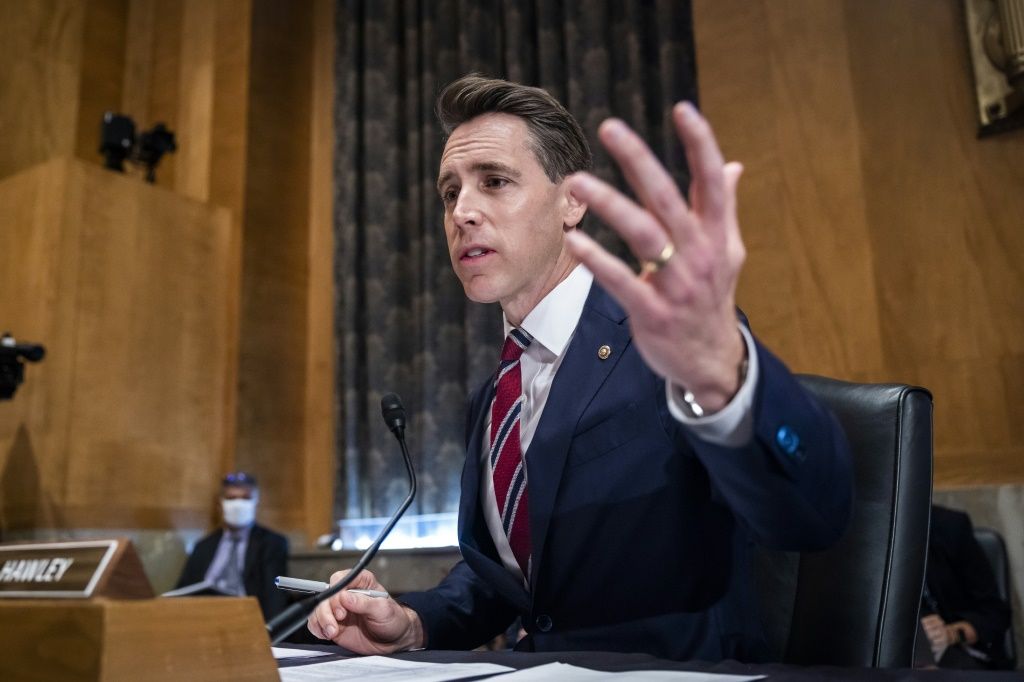
BREAKING: Missouri Senator Josh Hawley has swiftly defended his controversial vote against President Donald Trump’s ability to launch military actions in Venezuela without congressional approval. The Senate approved the resolution 52–47 just hours ago, highlighting significant divisions within the Republican party.
In a move that many are calling unprecedented, Senator Tim Kaine of Virginia introduced the resolution under the War Powers Act, directly responding to recent unilateral military actions by the Trump administration. These actions included the capture of Venezuelan leader Nicolás Maduro and his wife, Cilia Flores, who are now in U.S. custody in Brooklyn, NY, facing serious charges related to drug trafficking and corruption.
Hawley’s decision to support the resolution has ignited a firestorm of reactions, particularly from Trump, who condemned the vote on his social media platform, Truth Social. He claimed that the senators who supported the resolution “should be ashamed,” asserting that this move undermines national security and limits his authority as commander-in-chief.
“Congress needs to tell the American public where it stands,” Kaine stated, emphasizing the necessity of legislative oversight in military engagements.
The resolution is significant; while it does not reverse previous actions against Venezuela, it aims to restrict the executive branch’s power to escalate military involvement without congressional consent. This includes future actions that could exceed targeted strikes on drug-smuggling vessels, a critical point for U.S. national security.
Hawley took to social media to clarify his stance, saying, “If the President feels the need to put boots on the ground there in the future, Congress would need to vote on it. That’s why I voted yes on this morning’s Senate resolution.”
In addition to Hawley, four other Republican senators—Senators Todd Young of Indiana, Lisa Murkowski of Alaska, Susan Collins of Maine, and Rand Paul of Kentucky—supported the measure, reflecting a growing concern among some GOP members about unchecked military power.
Despite this advancement in the Senate, the resolution now faces a challenging path in the House of Representatives, which is controlled by Republicans. Past attempts to limit military actions against Venezuela have stalled in the House, and if it does pass, Trump has indicated he would veto it.
This developing story raises critical questions about the balance of power in U.S. foreign policy and military engagement. As the situation unfolds, all eyes will be on the House and whether they will uphold the Senate’s decision.
Stay tuned for updates as this urgent matter continues to evolve.
















