









































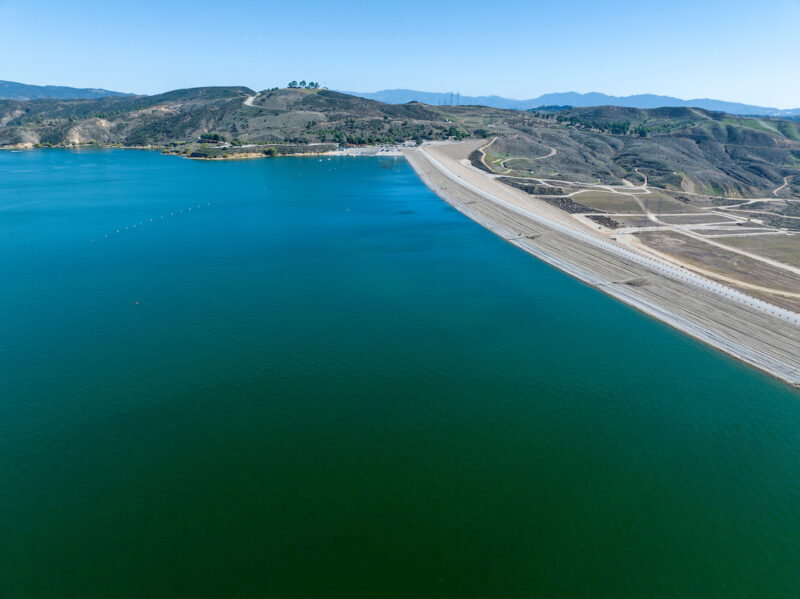
UPDATE: Santa Clarita’s local water supply is showing promising signs as rainfall levels have surged to 147% of the annual average, thanks to significant storms in late 2025. The Santa Clarita Valley Water Agency (SCV Water) is expected to have an increased availability of locally sourced water by 2026, but looming challenges with the snowpack may hinder future supply stability.
According to Sarah Fleury, SCV Water’s senior water resources planner, local rainfall has reached about 25.3 inches between October and February, a significant improvement over last year’s drought conditions. During a recent board meeting, Fleury emphasized the agency’s goal of achieving a 50-50 split between imported water and groundwater from the valley’s aquifers. This balanced approach is crucial as California faces ongoing climate uncertainties.
Over the past six years, several SCV Water wells were taken offline due to PFAS contamination, a growing concern across the U.S. However, these wells are gradually being restored as treatment facilities are developed, allowing the agency to potentially hit that desired water production ratio soon. In 2022, an alarming 67% of SCV Water’s supply came from imported sources.
“In 2020, we lost over half of our wells due to contamination,” Fleury noted, highlighting the dramatic impact of previous droughts. “With more groundwater wells coming back online, we gain flexibility in our water production.”
Despite these encouraging developments, challenges remain. The snowpack, typically a natural reservoir for water, is in jeopardy. The Department of Water Resources (DWR) reports that as of late February, California’s statewide snowpack sits at only 66% of average levels. Warmer storms are causing rapid runoff, resulting in less water being stored for warmer months.
SCV Water is projected to receive only 30% of its allocated 95,000 acre-feet this year, indicating a potential strain on future supply. These developments could adversely affect agricultural water customers in the Central Valley, who depend on reliable water sources regardless of drought conditions.
“We’re experiencing more dry spells in the winter when we should see peak snow production,” Fleury warned. “The shifting patterns of snowfall and precipitation complicate our ability to predict water supply.”
As Santa Clarita’s water supply appears to be on the rebound, the uncertainty regarding snowpack highlights the need for continued vigilance and adaptability in managing water resources. The agency’s efforts to balance local and imported water sources may be more important now than ever.
Residents and stakeholders in the Santa Clarita Valley are encouraged to stay informed on ongoing developments as SCV Water navigates these critical challenges. The situation remains fluid, and updates will be essential in understanding the future of the valley’s water supply.
This story will continue to develop, and further evaluations of the snowpack and water allocations are expected in the coming weeks. Stay tuned for the latest updates on this urgent issue.











