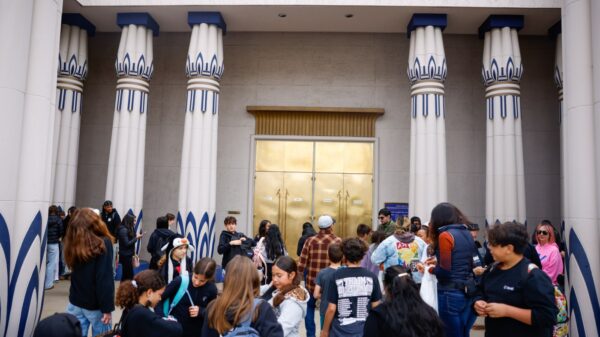





































DEVELOPING: The Rosicrucian Egyptian Museum in San Jose welcomed a surge of visitors as children flocked to explore its captivating exhibits on April 18, 2025. The museum, which attracts nearly 100,000 visitors annually, is a vital hub for education and cultural enrichment, especially for 26,000 schoolchildren who visit each year.
As children gathered around replicas of ancient artifacts, the buzz of excitement filled the air. In a standout moment, a video playing on loop showcased 22 precepts of ancient Egyptian philosophy, emphasizing values like tolerance and generosity. Some precepts, however, caught attention with their mystical advice, such as creating a sanctum at home and purifying food with vibrations.
The museum houses over 4,000 artifacts, making it the largest collection of ancient Egyptian treasures in western North America. Yet, many visitors remain unaware of the intriguing history behind the museum’s name and its connection to the Ancient Mystical Order of Rosae Crucis (AMORC), the organization that established it.
Julie Scott, the museum director and a Grand Master within AMORC, stated, “Everything that we manifest at Rosicrucian Park is with the mystical perspective in mind.” This perspective reflects the Rosicrucians’ belief in esoteric wisdom passed down through the ages, linking their teachings to the ancient Egyptian mystery schools.
Founded in 1915 by H. Spencer Lewis, AMORC moved its headquarters to San Jose in 1927. Lewis’s vision included creating a museum that would share the spiritual beliefs of ancient Egyptians. The museum opened in 1966, modeled after the Temple of Amon at Karnak, and has since become a staple for school field trips and a center for community learning.
While some scholars view the ancient Egyptian roots of Rosicrucianism as mythical, Massimo Introvigne, managing director of the Center for the Studies on New Religions, emphasized that the impact of these myths has been significant. “(The myth) is not simply a ‘false’ story; it is more a symbolic one,” he stated. Rosicrucians have made substantial contributions to the understanding of ancient Egypt and funded various excavations.
Children’s reactions to the exhibits highlight the museum’s profound impact. One girl, captivated by a real mummy on display, gasped in wonder, exclaiming to her parents, “Look – it’s real.” Such moments capture the essence of why the museum is essential.
The Rosicrucian Egyptian Museum also reflects a commitment to sustainability. The grounds include a carbon-neutral garden with native plants, and an upcoming alchemy museum is set to open on the 2026 spring equinox, adhering to the highest international sustainable building standards.
Despite some discrepancies with mainstream Egyptology, Scott maintains that this unique approach allows for a broader understanding of ancient wisdom. “It’s presenting a perspective that doesn’t have the limits of academia,” she explained.
As the museum continues to engage young minds and promote a deeper understanding of ancient cultures, its role in the community remains vital. With the world watching, the Rosicrucian Egyptian Museum stands as a beacon of education, mysticism, and cultural preservation—ensuring that the legacy of ancient Egypt continues to inspire future generations.
Stay tuned for more updates on the Rosicrucian Egyptian Museum as it continues to evolve and expand its offerings.