


































UPDATE: Russia and Iran are rapidly advancing the development of the **International North-South Transport Corridor (INSTC)**, a vital trade network aimed at connecting **Northern Europe** with **South Asia**. This urgent initiative was confirmed earlier today during a high-level meeting in Tehran, where Russian and Iranian officials outlined plans to expedite construction and operational readiness of the corridor.
The INSTC serves as a strategic lifeline for Russia, allowing its goods and energy to bypass increasingly insecure maritime routes through the **Black Sea**, **Suez Canal**, and **Red Sea**. As geopolitical tensions escalate, this corridor offers a more secure and efficient route for Russian exports, significantly reducing dependence on Turkey-controlled passageways.
Why This Matters NOW: With Russia facing severe logistical challenges due to ongoing sanctions, the INSTC promises to transform its trade dynamics. This corridor allows Russian cargo to travel via rail to **Baku** in **Azerbaijan**, cross the **Caspian Sea**, and continue through northern **Iran** to **Bandar Abbas** on the **Persian Gulf**. This route not only shortens transit times by nearly half but also enhances security, making it crucial for Moscow’s economic survival amid sanctions.
Just this week, **Ali Larijani**, secretary of Iran’s Supreme National Security Council, met with Russian **Deputy Prime Minister for Transport Vitaly Savelyev** to discuss progress. Larijani emphasized the corridor’s strategic priority, affirming **Iran’s commitment** to making this project operational as soon as possible.
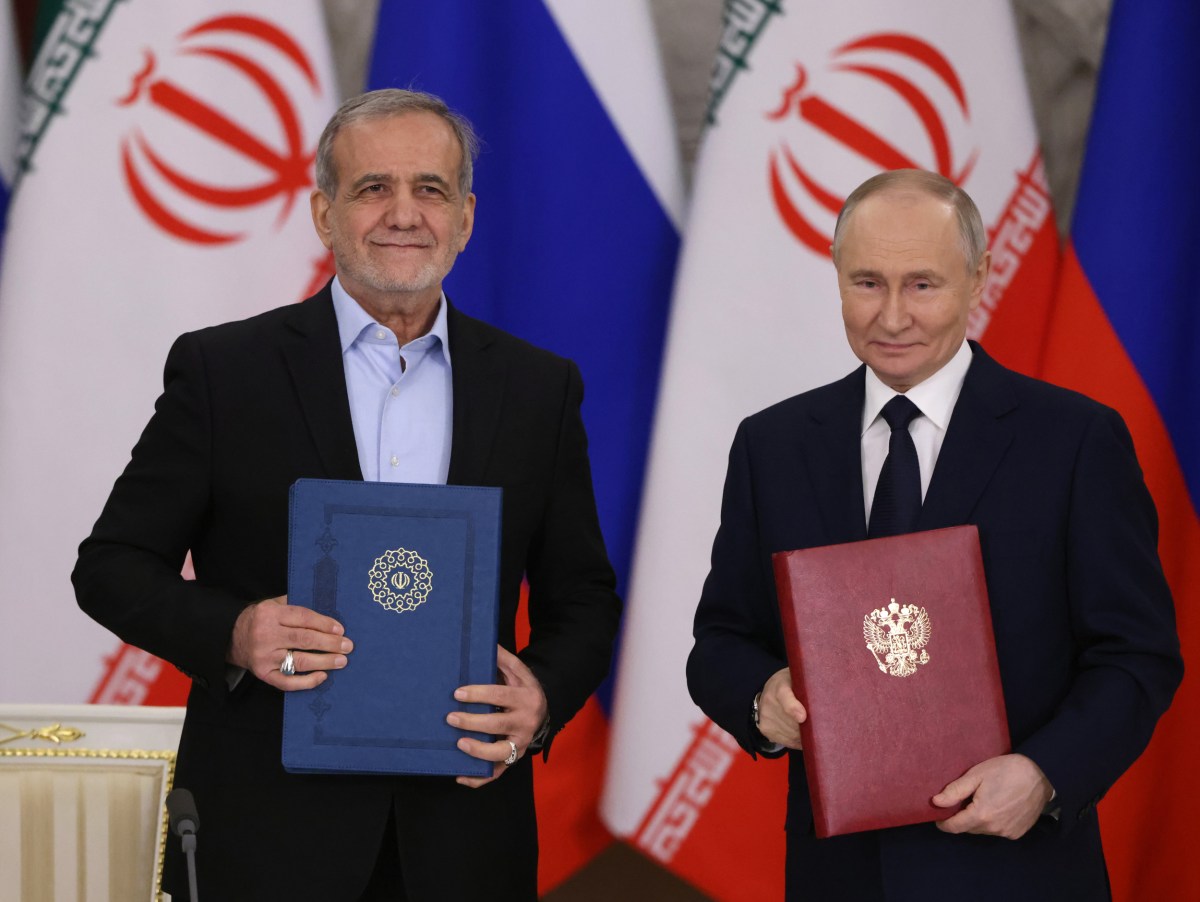
In a separate discussion, President **Vladimir Putin** pressed **Masoud Pezeshkian**, Iran’s Parliament Speaker, on the status of the **Rasht-Astara railway**, a key segment of the corridor. Pezeshkian reassured Putin that he is monitoring the project’s progress weekly, highlighting its significance for enhancing bilateral trade.
Current Developments: More than **106 kilometers** of the **Rasht-Astara line** have already been completed. The INSTC combines multiple transport modalities—rail, road, and maritime—through **Kazakhstan**, **Turkmenistan**, and **Azerbaijan**, facilitating a direct connection to major Indian ports such as **Mumbai**. This transformation marks a significant shift in regional trade dynamics, allowing Iran to gain influence without resorting to military force.
However, U.S. officials are closely monitoring the developments. Washington has expressed concerns that increasing Iranian control over the corridor could undermine sanctions enforcement and alter regional power balances.
What Happens Next: The INSTC could eventually integrate with East-West routes to **China** and **Europe**, creating a comprehensive Eurasian transport network. For Russia, this corridor provides a durable alternative to constrained maritime routes, while for Iran, it enhances its geopolitical leverage.
As both nations push forward with the INSTC, the implications extend beyond trade—reshaping logistics and power dynamics in a rapidly changing global landscape. The urgency of these discussions signals a pivotal moment for regional cooperation and economic strategy.
Stay tuned for further updates as this developing story unfolds, impacting global trade and regional stability.