









































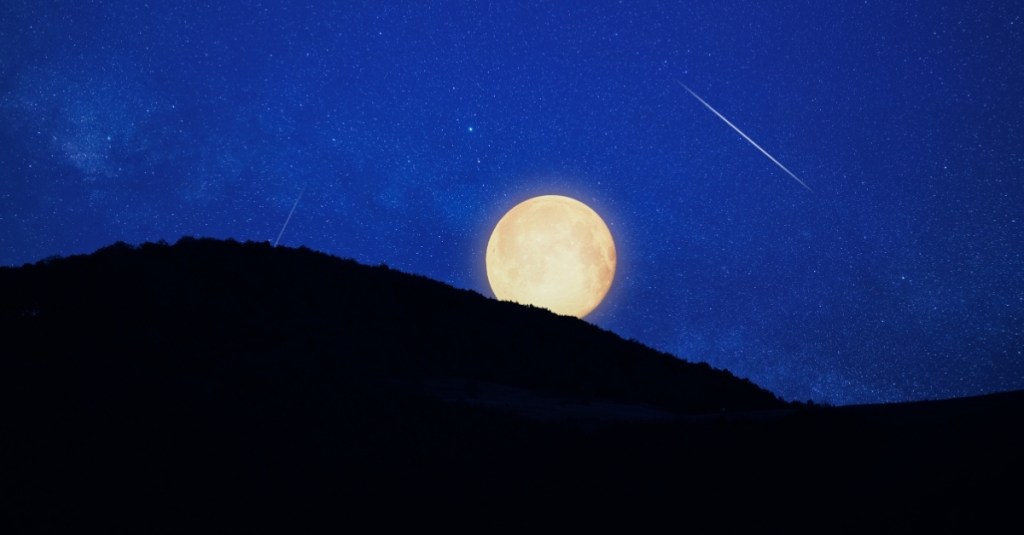
UPDATE: The highly anticipated Quadrantid meteor shower peaks tonight, January 6, 2024, just as a dazzling supermoon brightens the night sky, creating a cosmic clash for stargazers. The American Meteor Society reports that under perfect conditions, observers could see up to 25 meteors per hour. However, this year’s supermoon is expected to reduce visibility significantly, limiting meteor sightings to fewer than 10 meteors an hour for most viewers.
The supermoon, which occurs when the moon is at its closest point to Earth, will overshadow the meteor shower, making it difficult to catch sight of the fleeting meteors. Mike Shanahan, director of the Liberty Science Center, stated, “The biggest enemy of enjoying a meteor shower is the full moon.” This means stargazers will need to strategize to maximize their viewing experience.
Meteor showers occur when Earth passes through debris left by comets or asteroids. As these tiny space rocks enter the atmosphere at high speeds, they burn up and create striking flashes of light, often referred to as shooting stars. The Quadrantids are known for their brief but intense displays, although their peaks can be unpredictable. Typically, they provide a thrilling cosmic event for eager astronomers.
Tonight, the best time to view the meteors is during the early evening hours before the moon dominates the sky. Alternatively, observers can venture outside just before dawn on Sunday, when the radiant point of the shower is higher and more visible. Jacque Benitez from the Morrison Planetarium at the California Academy of Sciences suggests that patience is key, especially with the bright moonlight competing for attention.
No special equipment is needed to observe the meteor shower. Stargazers should give their eyes time to adjust to the darkness, avoid distractions like mobile phones, and scan the sky for quick white flashes that indicate meteors.
Despite the supermoon’s bright presence, this meteor shower shouldn’t be missed. The next major meteor display, the Lyrids, is not set to arrive until April. Moreover, this supermoon marks the end of a four-month stretch of supermoons that began last October, with the next occurrence not expected until late 2026.
Even with diminished visibility, the Quadrantid meteor shower is a chance to connect with the cosmos. Stargazers are encouraged to step outside, embrace the chill of the night, and witness this celestial event, even if it’s not at its full glory.
Share your experiences and photos using #Quadrantids and join the conversation with fellow astronomy enthusiasts.
















