








































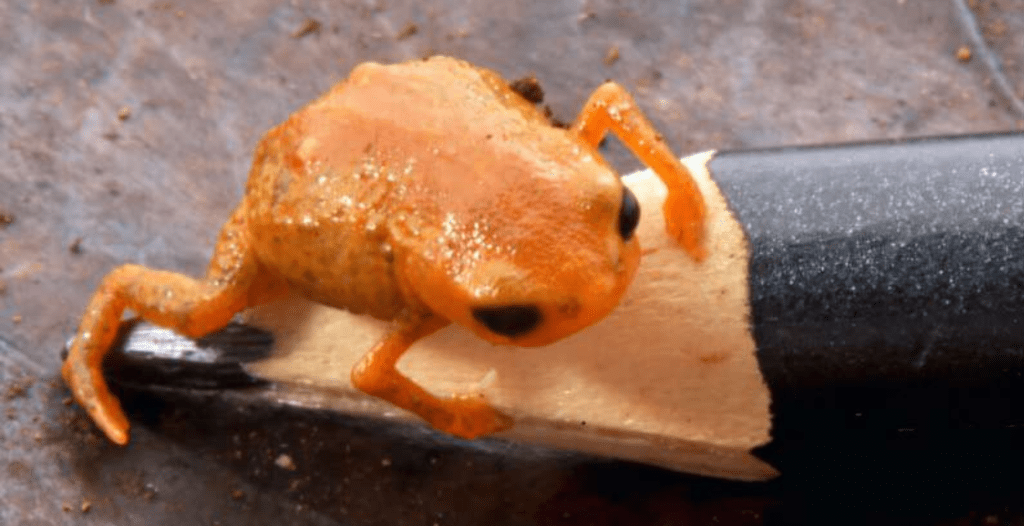
BREAKING: Researchers have just confirmed the discovery of a new species of pumpkin toadlet, named Brachycephalus lulai, in the mountains of southern Brazil. Measuring less than a Tic Tac and glowing vibrantly like a traffic cone, this tiny frog lives at an elevation of over 750 meters (2,460 feet) in the untouched forests of the Serra do Quiriri range, located in Santa Catarina.
In a groundbreaking study published in PLOS One, scientists reveal that this unique amphibian was hidden from formal description until now, highlighting the urgent need for scientific attention to smaller species amidst larger environmental issues. Researchers have been surveying this mountainous region for seven years, working tirelessly to map the habitats of orange frogs. They successfully tracked the mating calls of male toadlets, leading to the discovery of this previously unrecognized species.
The naming of this frog after Brazilian President Luiz Inácio Lula da Silva aims to draw attention to the critical conservation needs of the Atlantic rainforest. This region faces numerous threats, including grazing, deforestation, and invasive species, which have already devastated many other amphibian populations in the area. The study notes that while B. lulai is currently classified as “least concern,” the surrounding environment is highly vulnerable.
Urgent Action Required: The Brazilian government is currently discussing the establishment of a federal conservation unit in this unique ecological area, a move that could help protect both the pumpkin toadlet and its forest home without displacing private landowners. Researchers emphasize that fieldwork is challenging, with long hikes and dense vegetation complicating efforts to locate these small creatures. Without continued research and conservation efforts, many of these frogs may remain undiscovered, potentially vanishing before they are ever recognized.
As amphibians continue to be the most threatened group of vertebrates globally, the discovery of B. lulai serves as a stark reminder of the fragility of biodiversity. The fight for conservation support is more critical than ever, as the survival of many species hangs in the balance.
Stay tuned for more updates on conservation efforts in Brazil and the latest developments in the study of this extraordinary new species.