



































UPDATE: In a groundbreaking effort to understand monarch butterfly migration, citizen scientists in California can now track these iconic insects using new Bluetooth technology. The Project Monarch app, launched just this month, allows users to detect and upload data on tagged butterflies, marking a significant advancement in conservation efforts.
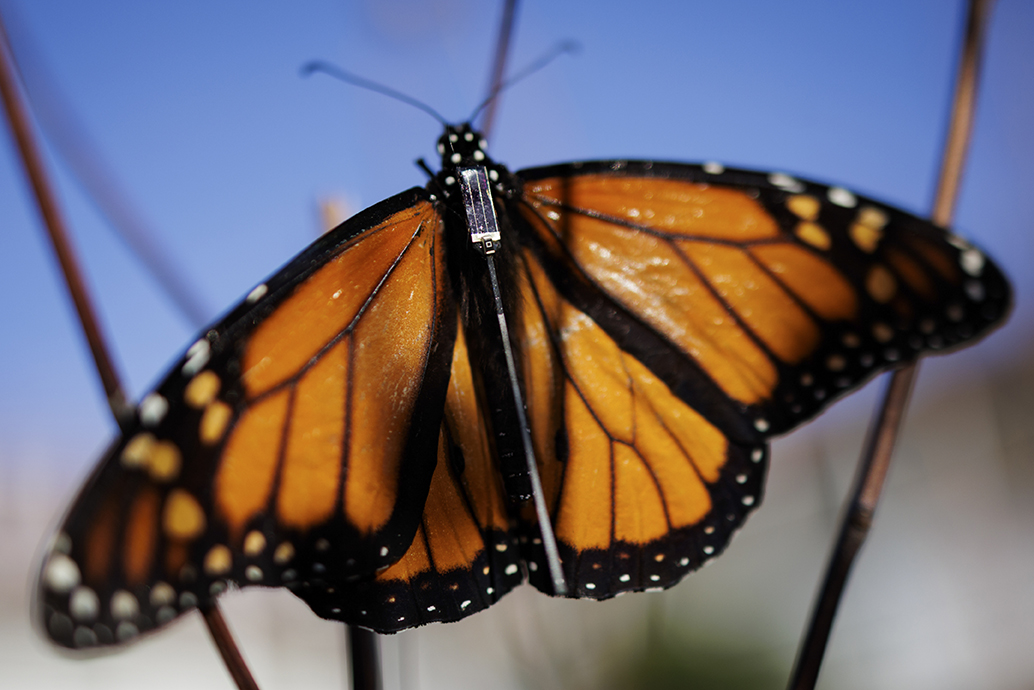
At Natural Bridges State Beach in Santa Cruz, local enthusiast Sasha Hernandez is among the first to utilize the Blu+ tags, ultra-light sensors that communicate with smartphones. This initiative aims to gather real-time data on monarch movements during their annual migration to winter colonies in Mexico, a journey that can span thousands of miles.
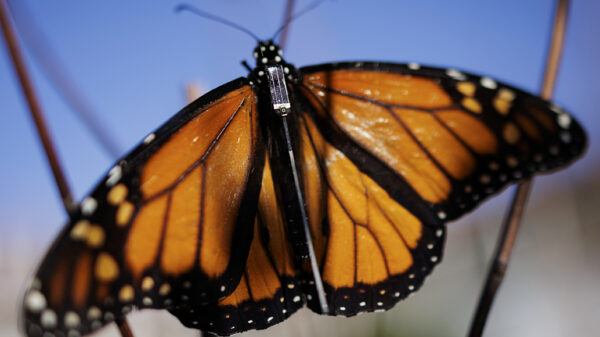
“This year, we are excited to see how technology can enhance our understanding of monarch migration,” said Ashley Fisher of the Xerces Society. The tags are designed to be as light as a grain of rice, allowing for seamless tracking without hindering the butterflies’ journey. Each device is attached using a gentle eyelash glue, ensuring the safety of these fragile creatures.
The Blu+ system not only represents a technological breakthrough but also empowers everyday individuals to contribute to scientific research. By simply using their smartphones, hikers and butterfly watchers can detect tagged monarchs within a 100-yard range. This innovative approach is crucial, given that the western monarch population has plummeted by approximately 95 percent over recent decades due to habitat loss and pesticide use, according to Fisher.
The app has already seen success during eastern monarch migrations, accumulating nearly 360,000 detections by July 2025. Now, as the tags become active on the West Coast, researchers anticipate valuable insights into overwintering behaviors and habitat preferences.
As monarchs seek shelter in coastal groves, the data collected through Project Monarch could help identify optimal overwintering sites. This information is vital for guiding future conservation efforts in California, where recent counts show fewer than 1,000 monarchs in certain areas, a stark contrast to historical numbers.
Hernandez, a second-year neuroscience student at UC Santa Cruz, expressed her enthusiasm for participating in the project. “It’s amazing to think that I can help track something as beautiful and delicate as a monarch butterfly,” she said. “This technology makes science accessible and exciting for everyone.”
The initiative aims to engage more citizen scientists in the conservation of western monarchs, encouraging volunteers to use the app while counting butterflies from October to January. Fisher emphasized the importance of community involvement, stating, “Every contribution counts. We need as many eyes on the ground as possible to help safeguard these migratory patterns.”
As the project unfolds, researchers remain cautious about the ecological implications of tagging. While the technology is designed to minimize impact, any signs of discomfort in the tagged butterflies could prompt a reevaluation of their use. The team is particularly mindful of the solar-powered batteries, which may face challenges during the butterflies’ roosting behavior.
With a growing urgency to address the decline in monarch populations, the combination of citizen science and advanced technology could provide a crucial lifeline. As Hernandez reflects on her experience, she notes, “Every time I see a monarch, I wonder where it’s headed. It’s incredible to be part of something that connects us to these amazing creatures.”
The Project Monarch app is available for both iPhone and Android, inviting everyone to join the effort in preserving the future of monarch butterflies. As this innovative tracking initiative gains momentum, researchers and enthusiasts alike are hopeful for new discoveries that could shape the future of butterfly conservation.
Stay tuned for more updates as the migration season progresses and the data continues to roll in.