









































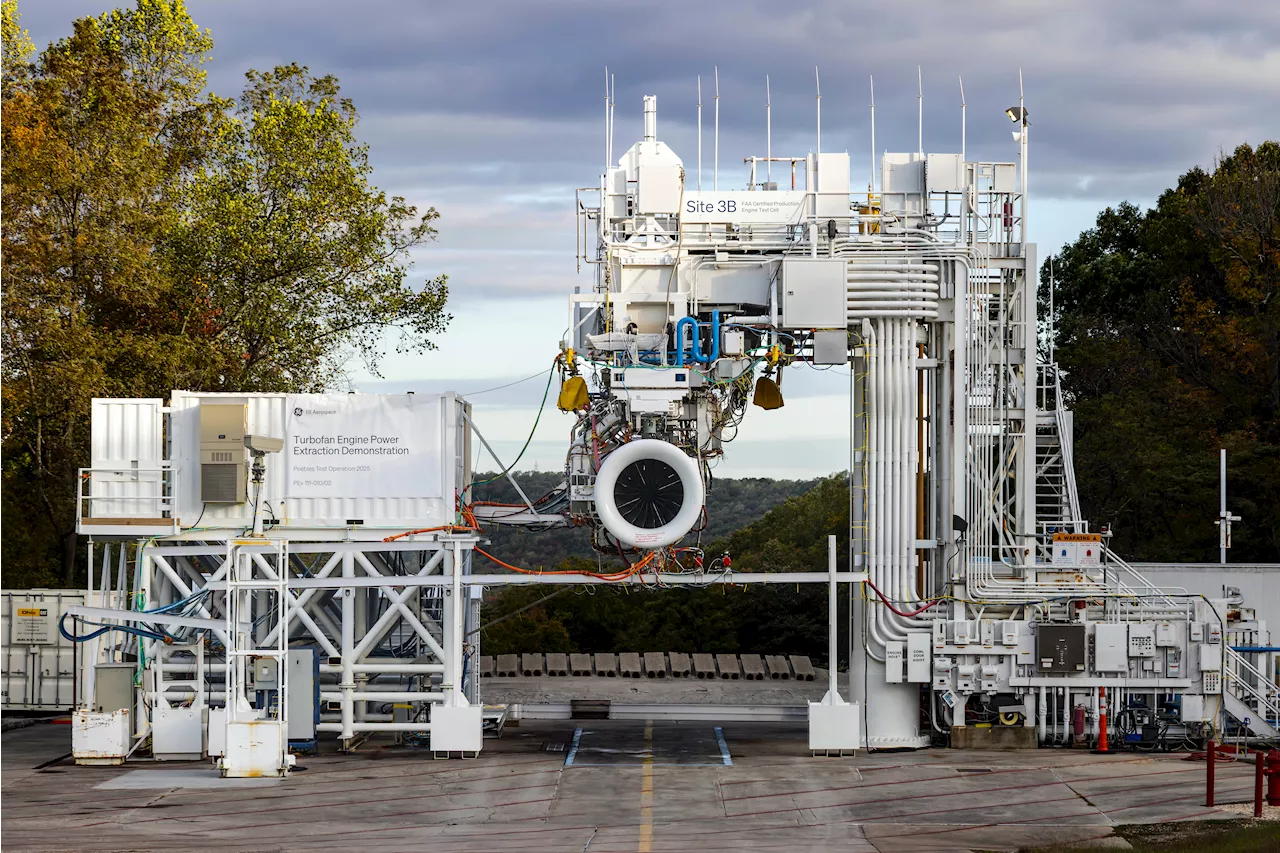
NASA and GE Aerospace have achieved a significant milestone with the successful testing of a hybrid engine that could pave the way for more efficient air travel. This groundbreaking demonstration took place in December 2023 at the GE Aerospace Peebles Test Operation site in Ohio. The engine, a modified version of the GE Aerospace Passport, demonstrated capabilities that might one day power commercial airliners.
The testing represented an important advancement for both organizations, marking the first trial of an integrated hybrid engine system. While components like electric motors and power system controls had been tested individually before, this was the first time they were combined in a functioning system. According to Anthony Nerone, manager of NASA’s hybrid engine project, “Turbines already exist. Compressors already exist. But there is no hybrid-electric engine flying today. And that’s what we were able to see.”
The hybrid engine operates using jet fuel, supplemented by electricity generated from its own operations. Although hybrid technology is commonplace in the automotive industry, the complexities involved in aviation applications are significant. Researchers had to innovate and adapt various components to create a system capable of delivering the power necessary for a single-aisle aircraft reliably.
Laura Evans, acting HyTEC project manager at Glenn Research Center, noted the challenges faced during the test. “They had to integrate equipment they’ve never needed for previous tests like this,” she explained. The demonstration, referred to as a power extraction test, was one of the most complex staged by GE Aerospace, showcasing the engine performing tasks similar to those required in an actual aircraft setting.
The timing of this test aligns with a growing trend in U.S. aviation, where the industry seeks to enhance power systems while simultaneously reducing fuel costs. Hybrid aircraft technology has been under development at NASA for approximately 20 years, a journey that began with the seemingly ambitious goal of creating a hybrid engine.
The HyTEC program, which is a collaborative effort between NASA and GE Aerospace, aims to refine this technology to achieve an engine that consumes up to 10% less fuel than current best-in-class models. NASA is focused on accelerating the technology’s market readiness to meet the industry’s evolving demands.
While this demonstration is a promising step forward, both NASA and GE Aerospace are undertaking a thorough analysis of the data collected from the test and prior research. This information will inform the development of a compact engine test planned for later in this decade.
The successful demonstration not only highlights the advancements in hybrid technology but also signifies a move toward more sustainable aviation practices. With the integration of hybrid systems closer than ever to becoming a reality, the aviation industry may soon be able to embrace a future marked by enhanced efficiency and reduced environmental impact.
















