






















UPDATE: A growing number of millennials are expressing feelings of “age dysmorphia,” with many claiming they don’t feel their actual age, leading to surprising social interactions and emotional confusion.
In a viral TikTok posted in late October 2023, Helen McPherson candidly shared her experience with this phenomenon, stating, “I’m a literal baby!” McPherson’s video highlights a disturbing trend among her generation, who often feel much younger than their documented ages, leading to shock and disbelief when confronted with societal expectations.
This condition, referred to as “millennial age dysmorphia,” is gaining traction online as more individuals resonate with McPherson’s sentiments. Many millennials, now in their 30s and 40s, report feeling disconnected from the adult milestones society expects, such as owning homes or starting families. This disconnect has created a pervasive sense of youthfulness that clashes with societal perceptions of aging.
McPherson articulates her struggle with this age perception: “It’s always been that secret superfix that I thought, like, ‘other people are getting old, but I’m not getting older. I’m exempt from the aging process.'” Her revelation struck a chord, as her followers on TikTok reacted with similar sentiments, confirming that they too experience a detachment from their actual ages.
In a poignant moment, McPherson recalled a recent incident where her followers judged her to be in her 50s based on her appearance. “What are you talking about?” she exclaimed. The reality of her situation hit home when her jokes about aging and motherhood were met with indifference, revealing a stark gap between her self-perception and how others view her.
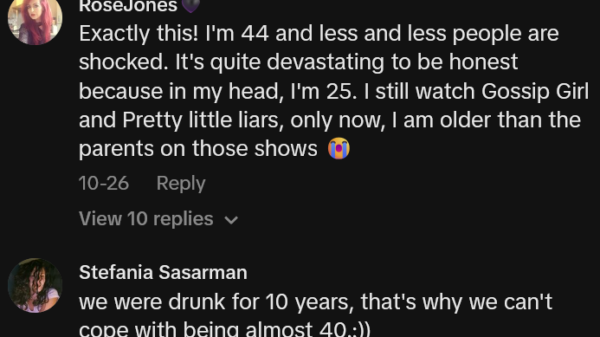
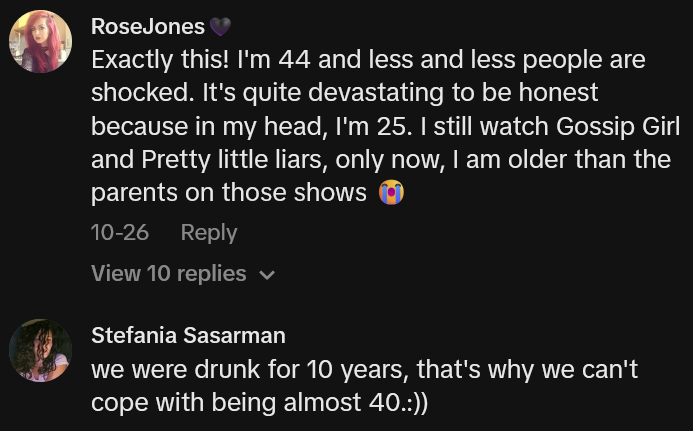
The responses to her video underscore a collective struggle among millennials. One commenter stated, “It’s quite devastating to be honest because in my head, I’m 25.” Another user shared, “I still look for trusted adults in uncomfortable situations,” highlighting the ongoing internal conflict many face.
Experts suggest that this phenomenon may stem from financial instability and societal pressures. Many millennials are grappling with economic challenges that hinder their ability to achieve traditional adult milestones. One commenter pointedly noted, “We have it because we don’t have the money to feel like adults,” reflecting the harsh reality that many face today.
As McPherson’s TikTok continues to gain traction, the conversation around millennial age dysmorphia is poised to grow. This condition not only affects individual self-perception but also highlights broader societal issues related to aging, responsibility, and financial security.
The implications of this trend are significant, as it raises questions about how society perceives aging and the expectations placed on younger generations. As millennials navigate this complex landscape, it remains crucial to understand the emotional and psychological impacts of feeling out of sync with one’s age.
In the coming weeks, experts may delve deeper into this topic, exploring its roots and potential solutions. For now, McPherson’s candid expression of her struggle resonates with many, creating a sense of community among those feeling similarly adrift in their aging process.
As the conversation unfolds, it will be essential to monitor how this phenomenon continues to shape the experiences and identities of millennials worldwide.