









































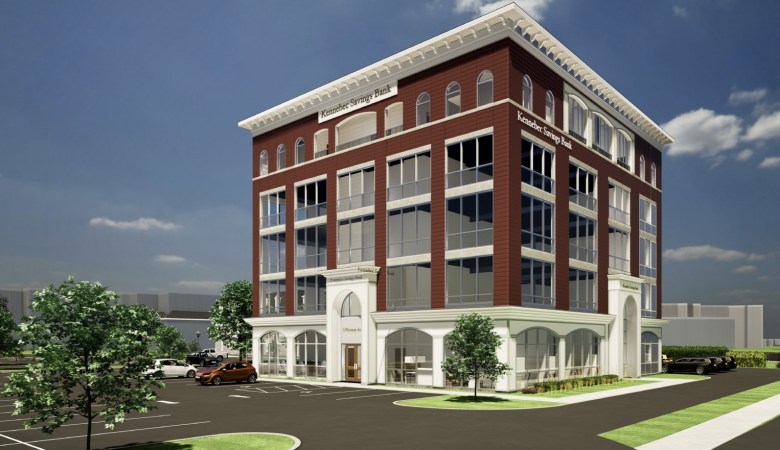
UPDATE: Kennebec Savings Bank has officially initiated plans to demolish a historic house in Augusta, Maine, to clear the way for a modern five-story office building. This development was confirmed during a meeting with the Augusta Historic Preservation Commission on October 31, 2023.
The new building will provide office space for over 100 employees and extend the bank’s presence significantly, occupying most of the block bordered by Western Avenue, State Street, and Chapel Street. However, the decision to demolish the historic property at 15 Western Ave. has sparked controversy among local residents and preservationists.
Kennebec Savings Bank CEO, Andrew Silby, stated that the design of the new project necessitates the removal of the house, which was designed by renowned Maine architect John Calvin Stevens in 1899. Silby explained to commission members, “We worked very diligently to try to figure out what we could do with this building. Unfortunately, moving it is cost-prohibitive.”
The house has been unoccupied for approximately 15 months and has not been well-maintained, with renovation costs estimated at nearly $2 million. Silby mentioned that two contractors had assessed the possibility of relocating the building but deemed it financially unfeasible.
Despite the house’s lack of inclusion in Augusta’s historic districts or the National Register of Historic Places, the commission acknowledges its historical significance due to Stevens’ architectural contributions. In response to community concerns, the commission has imposed a 60-day delay on the demolition to explore possible alternatives.
During the meeting, local developer Richard Parkhurst publicly proposed to purchase and relocate the house. “In my mind, it would be a simple move to the north end of the rotary,” he stated. Commission Vice Chair Gerald Bumford emphasized the urgency of the situation, saying, “You’ve got 60 days left before the demolition delay expires. Time is of the essence.”
Kennebec Savings Bank’s ambitious project still requires multiple approvals, including a zoning change from the Planning Board and a building height allowance from the City Council. The community’s reaction has been mixed, with many expressing sadness over the potential loss of the historic house.
As negotiations continue, the clock is ticking for both the bank and preservation advocates. The outcome could reshape the Augusta landscape, highlighting the ongoing tension between development and historic preservation.
Stay tuned for more updates as this story develops.
















