









































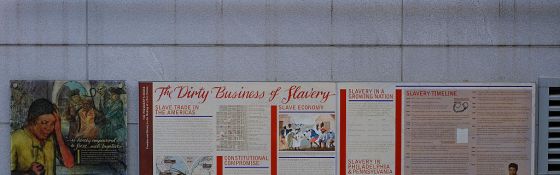
A federal court has mandated the restoration of historical exhibits related to slavery, previously removed by the National Park Service (NPS) under the Trump administration. Senior Judge Cynthia M. Rufe issued the order on Monday, instructing officials to reinstate the displays at the President’s House Site in Philadelphia. The ruling demands that the site be returned to its condition as of January 21, 2023, just before the removal of the signage, which coincided with the onset of Black History Month.
The NPS began dismantling the exhibits following an executive order titled “Restoring Truth and Sanity to American History” issued by former President Donald Trump. The directive sparked significant controversy, as it aimed to reduce the visibility of Black history, particularly elements depicting slavery and the Jim Crow era. In her ruling, Judge Rufe emphasized the importance of maintaining historical accuracy and expressed skepticism towards the administration’s justifications for the removals.
According to the order, the NPS is required to safeguard all items removed from the site and may not substitute them with replacement materials without prior agreement with the city of Philadelphia. The ruling further stipulates that the site must be properly maintained, including all grounds and exhibits, while litigation is ongoing.
The city of Philadelphia had previously filed a lawsuit in federal court, arguing that the NPS’s actions violated prior agreements that necessitated resolution through dialogue rather than unilateral removals. In her decision, Rufe drew comparisons to the dystopian elements of George Orwell’s 1984, stating, “The government here likewise asserts truth is no longer self-evident, but rather the property of the elected chief magistrate and his appointees.”
The Department of Justice contended that the city lacked the authority to bring the lawsuit, asserting that the government holds the right to determine its messaging. This perspective has been met with criticism, particularly in light of the administration’s broader pattern of minimizing representations of Black history in national parks and museums.
The Trump administration’s approach has faced scrutiny not only for the removal of exhibits but also for its efforts to alter historical narratives surrounding figures like George Washington, who enslaved individuals until his death. The administration’s actions have raised concerns about a deliberate attempt to prioritize a specific ideological viewpoint over factual historical representation.
As the situation develops, the NPS is now tasked with complying with the court’s order without a specified timeline for restoration. The implications of this ruling resonate significantly, highlighting ongoing national debates regarding historical memory and representation in public spaces.
















