









































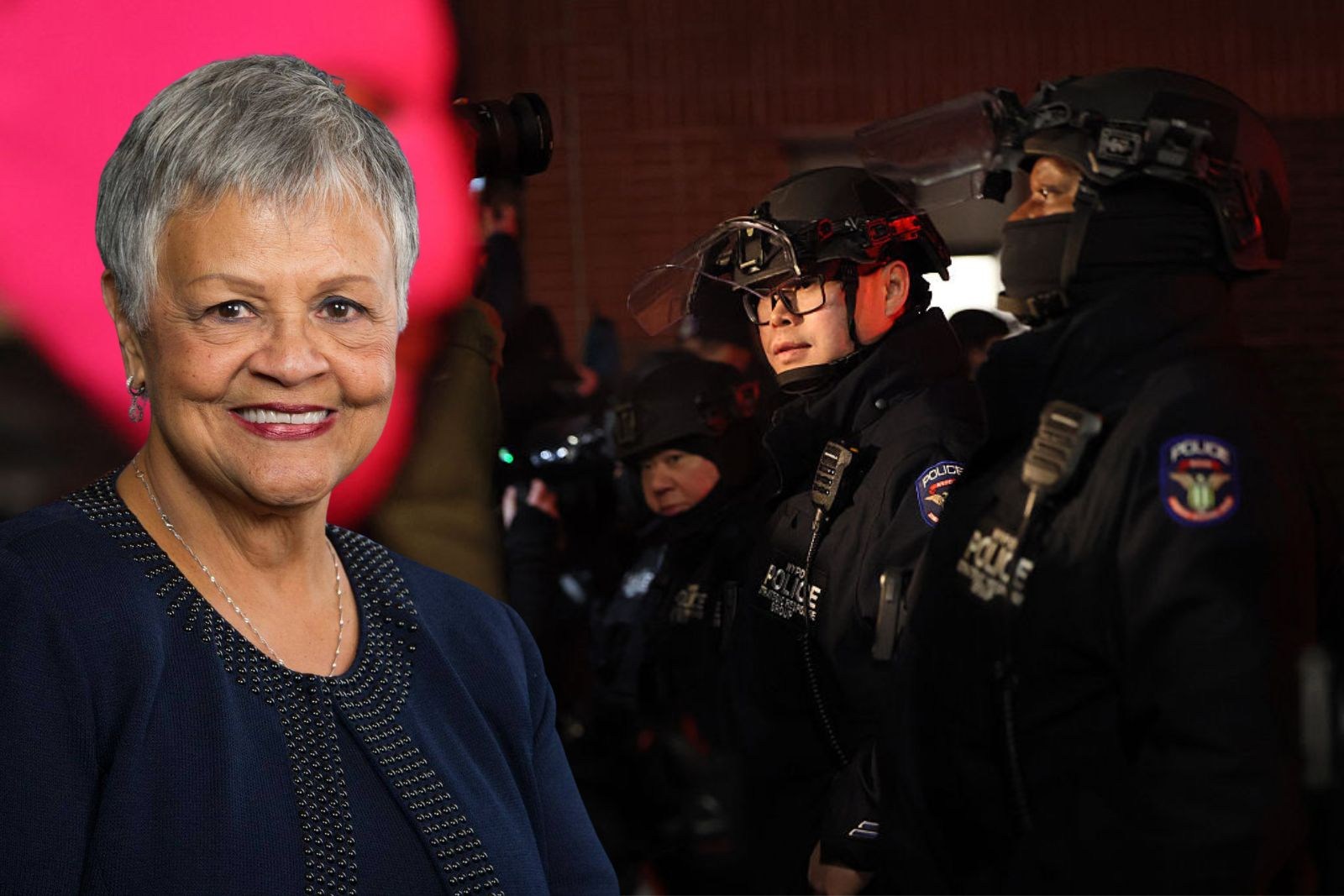
UPDATE: Tensions escalate as U.S. Immigration and Customs Enforcement (ICE) accuses New Jersey Congresswoman Bonnie Watson Coleman of spreading “fear and confusion” regarding a controversial arrest operation in Trenton. The dispute arises just days after a federal lawsuit was filed by the Trump administration challenging New Jersey’s restrictive immigration policies.
On February 20, 2023, ICE conducted an operation at an auto body shop in Trenton, leading to the arrest of Eduardo Reyes, a criminal illegal alien wanted for serious offenses, including aggravated assault. Watson Coleman claimed that ICE agents detained individuals without a warrant and covered security cameras during the operation. However, ICE quickly countered, stating that their agents were not in charge of the operation and that arrests were made under a court-ordered criminal warrant.
In a press release, ICE clarified, “The primary target who was arrested is Eduardo Reyes, a criminal illegal alien from Guatemala.” They stressed that Watson Coleman’s comments misrepresented the facts, fueling misinformation in the community.
Watson Coleman, who represents Trenton, expressed her concern in a statement, saying, “I’ve been briefed on reports of ICE agents covering security cameras at a Trenton auto repair shop and detaining multiple individuals without a warrant.” However, she did not disclose her sources, raising questions about the validity of her claims.
This clash comes amid the broader context of New Jersey’s ongoing conflict with federal immigration enforcement. The Department of Justice has initiated legal action against Gov. Mikie Sherrill‘s executive order, which limits ICE’s access to state properties for enforcement actions. The DOJ argues that these restrictions violate constitutional obligations, stating, “Governor Mikie Sherrill aims to intentionally obstruct federal law enforcement.”
Despite these federal challenges, New Jersey lawmakers are pushing forward with new legislation to curb ICE’s operations. One significant proposal, dubbed the Fight Unlawful Conduct and Keep Individuals and Communities Empowered Act, seeks to empower individuals to file civil lawsuits against federal immigration officers for alleged constitutional violations during enforcement actions. Proponents argue this will protect immigrant communities, while critics warn it could hinder public safety and cooperation with federal authorities.
As these tensions unfold, ICE is planning to bolster its enforcement efforts with an addition of 12,000 officers nationwide this year. The situation in New Jersey exemplifies the ongoing battle between state policies and federal immigration enforcement, with significant implications for communities and law enforcement operations.
What happens next? Observers will be closely monitoring the legal proceedings initiated by the DOJ and the advancement of anti-ICE legislation in New Jersey. The implications of these developments could reshape immigration enforcement across the state and potentially set a precedent for other states grappling with similar issues.
Stay tuned for more updates as this story continues to develop.










