
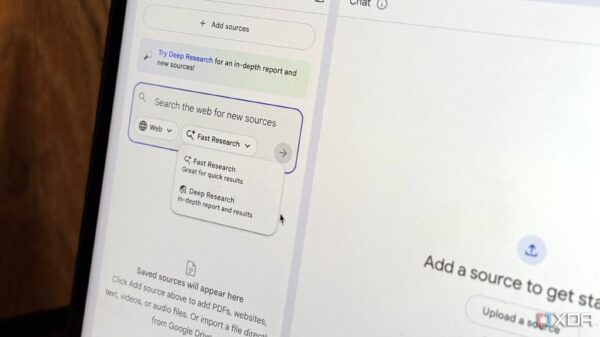






































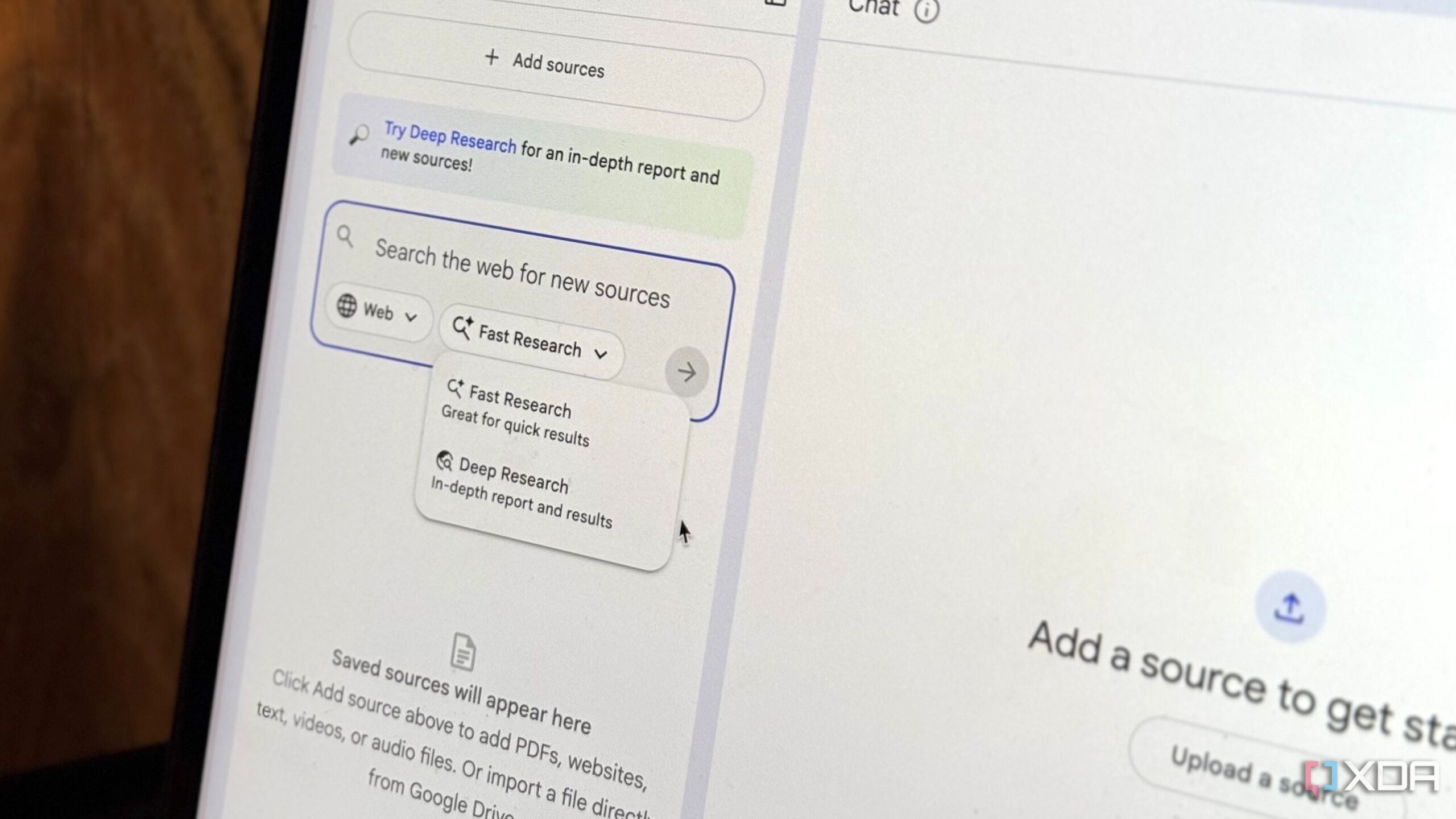
UPDATE: Google just announced a groundbreaking enhancement to its research tool, NotebookLM, integrating the powerful Deep Research feature from its Gemini chatbot. This development transforms how users discover and compile sources, making research faster and more efficient than ever before.
With the integration of Deep Research, users can now tackle complex topics with ease, bypassing the often tedious process of manual searches. This significant upgrade allows NotebookLM to generate detailed research plans and reports tailored to specific queries, such as understanding “The impact of regulatory changes on crypto-staking in 2025.” Users can simply input their learning goals, and the AI takes over, providing structured overviews that inform without overwhelming.
Previously, users faced challenges when searching for niche information, often wading through surface-level content. Now, with Deep Research, NotebookLM excels at diving deep into specialized topics like sustainable coffee, delivering white papers and in-depth analyses that traditional search engines often overlook. This enhancement saves users valuable time and enhances their knowledge base significantly.
Moreover, the new feature streamlines the user experience by displaying citations alongside reports, complete with one-line descriptions to clarify their relevance. This eliminates the cumbersome back-and-forth of checking sources, allowing for a more fluid research process.
Deep Research does not only improve source discovery; it also functions as a heavy-duty discovery tool. Users can uncover high-quality PDFs and long-form content that simpler search algorithms might miss, enhancing the depth of their research. This capability is particularly beneficial for those in technical fields, where nuanced information is paramount.
In addition to improving source-finding capabilities, the integration with NotebookLM allows users to generate customized study materials directly from research reports. Users can create mind maps, study guides, audio overviews, and flashcards—all without the need for tedious manual data entry. The flexibility of these tools means that learners can engage with information in a way that best suits their study habits.
Despite its numerous advantages, users should remain aware of the limitations of Deep Research. Occasionally, the tool may misinterpret a connection or focus on less relevant sources. However, its value in combating “blank page syndrome” and facilitating a more productive research experience is undeniable.
As Google continues to enhance its AI capabilities, this latest integration signifies a major leap forward for researchers, students, and professionals alike. The immediate impact of this upgrade is clear: users can now focus on what truly matters—the understanding and application of knowledge.
Stay tuned for more updates as Google rolls out this feature across its platforms, promising to redefine how we conduct research in the digital age.