









































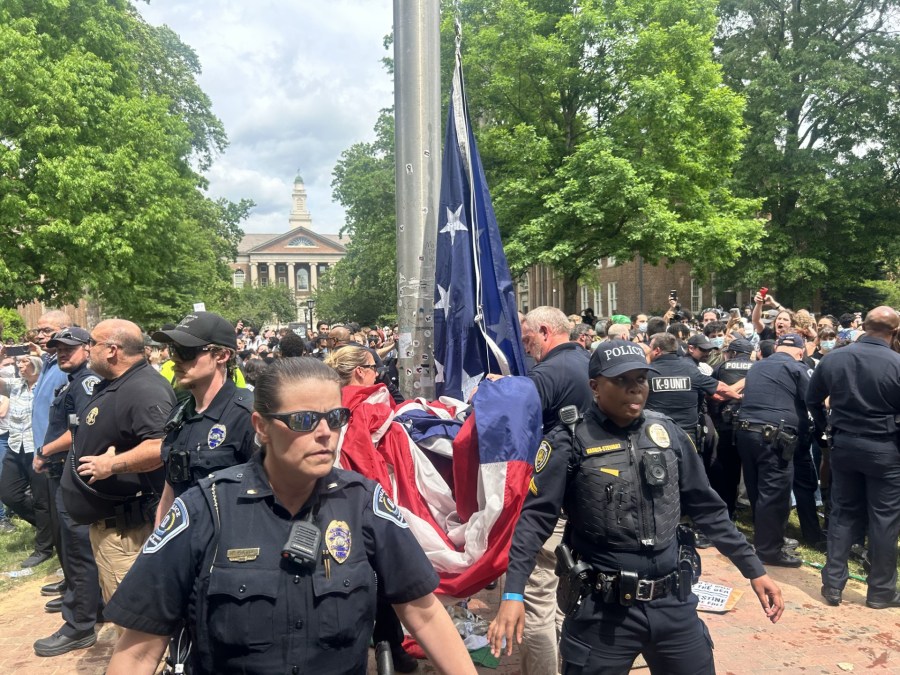
UPDATE: A federal judge has just ordered the University of North Carolina (UNC) in Chapel Hill to lift its campuswide ban against pro-Palestine protesters. This urgent decision comes amid an ongoing lawsuit that has sparked widespread attention and concern over free speech rights on college campuses.
Court records reveal that the American Civil Liberties Union (ACLU), along with civil rights organizations Emancipate NC and Muslim Advocates, filed the lawsuit challenging the university’s ban, which was imposed following a clash during protests in 2024. The ruling is a significant victory for advocates of free speech and sets a precedent for how universities handle protests.
The judge’s decision highlights the tension between campus security and the right to protest, particularly on contentious issues like the Israel-Palestine conflict. Students and activists are poised to respond, with many expressing relief and eagerness to resume their demonstrations.
Why This Matters NOW: The ruling not only affects the immediate campus environment at UNC but also has implications for colleges nationwide grappling with similar issues. As protests gain momentum, the decision reinforces the importance of protecting free expression in educational institutions.
Authorities have stated that the university must comply with the ruling immediately, allowing protesters to gather and express their views without fear of retribution. This swift action has the potential to reshape the dialogue around activism and administration policies across campuses in the United States.
What’s Next: As this story develops, the community will be watching closely. The university is expected to issue a statement in response to the ruling, while the ACLU and its partners will likely continue to monitor the situation to ensure compliance and advocate for broader protections of protest rights.
Stay tuned for further updates on this developing story as it unfolds, particularly how it may influence similar cases and policies at other universities. This landmark decision could have a lasting impact on the landscape of student activism and academic freedom across the country.
















