









































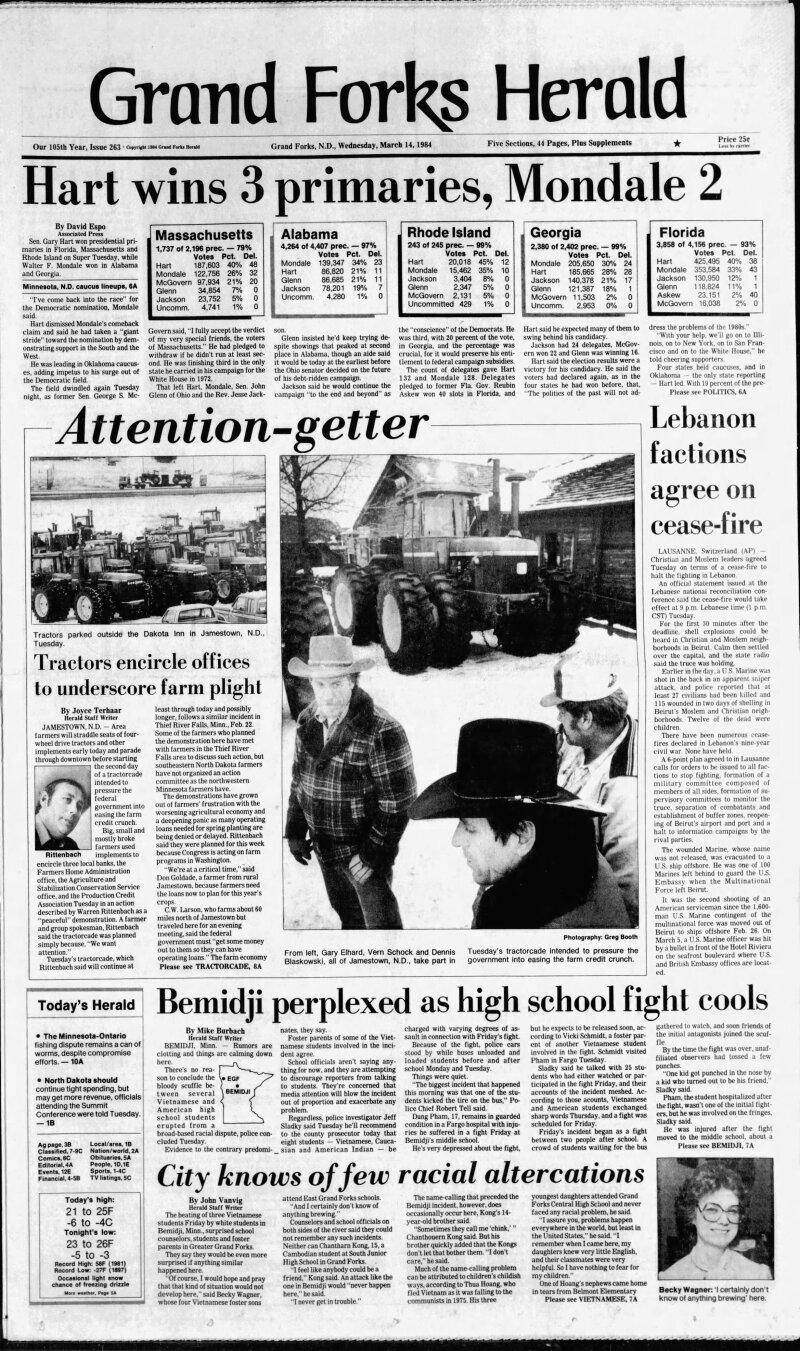
UPDATE: Farmers in Jamestown, North Dakota, have launched a high-stakes tractorcade to demand immediate action from the federal government regarding the escalating farm credit crisis. Beginning early on March 14, 1984, local farmers encircled banks and agricultural offices, sending a clear message that urgent support is needed to prevent further economic hardships.
As the tractorcade unfolded, approximately 100 farmers participated in this peaceful demonstration, designed to draw attention to the dire state of the agricultural sector. Farmers, led by spokesperson Warren Rittenbach, emphasized the necessity of federal intervention to ease the ongoing credit crunch that has left many unable to secure vital operating loans for spring planting.
The protests are a response to a worsening agricultural economy, marked by delayed and denied loans, creating an atmosphere of panic among farmers. Don Goldade, a local farmer, expressed the urgency of the situation, stating, “We’re at a critical time. Farmers need these loans now to plan for this year’s crops.”
The tractorcade, which began on Tuesday and is expected to continue, is a coordinated effort following a similar protest in Thief River Falls, Minnesota, on February 22. Farmers are calling for immediate reforms, including lower interest rates and increased funding for critical farm programs as Congress deliberates on agricultural policies.
Local sentiment about the tractorcade has been mixed. While some community members express support, others have shown hostility, with reports of vandalism, including damage to a tractor worth an estimated $5,000. Rittenbach noted that a farmer guard has been assigned to protect the tractors from further attacks.
In addition to the demonstrations, farmers have been actively meeting with government representatives and organizing a letter-writing campaign to influential lawmakers. The group is advocating for proposals to enhance financial support for farmers, including increasing storage payment rates and broadening access to federal funds.
One notable proposal includes utilizing a portion of the defense budget to establish a reserve fund dedicated to agricultural support. Rittenbach remarked, “This is better than nothing, and that’s what we’ve got in Washington now—nothing.”
As the tractorcade progresses, farmers will continue to voice their demands for urgent assistance and reforms necessary to stabilize the agricultural economy. With the situation evolving rapidly, the outcome of their advocacy remains to be seen.
Stay tuned for further updates on this developing story as farmers in Jamestown fight for their livelihoods and the future of agriculture in the region.
















