









































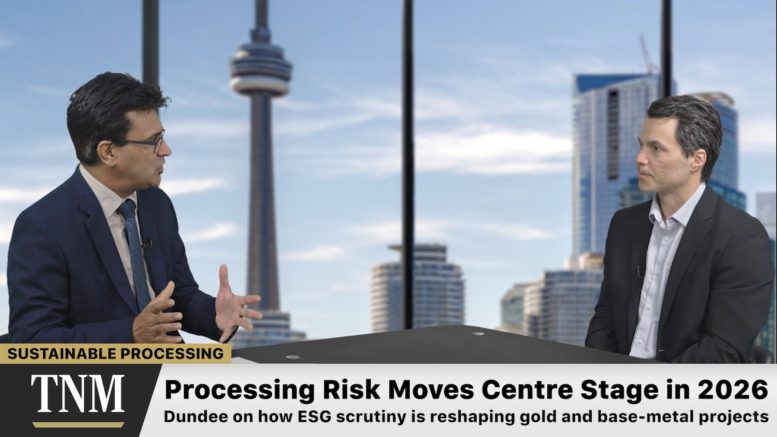
As the year 2026 begins, mining companies are facing evolving challenges related to environmental, social, and governance (ESG) issues. These factors are increasingly influencing permits, financing, and project timelines, prompting a closer examination of ore processing methods, particularly in gold and base metals. This heightened scrutiny is shifting processing decisions earlier in the project lifecycle, impacting how miners assess project viability. As a result, metallurgical choices are now integral to project approval and financing, adding layers of complexity to planning and execution.
In an interview with The Northern Miner, Jean-Philippe Mai, CEO of Dundee Sustainable Technologies, discussed the implications of this shift for mining operations. He highlighted that while conversations with miners have not drastically changed, there is a noticeable momentum in interest surrounding Dundee’s processes, particularly as more successful results emerge from various clients.
Adapting to New Realities in Mining
Dundee Sustainable Technologies has carved a niche in arsenic management, a critical concern in mining operations. The company specializes in removing arsenic from sulphide-bearing metal concentrates, converting it into an insoluble glass product that can be safely disposed of. This innovation not only addresses contamination but also adds value to mining projects by enhancing their overall viability.
According to Mai, there has been a significant evolution in the timing of engagements with mining companies. In the past, miners typically sought assistance later in the project timeline, often after encountering challenges during permitting or metallurgical processes. Now, there is a growing trend of early-stage projects reaching out to Dundee for insights into how its processes can benefit their operations. Mai noted, “Developers want to understand the numbers and see how our process could benefit their project.”
Measuring Success and Navigating Costs
Looking toward the end of 2026, Dundee aims to achieve several milestones, including pilot projects, commercial deployments, and repeat business from existing clients. Mai expressed optimism about the strong base of repeat customers, some of whom have engaged Dundee on multiple occasions. As projects advance, the company continues its test work at the lab level and moves into larger pilot-scale testing, generating valuable data for downstream applications.
Despite significant cost pressures in the mining sector over the past year, the focus on cost remains paramount. Mai emphasized that while cost is a critical driver for adoption, miners must also evaluate the trade-offs involved in integrating alternative processing technologies. He stated, “What we’re asking the industry to do is assess the trade-offs—test our processes and evaluate the costs relative to the benefits.”
The conversation around alternative processing technologies is shifting. Mai noted that for some projects, these options have transitioned from being a competitive advantage to becoming an operational necessity. This shift is driven by various factors, including regulatory requirements and the need for faster market entry.
As the industry progresses through 2026, Dundee Sustainable Technologies anticipates a significant phase of commercial relevance. Mai hopes to share updates on successful commercial implementations, highlighting operational experiences gained from running industrial demonstration plants in locations such as Thetford Mines and Namibia. He remarked, “Being able to share that operational experience with the market would signal a real shift in our commercial position.”
The changing landscape of mining underscores the importance of adaptability and innovation in addressing the complex challenges posed by ESG considerations. Dundee Sustainable Technologies is positioning itself to lead in this evolving environment, ensuring that its processes not only meet regulatory demands but also enhance the viability of mining projects worldwide.
















