









































Dogs have long been recognized for their ability to learn commands such as “sit” and “stay.” A recent study has revealed that some exceptional dogs can also expand their vocabulary by eavesdropping on their owners. This research opens new avenues for understanding canine cognition and communication.
Researchers focused on a select group of dogs known for their impressive learning capabilities. While approximately 50 specially gifted dogs have been identified in previous studies, the latest findings show that these canines can grasp new toy names through passive observation. Ten dogs participated in the study, including a Border Collie named Basket and a Labrador named Augie.
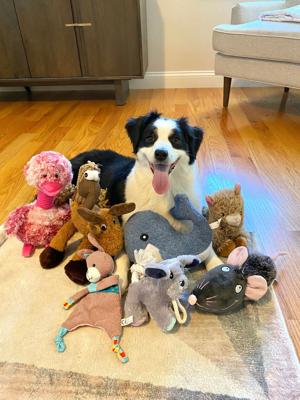
In this innovative experiment, the dogs observed their owners engaging in conversation about a new toy. After watching their owners interact, the dogs were asked to retrieve that specific toy from a collection of various items. Remarkably, seven out of ten dogs successfully identified new toys such as stingrays and armadillos just by listening.
Groundbreaking Findings on Canine Cognition
Shany Dror, a lead author of the study from Eötvös Loránd University in Hungary and the University of Veterinary Medicine in Austria, highlighted the significance of these findings. “This is the first time that we see a specific group of dogs that are able to learn labels from overhearing interactions,” Dror stated. The study demonstrates that dogs can learn names even when their owners place toys in opaque containers and then discuss them, indicating a sophisticated level of understanding.
This ability to learn through eavesdropping is not commonly found in the animal kingdom. Only a few species, such as parrots and apes, have shown similar capabilities. For humans, this skill is vital during early development; children under two years old can acquire new words by listening to conversations, often picking up terms their parents may not intend to teach. Dror noted that the cognitive mechanisms in dogs may differ from those in humans, given that the studied dogs are all fully grown.
Animal cognition expert Heidi Lyn from the University of South Alabama commented on the implications of this research. She expressed that this work illustrates the advanced cognitive processes animals possess, which often go unrecognized. Lyn, who was not involved in the study, emphasized the importance of understanding the intellectual capabilities of different species.
Ongoing Research and Future Directions
While this research sheds light on the remarkable abilities of certain dogs, it also highlights that not all dogs possess the same learning aptitude. Casual observers might not notice their pets picking up toy names while lounging under the dinner table. Dror plans to continue her studies on these gifted dogs to further explore the cues they respond to during learning.
The research can be messy; Dror humorously noted, “We do have dogs coming to the lab sometimes, which is really nice, but then often someone pees on the couch.” Despite the occasional mishaps, her enthusiasm for studying these unique dogs remains strong.
This research was published on Thursday in the journal Science, contributing significantly to the growing body of knowledge regarding animal intelligence and communication. As scientists continue to explore canine cognition, the findings may reshape how we perceive the relationships between humans and their furry companions.
















