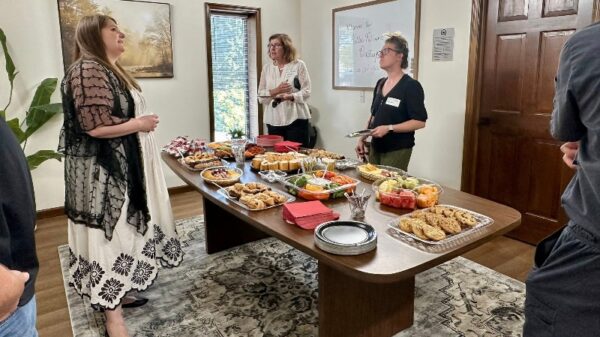










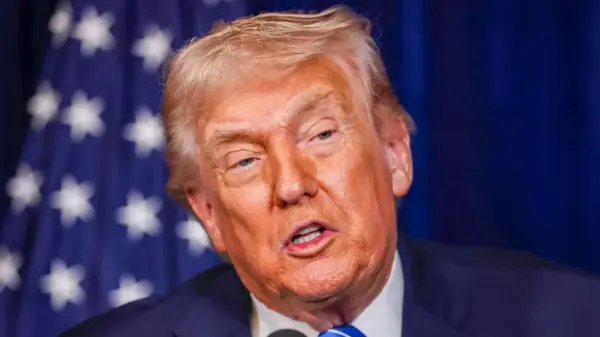













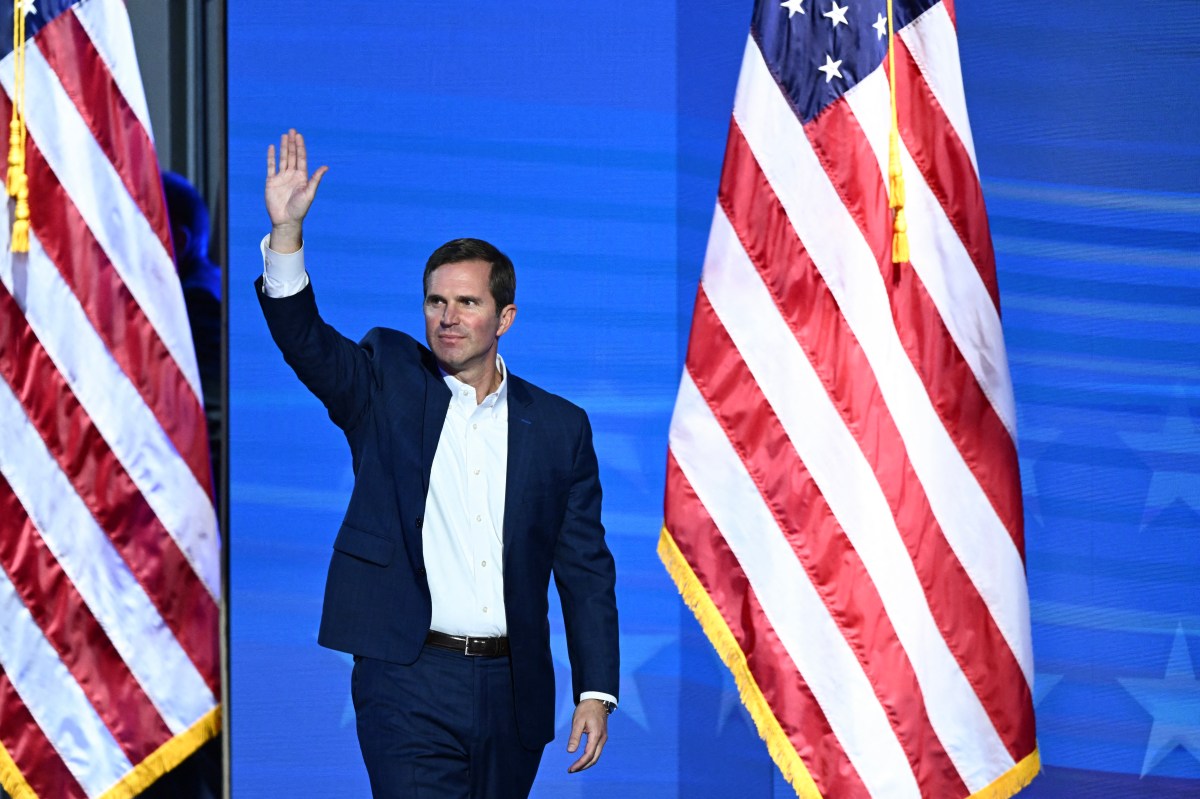
URGENT UPDATE: Democratic governors from across the nation convened at the Arizona Biltmore Hotel this past weekend to strategize on their approach for the 2026 midterm elections. Their primary aim? To counter the influence of President Donald Trump and his Make America Great Again (MAGA) movement.
With both the U.S. House of Representatives and U.S. Senate under Republican control, Democrats are looking to governors as essential leaders in this battle. The Democratic Governors Association (DGA) is taking charge of this effort, having been instrumental in the party’s recent wins, including candidates Mikie Sherrill in New Jersey and Abigail Spanberger in Virginia.
In a pivotal briefing on Sunday, new DGA Chair Andy Beshear of Kentucky outlined the organization’s focus for the upcoming election cycle, emphasizing the need to address rising costs impacting American families. “Most of America should feel betrayed right now with the tariffs making everything more expensive,” Beshear stated. He stressed the importance of making the American dream achievable for hardworking citizens.
Beshear identified Iowa, Georgia, and Nevada as top priorities among the 36 governor races in 2026. Currently, Democrats hold 24 of 50 governorships, and Beshear is optimistic about flipping more states by 2026.
Replacing Beshear as vice chair, Gretchen Whitmer, the governor of Michigan, echoed the necessity of strong leadership amid chaos from Washington, D.C. “Democratic governors have been the frontline in protecting people from all the chaos coming out of Washington,” she declared.
The DGA is positioning itself as a formidable force in Democratic politics, a shift acknowledged by its staff. Ken Martin, chair of the Democratic National Committee (DNC), emphasized his commitment to strengthening state parties, a vision he aims to realize through partnerships with organizations like the Democratic Legislative Campaign Committee (DLCC).
In a separate briefing, California Governor Gavin Newsom, a potential candidate for the 2028 presidential nomination, argued for a grassroots approach to party building. “Stop with this obsession with the guy or gal on the white horse to come save the day—Stop,” he urged. Newsom highlighted the need to focus on local races, including school board elections, to build a robust Democratic infrastructure.
Former Kansas Governor Laura Kelly noted an increasing recognition among donors of the significance of state races. She attributed her success in a traditionally Republican state to engaging with local issues rather than the national narrative.
As Democratic governors carve their path forward, they are emerging as key messengers for the party, especially as constituents grow distant from Washington’s politics. The strategies discussed at the Arizona Biltmore could set the foundation for the party’s platform in both 2026 and 2028.
In this high-stakes environment, Sherrill warned against complacency. “You have people in Washington who are acting like this is the 1980s,” she said. “Governors can’t do that because you can’t duck behind like 99 other people. You have to deliver, and you have to show your work.”
The urgency of this gathering and the ambitious goals set forth signal the Democratic Party’s commitment to reclaiming ground in the upcoming elections. As these leaders refine their messages and strategies, the 2026 elections are shaping up to be a pivotal moment in American politics.