









































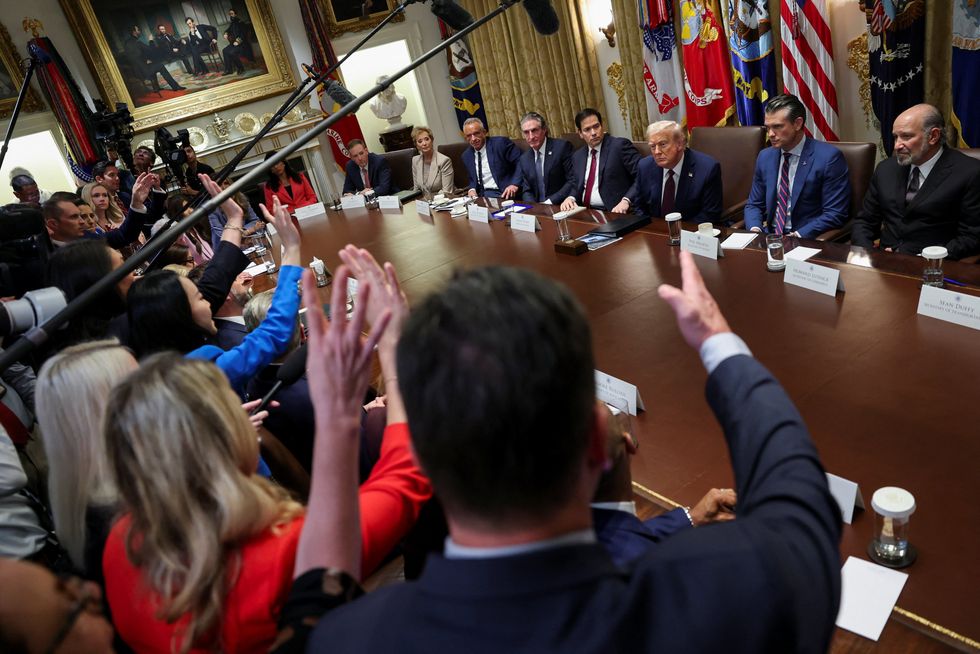
UPDATE: Defense Secretary Pete Hegseth is facing backlash for his remarks regarding the deaths of six American soldiers in a recent drone strike in Kuwait. During a news conference on Wednesday, Hegseth suggested that media coverage of these fatalities is merely a “narrative” and urged the public to “cut through the noise” and focus on the broader mission. This statement immediately raises questions about the administration’s stance on reporting U.S. combat casualties.
The tragic incident occurred on Sunday, July 30, 2023, when an Iranian drone targeted a U.S. facility, resulting in the deaths of six Army reservists. The fallen soldiers include: Sgt. Declan Coady (20), Sgt. 1st Class Nicole Amor (39), Capt. Cody Khork (35), Sgt. 1st Class Noah Tietjens (42), Maj. Jeffrey O’Brien (45), and CW3 Robert Marzan (54).
Hegseth’s remarks sparked outrage as he implied that the loss of these lives is overshadowing the military mission. Notably, during the White House briefing, Kaitlan Collins from CNN confronted Press Secretary Karoline Leavitt with Hegseth’s comments, to which Leavitt responded, “The press does only want to make the president look bad. That’s a fact.”
This perspective raises significant concern about the administration’s treatment of military casualties. To many, the loss of a soldier is not simply a “political liability” but a profound tragedy affecting families and communities. The family of Nicole Amor, a mother of two who was just days away from returning home, is currently grappling with the devastating reality of her death.
The context surrounding these remarks is troubling. Earlier, in January 2024, when three American soldiers were killed in a drone attack in Jordan, Republican leaders did not shy away from condemning the situation, using the deaths to criticize President Joe Biden’s foreign policy. This pattern of political maneuvering raises questions about why the narrative appears to shift under the current administration.
Historically, U.S. media has reported every combat death, irrespective of political affiliation. The names of the six soldiers—Declan, Nicole, Cody, Noah, Jeffrey, and Robert—are not just statistics; they represent individual lives cut short. Reporting these casualties is a vital part of journalism, holding leaders accountable and giving voice to the families left behind.
As the situation develops, the nation watches closely. Will the administration reassess its approach to transparency regarding military casualties? Public sentiment is likely to demand accountability and respect for those who have made the ultimate sacrifice for their country.
Stay tuned for further updates as this story unfolds.











